European Auto Makers Pivot to Defense Amid Industrial Crisis
Ford, Renault, and Volkswagen are leveraging factory overcapacity for military production as European defense budgets surge.
Key points
- Ford is bidding to supply 9,000 military vehicles to the UK Ministry of Defence over the next five to seven years.
- Renault and Volkswagen have also entered defense production, with Renault targeting 1,000 drones monthly and VW selling a plant to a defense investor.
- European auto makers are leveraging factory overcapacity to tap into surging defense budgets as a hedge against commercial market decline.
European automotive executives are increasingly viewing military rearmament as a critical lifeline for an industry facing severe commercial headwinds. According to reports from BBC Business, major manufacturers are pivoting toward defense contracts to utilize underutilized production lines, a strategic shift driven by the need to offset declining civilian demand and intense competition from Asian rivals.
The move reflects a broader geopolitical reality where surging defense budgets across the continent offer a new market for industrial capacity that has struggled in the passenger car sector. While the transition raises questions about the long-term sustainability of such a pivot, it provides immediate employment stability and revenue streams for plants that have seen output levels halve over the last decade.
Ford Bids for Military Fleet Contract
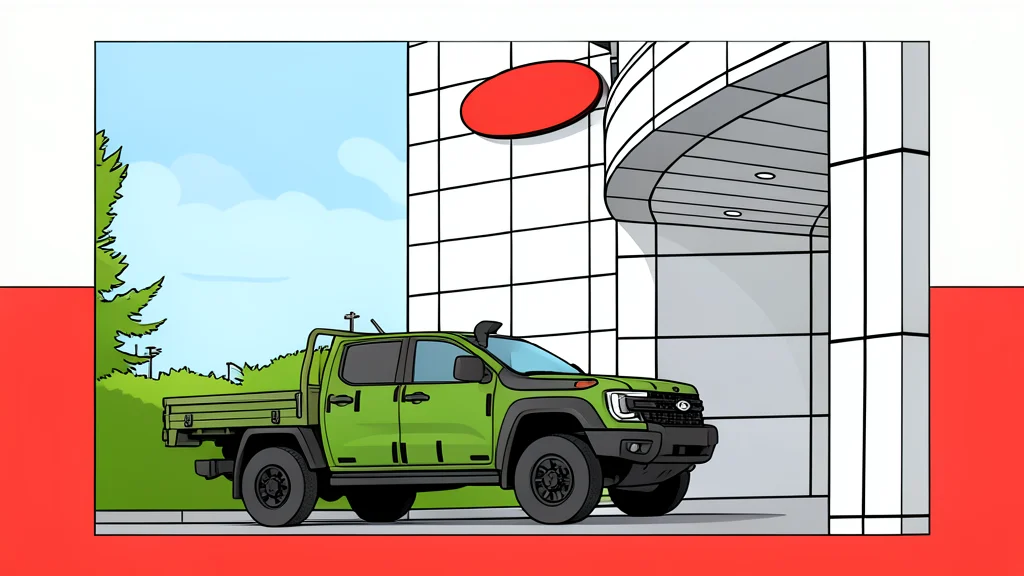
Ford Motor Company is leading this charge in the United Kingdom, where its Dagenham plant is positioning itself for a significant defense opportunity. The automaker is part of a joint venture with General Dynamics and Ricardo, bidding to supply 9,000 vehicles to the Ministry of Defence over the next five to seven years. This contract would replace the Army’s ageing Land Rover-based fleet, allowing Ford to deploy its robust Ranger-based pickup trucks for military use.
Lisa Brankin, chair of Ford UK, described the situation as a chance to demonstrate the company's ability to respond rapidly to urgent security needs. For the 2,000 employees at the Dagenham facility, which currently produces half the engines it did a decade ago, this potential contract represents a crucial opportunity to stabilize employment and maintain industrial relevance in a challenging economic climate.
Wider Industry Shift to Defense Production
Ford is not alone in this strategic realignment. Renault has signed a strategic agreement with Thales to produce military drones, targeting an output of up to 1,000 units per month. By leveraging its mass-production capabilities, the French automaker aims to bypass traditional, slower defense supply chains. Similarly, Volkswagen has agreed to sell an under-used factory in Osnabruck, Germany, to an Israeli-based defense investor, converting the site into a military manufacturing hub.
Jaguar Land Rover is also actively bidding for the same UK military contract and has established a dedicated business unit to support its global military ambitions. Mike Hawes of the Society for Motor Manufacturers and Traders noted that shifting under-utilized auto capacity to defense is a logical step for a supply chain that is highly vulnerable and reliant on a small number of major manufacturers.
Historical Precedent for Industrial Conversion
The current pivot echoes historical patterns from the mid-20th century. During World War Two, Ford’s Dagenham plant became the largest car facility in Europe, ceasing civilian assembly to produce 360,000 vehicles for the Allied war effort between 1939 and 1945. Workers in Manchester also manufactured 34,000 Merlin engines for fighter planes, demonstrating the sector’s capacity to reorient toward national security needs when required.
Today, with Europe committed to spending hundreds of billions on defense due to geopolitical tensions, auto makers are hoping to replicate that industrial mobilization on a smaller scale. However, the question remains whether this shift can fully reverse what suppliers describe as a terminal decline in the traditional automotive market, or if it merely serves as a temporary buffer against structural obsolescence.