Finland Bids for UN Security Council Seat in 2029
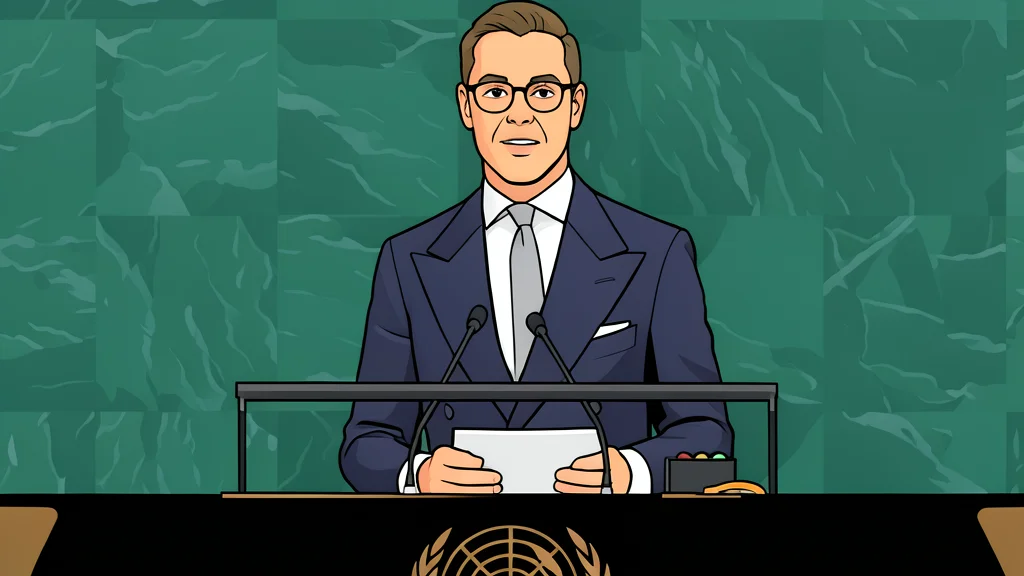
President Stubb calls for Security Council reform and new cooperation as Finland launches its bid for a non-permanent seat.
Key points
- Finland has launched a bid for a non-permanent UN Security Council seat for the 2029–2030 term.
- President Stubb proposed adding five new seats for developing regions and eliminating veto rights.
- The proposal includes suspending voting rights for members who violate the UN Charter.
President Alexander Stubb has formally launched Finland’s campaign to secure a non-permanent seat on the United Nations Security Council for the 2029–2030 term. Speaking at the 81st UN General Assembly in New York, the Finnish leader framed the global political landscape as a binary choice between cooperative engagement and conflict, urging world leaders to recommit to international law.
According to the Helsinki Times, Stubb’s address emphasized that while interstate competition is inevitable, the abandonment of shared rules threatens the stability of the international system. He argued that the current climate of distrust and weakening institutions requires a renewed focus on humanitarian principles and restraint in political rhetoric to prevent further fragmentation of global governance.
Proposals for Council Restructuring
Central to Finland’s candidacy is a detailed plan for reforming the Security Council’s structure and decision-making processes. Stubb proposed expanding the body by adding at least two seats for African nations, two for Asian countries, and one for Latin America. He also called for the elimination of veto rights, arguing that the current system allows individual members to block collective action on critical issues.
Furthermore, the president suggested a mechanism to temporarily suspend the voting rights of any Security Council member found to be in violation of the UN Charter. These measures aim to restore the legitimacy and effectiveness of the Council, which Stubb described as essential for addressing contemporary threats to peace and security.
Diplomatic Context and Competing Narratives
Stubb’s call for multilateralism occurred against a backdrop of significant diplomatic tension. President Donald Trump used his own address to threaten further action against Iran, while simultaneously urging UN member states to leave the International Criminal Court. Conversely, outgoing Secretary-General António Guterres warned that the scale of destruction in Gaza and expansion of settlements in the West Bank are eroding the prospects for a two-state solution.
The assembly also featured strong condemnations of Israel’s actions in Gaza by Turkish President Recep Tayyip Erdogan and Jordan’s King Abdullah II, who accused the international community of failing to enforce legal standards. Meanwhile, Guterres reaffirmed that Russia’s invasion of Ukraine constitutes a violation of the UN Charter, highlighting the competing narratives that currently dominate the General Assembly floor.
Seeking a New Global Consensus
In a concluding reference to the 1945 San Francisco conference, Stubb proposed a "new San Francisco moment" to renew global commitment to international principles. He suggested that the next UN Secretary-General should lead a process to bring governments together for this purpose, aiming to shift resources toward conflict prevention and human rights protections.
Finland’s bid reflects a broader strategy to increase its influence within the UN while maintaining support for Ukraine and partnership frameworks. As the General Assembly debates the role of artificial intelligence and the limits of military force, the next steps will likely involve formal diplomatic consultations to gauge international support for Finland’s candidacy and its specific reform proposals.