Georgia’s New Civility Laws Threaten Free Speech
Georgian authorities are leveraging new administrative codes to penalize online dissent, raising concerns about the erosion of democratic freedoms in Tbilisi.
Tbilisi, Georgia — A local business owner recently faced judicial consequences for a personal social media post that included profanity directed at the ruling party. According to reports, Zurab Chitaia was fined approximately $1,100 by a judge in Tbilisi after prosecutors deemed his online comments a violation of public order. The case highlights a growing trend in which the Georgian government utilizes new administrative regulations to police speech, even in the absence of a specific complaint from an individual victim.
This incident is part of a broader legal framework adopted in February, which amends Soviet-era codes to punish verbal insults and swearing directed at political officeholders and civil servants. Critics argue that these measures transform courts into instruments of speech control, creating a chilling effect on political discourse. As described by Foreign Policy, the state is employing the language of civility as a mechanism to suppress criticism, effectively criminalizing dissent under the guise of maintaining social order.
Legal Framework Targets Political Dissent
The parliamentary amendments introduced in early 2024 established specific penalties for offensive acts against public officials. A first offense can result in fines ranging from 1,500 to 4,000 Georgian lari or up to 45 days of administrative detention. Repeat offenses carry significantly heavier consequences, including fines up to 6,000 lari or detention periods of five to 60 days. Investigators from the interior ministry have been active in identifying such posts, writing up charges without waiting for formal complaints from the alleged targets.
Chitaia described the legal process as bureaucratic theater, questioning whether the use of curse words on Facebook constitutes a criminal act when no specific individual is insulted. The rapid adjudication of his case suggests a streamlined procedure for enforcing these new norms. This approach allows the state to bypass traditional libel or insult laws, which typically require a private claimant, and instead treat all political profanity as a matter of state security and public order.
Context of Democratic Backsliding
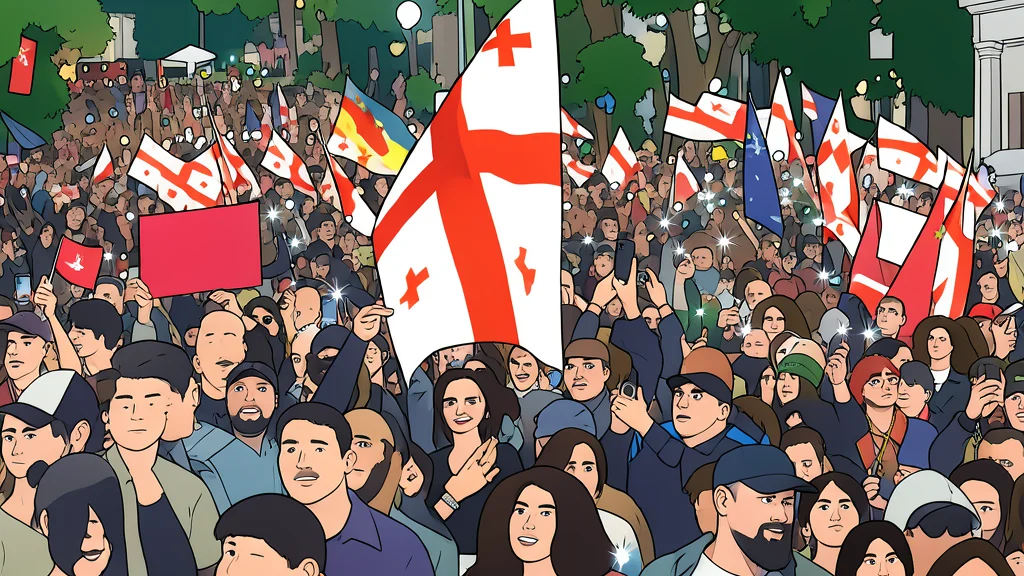
These speech restrictions form one layer of a wider pattern of democratic erosion in Georgia. Since the disputed parliamentary election in October 2024 and the subsequent suspension of European Union accession talks, the political landscape has become increasingly volatile. Tens of thousands of citizens have protested, while activists, journalists, and opposition politicians have faced detention, fines, or criminal prosecution. Dozens of protest participants have received prison sentences, and major opposition leaders have been jailed or pushed into exile.
Violence against opposition figures by masked groups has further destabilized the environment, with investigations often yielding little accountability. The ruling Georgian Dream party has also moved toward banning rival political parties. In this context, the policing of online speech serves as a tool to fragment opposition coordination and intimidate critics who might otherwise organize resistance through digital channels. The state maintains an appearance of democracy while systematically dismantling the mechanisms that allow for genuine political contestation.
Backlash and Unintended Consequences
The government’s attempts to police online speech have occasionally produced counterproductive results. In one notable instance, the interior ministry brought an administrative case against a blogger for swearing at Kremlin propagandists. Rather than silencing the blogger, the move sparked a wave of similar posts from ordinary citizens daring the authorities to prosecute them all. This reaction underscores the difficulty of managing public sentiment through legal coercion alone, especially when the public perceives the actions as illegitimate or politically motivated.
As the interior ministry continues to add new enforcement mechanisms, the tension between state authority and civil liberties remains acute. The next months will likely see further testing of these legal boundaries, with potential escalations in both state enforcement and public resistance. Observers will watch closely to see if international pressure can influence domestic policy or if the trend toward authoritarian consolidation continues to deepen within the legal system.