Germany's Gas Storage at 57% Amid Rising Winter Concerns
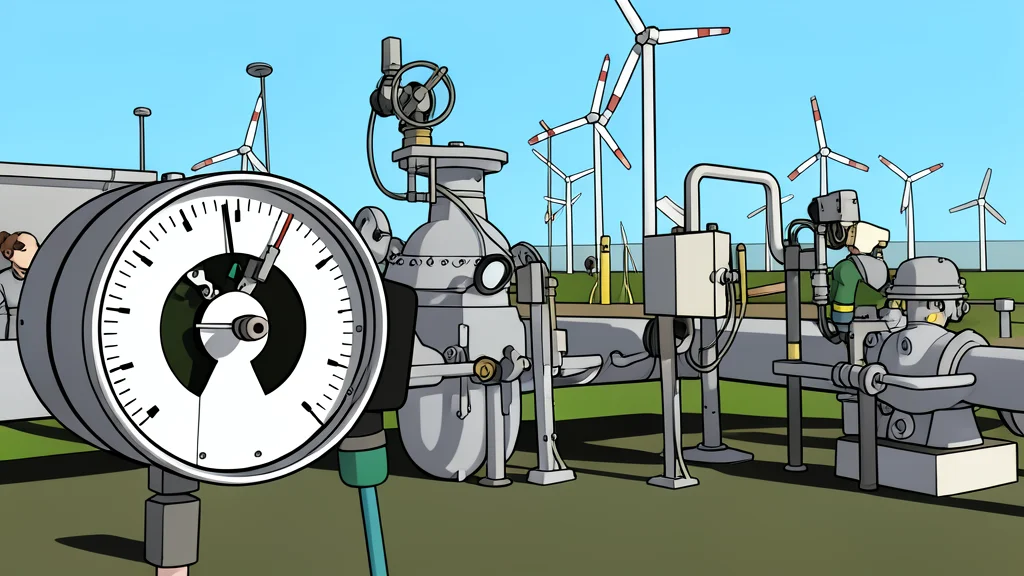
German gas storage levels lag behind recent years, prompting political debate despite official assurances that supply security remains stable.
Key points
- Germany's gas storage stands at 57% capacity, lower than previous years despite official assurances of supply security.
- Gas prices have surged from €46 to over €80 per megawatt-hour as the heating season approaches.
- Regulators and industry leaders cite diversified import routes and long-term contracts as key factors maintaining stability.
As autumn settles over Europe, Germany finds itself navigating a more delicate energy balance than in previous years. With gas storage levels sitting at approximately 57% of total capacity as of mid-September, the country faces a winter that requires careful management. While officials maintain that the supply situation is secure, the lower fill rate has sparked a debate among politicians and industry analysts about potential vulnerabilities.
The discussion has gained traction in Berlin, where regional leaders and opposition parties have raised alarms about the pace of storage filling. These concerns are not unfounded, given that gas prices have already begun to climb significantly ahead of the heating season. However, the broader context of diversified import routes and long-term contracts suggests that the risk of a supply crunch remains low, according to key regulatory bodies.
Storage levels lag behind recent norms
According to the Federal Network Agency, Germany currently holds about 141 terawatt-hours of gas, a figure that is technically sufficient but lower than the levels recorded during the same period in recent years. The agency noted that last winter saw the withdrawal of just under 134 terawatt-hours, a demand level that was manageable despite cold conditions. However, the current trajectory of filling has drawn criticism, with Bavarian Premier Markus Söder calling for federal intervention to ensure adequate reserves.
Political scrutiny has intensified in recent weeks. Britta Hasselmann, co-leader of the Greens' parliamentary group, accused the economy minister of negligence, stating that the facilities are not full enough to guarantee comfort for all consumers. This political pressure contrasts with the technical assessments provided by industry operators, who note that while it is possible to reach higher fill levels, the current rate of intake has slowed significantly in the past few weeks.
Officials cite robust infrastructure and contracts
Despite the political noise, the German government and regulatory agencies present a calm assessment of the situation. Nadia Affani, a spokesperson for the Federal Network Agency, told Deutsche Welle that the agency continues to assess the risk of a gas supply crunch as low. She emphasized that security of supply is currently guaranteed, citing the stability of the overall system rather than just the instantaneous storage percentage.
Industry experts support this view by pointing to the structural changes in Germany's energy landscape since 2022. Charlie Grüneberg, spokesperson for the German Gas and Hydrogen Industry association, highlighted that the country is no longer dependent on a single importer. He noted that investments in LNG terminals, new import routes, and reverse-flow capabilities have made the infrastructure significantly more robust. For most consumers and businesses, long-term contracts with reliable suppliers ensure that agreed-upon quantities will be delivered, mitigating the impact of short-term storage fluctuations.
Price volatility reflects market caution
While physical supply appears secure, the economic signals are more volatile. Gas prices on the futures market have risen from approximately €46 per megawatt-hour in the second quarter to over €80 recently. Sebastian Heinermann, managing director of the INES association, indicated that this price increase reflects market caution rather than an immediate physical shortage. He warned that if the current filling trend continues unchanged, storage levels may only reach about 65% by November 1, which is below the technical potential of 77%.
Analysts suggest that the next few weeks are critical for stabilizing the market. Olaf Geyer of Arthur D. Little noted that while there is no immediate supply problem, a colder-than-average winter or disruptions on the import side could exacerbate price pressures. The forward question now turns to whether the final push of autumn filling will accelerate, and how the broader European market reacts to shifting demand patterns. For now, the consensus remains that the system is resilient, but vigilance is required through the winter months.