Lithuania Votes to Lift Nuclear and Base Constitutional Ban
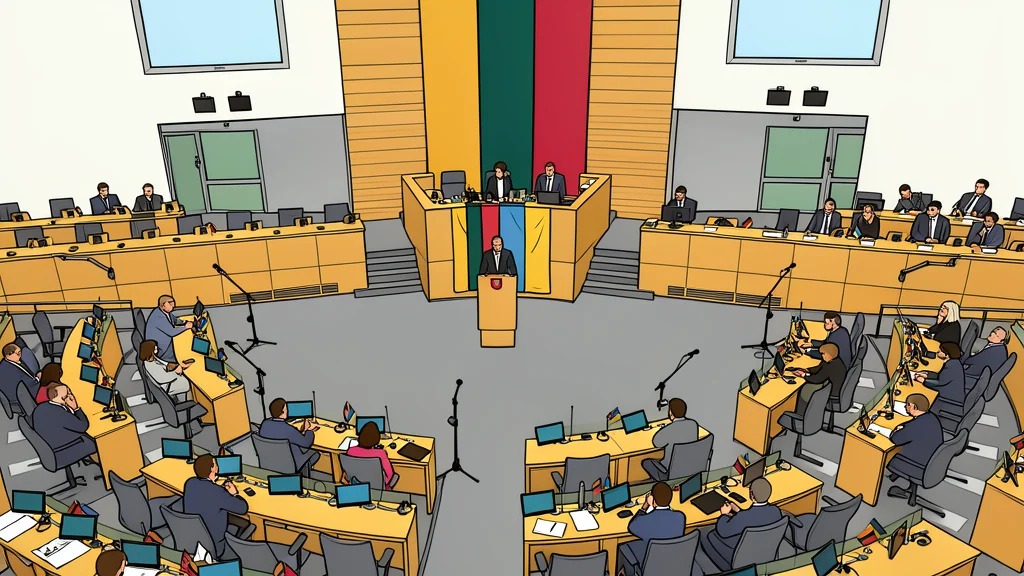
The Lithuanian Seimas approved the first step to remove legal barriers allowing foreign troops and nuclear arms.
Key points
- Lithuanian parliament approved 99-42 to start removing the ban on foreign bases and nuclear weapons.
- The amendment requires two more votes, each needing at least 94 votes, within three months to pass.
- Opposition leaders warn the change could be used by Russia and Belarus for propaganda purposes.
Lithuania’s parliament has advanced a significant constitutional change that would remove the current legal prohibition against hosting foreign military bases and nuclear weapons. On Tuesday, the Seimas voted to eliminate Article 137 of the constitution, a move that opens the door for NATO allies to deploy such assets on Lithuanian soil.
According to the report by Demócrata, the measure received support from 99 of the 141 members of the lower house. This initial approval is part of a multi-step process; the amendment now requires ratification in two further votes within a three-month window, with each session demanding a minimum of 94 affirmative votes to pass.
Political opposition cites security risks
Critics within the opposition have raised concerns about the strategic implications of the change. Remigijus Zemaitaitis, the leader of the Dawn of Nemunas party, argued that the constitutional clause can only be altered through a referendum. He warned that both Russia and Belarus could exploit the decision for propaganda purposes, labeling the move as unnecessary in the current geopolitical climate.
Other opponents have focused specifically on the removal of restrictions regarding foreign bases. They note that while the United States has confirmed it will maintain a military presence in Lithuania, the scale of that deployment is expected to be reduced compared to previous periods. This nuance has fueled debate over whether the constitutional shift aligns with actual defense planning or serves a broader symbolic purpose.
Alignment with regional defense shifts
Vilnius is aligning its legal framework with neighboring states that have already adjusted their legislation in response to perceived threats from Russia. Finland, for instance, modified its laws to facilitate similar defense arrangements. This shift is seen as part of a broader recalibration of Baltic security policies in response to changing regional dynamics.
The proposal also follows recent diplomatic discussions in Europe, including French President Emmanuel Macron’s defense of a European nuclear deterrence plan. That concept involves allowing NATO allies to temporarily deploy nuclear armaments on their territories, suggesting a wider European trend toward greater strategic flexibility.
Next steps in ratification process
The path forward requires strict adherence to parliamentary procedure. The amendment must secure the required supermajority in two subsequent sessions. Failure to achieve the 94-vote threshold in either round will stall the reform, leaving the constitutional ban on foreign bases and nuclear weapons intact.