Russia Tests Arctic Satellite Voting Amid NATO Tensions
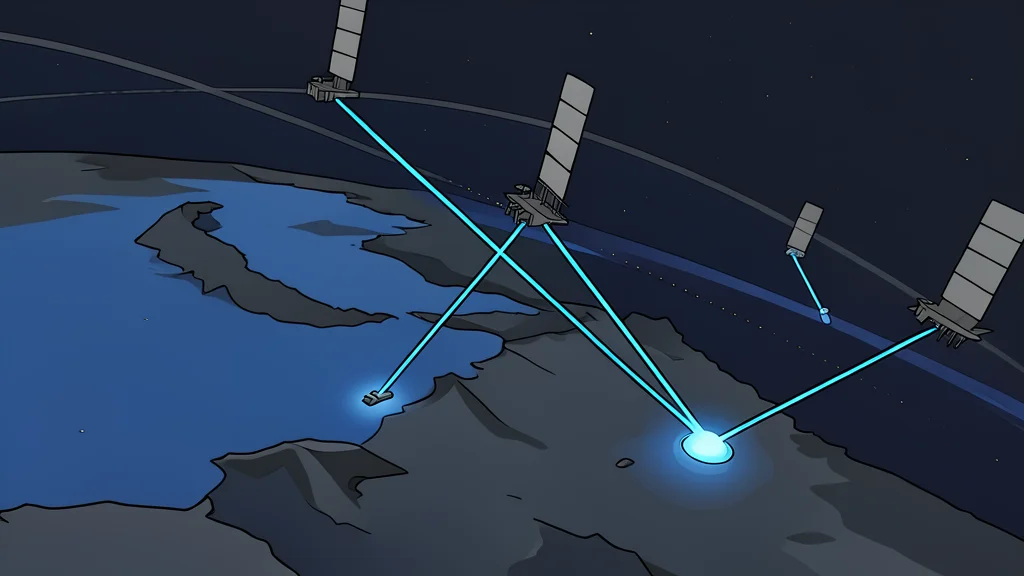
Russian authorities report successful trials of a low-Earth orbit satellite network for remote electronic voting in the Arctic, a development occurring against a backdrop of heightened military competition with NATO allies.
Russian officials have reported the successful completion of a satellite communications test in the Arctic, a region where geopolitical tensions with NATO members have intensified in recent months. The experiment involved residents of a remote settlement in the Nenets Autonomous Okrug accessing an electronic voting platform through a direct satellite link, marking a shift from earlier technical trials conducted solely by engineers. According to Ella Pamfilova, chair of the Central Election Commission, the system functioned as intended, allowing users to connect via Wi-Fi to their tablets and transmit data to central servers.
This development is closely linked to the rapid deployment of the Rassvet low-Earth orbit constellation, managed by the state-backed Bureau 1440. The network was accelerated after reports emerged that Russian military forces had disrupted access to Starlink terminals along the front line, prompting Moscow to seek independence from external satellite providers. As noted by Мілітарний, this strategic pivot aims to ensure continuous connectivity for military and civilian applications in regions where traditional infrastructure is sparse or vulnerable to interference.
Strategic Shift in Satellite Dependence
The urgency behind the Rassvet program stems from the strategic vulnerability of relying on third-party communications during conflict. Russian units previously utilized Starlink terminals for coordination, but the potential for service disruption by foreign authorities has driven the Ministry of Defense to prioritize indigenous capabilities. By launching the first 32 satellites of the planned constellation in 2026, Russia seeks to create a self-sufficient communications layer that can support drone control, real-time data transmission, and secure military operations without external reliance.
Company officials claim the system utilizes 5G Non-Terrestrial Network technology to maintain high-speed links between satellites and ground devices. Additionally, Bureau 1440 has reported testing inter-satellite laser communications, claiming data transfer speeds of up to 10 Gbps over distances of 1,000 kilometers. While these figures are self-reported, they indicate an ambition to match or exceed the capabilities of existing commercial constellations, particularly in terms of latency and bandwidth for tactical military use.
Arctic Infrastructure and Civilian Applications
Beyond military utility, the Russian government views the satellite network as a solution for connecting hard-to-reach regions. With 37 administrative regions identified as having limited access to traditional telecommunications, the electronic voting trial serves as a proof of concept for broader digital inclusion. The Central Election Commission plans to assess whether this technology can be expanded to other remote areas, potentially integrating it into the national civil infrastructure to ensure connectivity in the far north where fiber-optic lines are impractical.
The choice of the Arctic for this specific test is significant, given the region's growing strategic importance. NATO has increased its military presence in the area, which Moscow perceives as a direct security threat. By demonstrating reliable satellite connectivity in such an environment, Russia aims to showcase both its technical prowess and its ability to maintain governance and administrative functions in contested or remote zones, reinforcing its claim to sovereignty and operational resilience in the high north.
Forward Outlook for Regional Security
As the Rassvet constellation expands, observers will likely monitor the integration of these terminals into various military platforms, including aircraft, missiles, and unmanned aerial vehicles. The potential for these satellites to provide multiple daily communications windows over Ukraine highlights their dual-use nature, blurring the lines between civilian infrastructure and military assets. The coming months may reveal how effectively Russia can sustain these links under electronic warfare conditions, a critical factor in determining the long-term viability of the network as a strategic asset.