Moscow Dismisses US Sanctions as Ineffective in Vienna
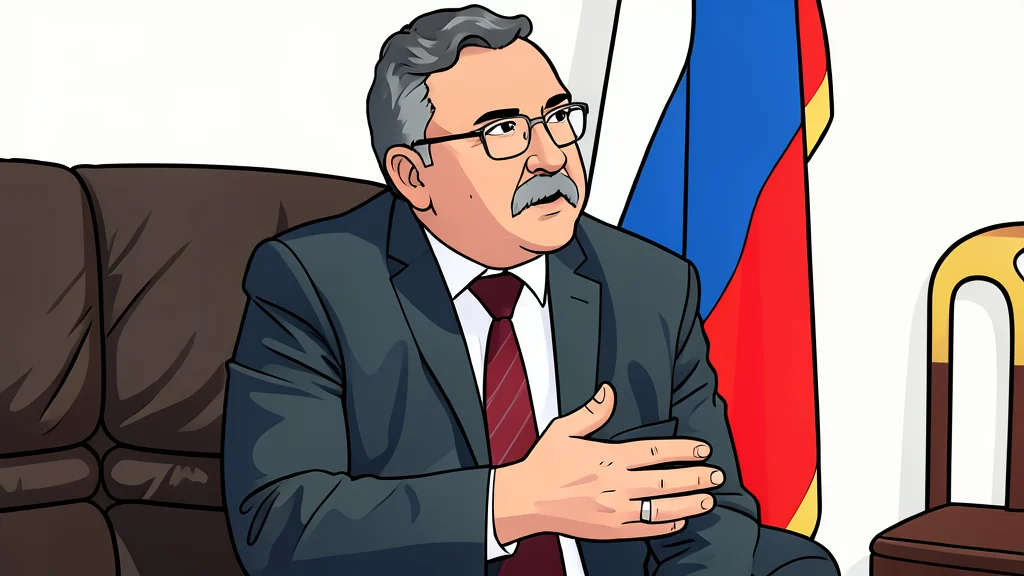
Russia's diplomatic representative in Vienna argues that historical data invalidates the efficacy of American economic restrictions, even as Washington expands legal mandates against both Moscow and Tehran.
Mikhail Ulyanov, Russia’s permanent representative to international organizations in Vienna, has publicly challenged the utility of United States economic coercion. According to statements attributed to him on social media platforms, the Kremlin’s diplomatic outpost asserts that American sanctions policy is fundamentally ineffective. This characterization comes at a time of heightened tension, following the recent signing of legislation by US President Donald Trump that extends restrictions on Iran until 2031 and broadens the scope of penalties applied to Russian officials, financial institutions, and the energy sector.
The Russian official described the outcome of these measures as a "fixed fact" established by long-term experience. By framing the issue as a matter of proven historical trajectory rather than political opinion, Ulyanov seeks to delegitimize the current enforcement mechanisms. This rhetoric aligns with broader Moscow narratives that view economic isolation as a tool that fails to alter the strategic behavior of targeted states, a stance that has been reinforced by recent legislative actions in Washington.
Legislative expansion targets key sectors
The controversy centers on new US legislation that significantly widens the net of economic penalties. The signed law does not merely maintain existing barriers but actively expands them to include specific categories of Russian entities and personnel. For Iran, the measures lock in a restrictive regime that extends well into the next decade, signaling a long-term commitment to economic containment. This dual-track approach reflects a broader US strategy to sustain pressure on both regional adversaries simultaneously, despite differing geopolitical contexts.
Diplomatic friction in Vienna context
The timing of these remarks is notable given the location of the diplomatic hub. Vienna hosts critical negotiations regarding nuclear non-proliferation and arms control, making it a focal point for US-Iran and US-Russia interactions. According to reports from the GN auto geopolitics/global: sanctions policy desk, the Russian representative’s comments serve as a preemptive defense against the anticipated impact of the new laws. By asserting that the policies are useless, Moscow aims to reduce the perceived diplomatic leverage that Washington believes it holds.
Strategic implications for future enforcement
As the US moves to enforce these expanded sanctions, the effectiveness of the measures will likely be tested through third-party compliance and financial evasion tactics. The Russian assertion that these tools are obsolete suggests that Moscow believes it has developed sufficient resilience or alternative pathways to mitigate economic damage. Observers will now watch for the immediate financial responses from Russian banks and energy firms, as well as any retaliatory diplomatic steps from Moscow in upcoming multilateral forums.