Ukraine Marginalized in Republican Midterm Convention Discourse
While the Republican Party focused on domestic agendas in Dallas, offstage conversations revealed deep divisions over U.S. support for Ukraine and the complexities of ongoing peace negotiations.
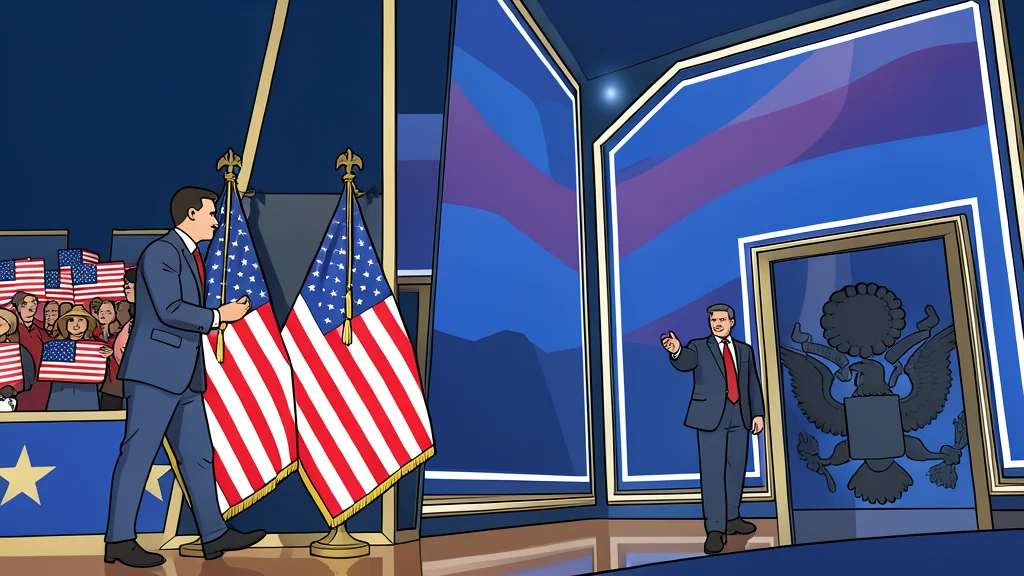
The first-ever national midterm convention of the U.S. Republican Party concluded in Dallas with a sharp focus on domestic policy and the incumbent president's agenda. Neither President Donald Trump nor Vice President JD Vance dedicated significant airtime to the war in Ukraine during their keynote addresses. The official program, which featured more than 100 speakers, prioritized internal party mobilization ahead of the November elections, leaving the conflict in Europe largely off the main stage.
However, the absence of the war from the formal proceedings did not silence the debate among party members. According to the Kyiv Independent, conversations among lawmakers, activists, and voters in Dallas revealed a spectrum of opinions ranging from urgent calls for increased weapons shipments to demands for a complete cessation of U.S. aid. This disconnect between the official platform and the grassroots sentiment highlights the ongoing tension within the party regarding foreign policy priorities.
Election Cycles Complicate Foreign Policy
Louisiana State Senator Michael Fesi noted that the timing of midterm elections creates structural barriers to resolving complex international issues. He argued that the political necessity of campaigning often hinders the time and political capital required to address long-term global conflicts. This perspective suggests that the war in Ukraine is being treated as a secondary issue, overshadowed by the immediate demands of domestic voter engagement.
The convention took place shortly after a series of high-level diplomatic maneuvers. U.S. envoys Steve Witkoff and Jared Kushner traveled to Moscow to meet with Russian President Vladimir Putin before heading to Kyiv to discuss peace negotiations with President Volodymyr Zelensky. These visits occurred just days before the Republican gathering, underscoring the active diplomatic track running parallel to the political rally.
Contested Narratives on Trust and Peace
Views on the viability of peace talks varied sharply among those present in Dallas. Some attendees expressed a desire for an end to the conflict, emphasizing the humanitarian cost of continued warfare. In contrast, influential figures like Laura Loomer cited recent military incidents to argue that Russian leadership cannot be trusted. Loomer pointed to reports of strikes near Ukrainian airports during a supposed pause in attacks, characterizing the Russian government as unreliable and hostile.
According to reports, a temporary agreement had been reached to cease attacks on both capitals during the envoys' visit. However, the Ukrainian military administration issued an air raid alert on September 7, citing Russian drones flying toward Kyiv. This incident fueled skepticism among some Republicans, who believe that diplomatic efforts are undermined by continued Russian aggression, while others maintain that negotiation remains the only viable path forward.
Air Defense Resources Remain Limited
A central point of contention in the offstage discussions was the availability of U.S.-made Patriot air defense systems. Ukraine has repeatedly identified these systems as a critical need to counter massed drone and missile strikes. While many Republicans expressed support for providing additional air defense capabilities, they acknowledged logistical constraints. Several noted that the U.S. inventory is limited and must be balanced against other global commitments, including security concerns in the Middle East.
The debate over resource allocation reflects a broader challenge in U.S. foreign policy: how to sustain support for Ukraine without overextending military and economic resources. As the party looks toward the November elections, the question of how to balance domestic priorities with international security obligations remains unresolved. The forward focus now shifts to whether diplomatic progress in Kyiv and Moscow will translate into concrete policy changes or if the issue will remain sidelined in the lead-up to the midterms.