US Confirms First On-Orbit Space Weapon Deployment
Washington has officially acknowledged the placement of defensive systems in Earth's orbit, a move that Beijing has condemned as a precursor to a dangerous militarization of the final frontier.
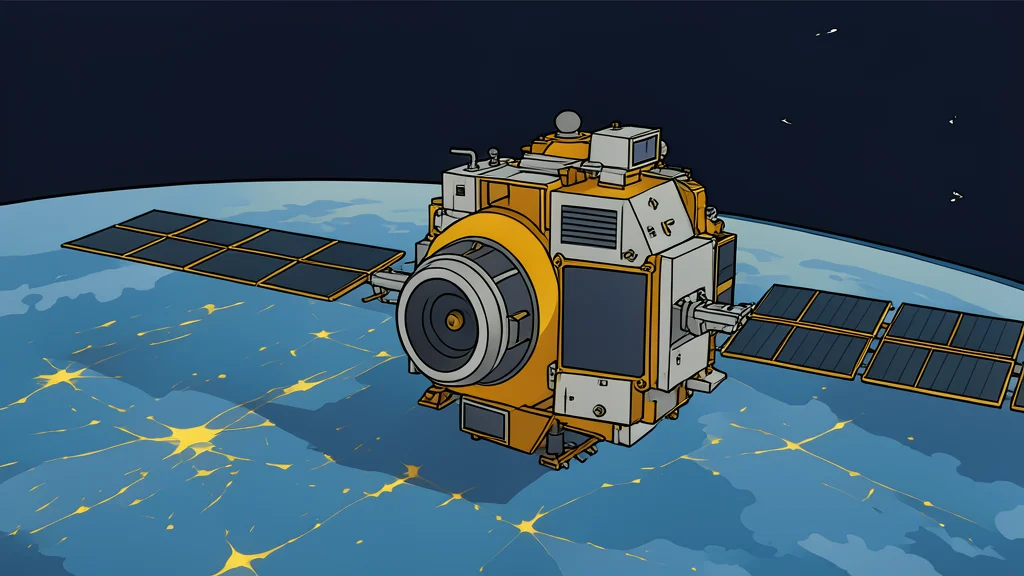
The United States has confirmed the deployment of its first on-orbit space weapon, marking a significant shift in the strategic landscape of the final frontier. U.S. Secretary of the Air Force Troy Meink announced the development at the Air, Space and Cyber Conference, stating that the capability is essential for safeguarding American forces against evolving threats. While the specific nature of the weapon and the timing of its launch remain classified, the confirmation signals a departure from previous policy stances that generally avoided the term "space weapon" in official communications.
The announcement has immediately triggered a sharp diplomatic response from Beijing. In a swift rebuttal, Chinese officials warned against the weaponization of outer space, characterizing the U.S. move as an attempt to initiate an arms race. This development underscores the growing tension between the two powers, who are increasingly viewing orbital dominance not just as a scientific achievement but as a critical component of national security and military deterrence.
Official Rationale for Orbital Defense
According to Meink, the introduction of these capabilities is driven by the necessity to protect joint forces from hostile adversary actions. He emphasized that the space environment is critical for both military and economic security, asserting that the United States must ensure it can operate freely in that domain. The Secretary declined to provide details on the weapon's specific mechanisms or whether it has been tested, arguing that such transparency would undermine its deterrent value. This strategy of ambiguity is designed to keep potential adversaries uncertain about the exact capabilities the U.S. holds in orbit.
This shift aligns with broader plans announced by senior military leaders to enhance military capabilities in space. These plans cite concerns regarding Russian and Chinese programs that are reportedly developing methods to disrupt U.S. satellites during a conflict. By formalizing a defensive posture, the U.S. aims to counter what it perceives as a growing threat to its satellite infrastructure, which underpins everything from navigation to intelligence gathering.
Beijing’s Warning Against Militarization
China’s foreign ministry responded with strong criticism, urging the United States to stop expanding its military capabilities in outer space. Guo Jiakun, a spokesperson for the ministry, warned against turning the cosmos into a battlefield and accused Washington of preparing for war in the space domain. The diplomatic friction highlights a fundamental disagreement over the legal and ethical boundaries of space exploration and utilization, with Beijing advocating for the peaceful use of outer space while Washington prioritizes operational readiness and defense.
The tension is further compounded by ongoing concerns about Chinese satellite activities. According to analysts at the Center for Strategic and International Studies, China continues to launch and operate highly maneuverable satellites that demonstrate advanced technological acumen. Open-source data suggests that these satellites have routinely maneuvered close to U.S. military assets, a behavior that Washington suspects is intended for surveillance or potential anti-satellite capabilities. This reciprocal suspicion fuels the narrative of an emerging arms race.
Broader Context of Space Threats
The U.S. decision occurs against a backdrop of increasing instability in the orbital environment. In February, it was revealed that two Russian satellites had likely intercepted communications from multiple European satellites since the invasion of Ukraine in 2022. Such actions raise the prospect that intelligence services could access sensitive data or even take control of foreign assets. These incidents reinforce the U.S. argument that the space environment is no longer a purely civilian domain but a critical theater for national security operations.
As the geopolitical stakes rise, the world watches how these developments will reshape international norms. The United States continues to lead in other aspects of the space sector, with NASA managing major exploration initiatives like the Artemis program. However, the integration of defensive weaponry into the orbital infrastructure suggests a new era where exploration and defense are inextricably linked. The next steps will likely involve further diplomatic negotiations and potentially new international treaties to govern the use of space-based military assets.