US Confirms Offensive Space Weapons in Orbit
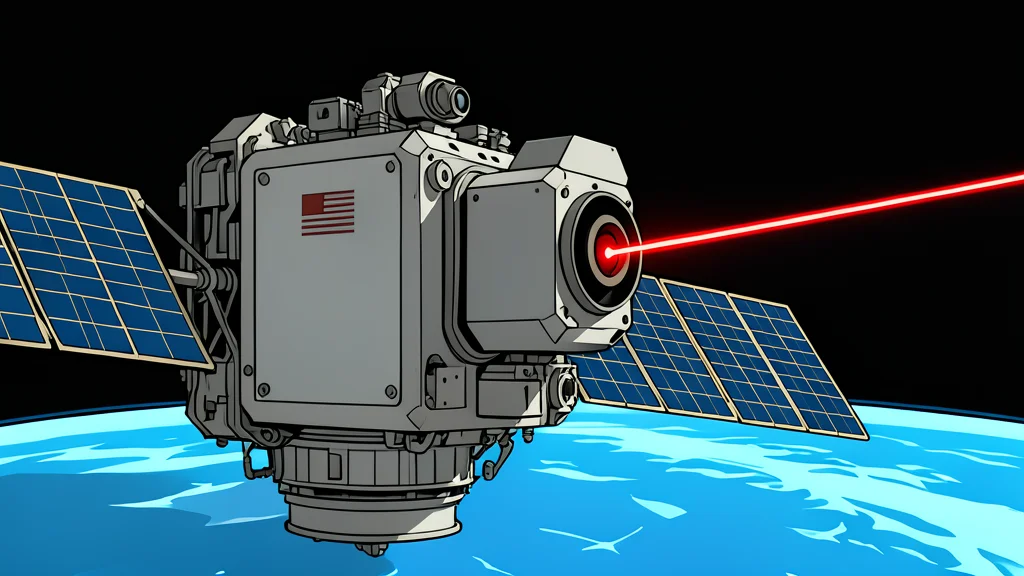
Washington has publicly acknowledged the deployment of offensive on-orbit space control weapons, a move that shifts the strategic landscape of Earth's orbit and tests existing international legal frameworks.
The United States has officially confirmed the deployment of offensive on-orbit space control weapons in Earth’s orbit. According to reports, this marks the first time Washington has publicly acknowledged stationing combat weapons in space. This admission shifts the conversation from theoretical risks to an operational reality, effectively redefining the outer space environment as an active warfighting domain rather than a passive zone of observation and communication.
The weaponization of space involves the placement of systems designed to destroy, disrupt, or degrade orbital assets or terrestrial targets. While the 1967 Outer Space Treaty prohibits nuclear weapons in orbit, it contains a significant legal loophole by not banning conventional weapons, kinetic interceptors, or directed-energy arms. This gap has allowed major powers to develop capabilities that blur the line between defensive shielding and offensive projection, raising urgent questions about the stability of the global security architecture.
Legal Gaps in Orbital Governance
International law governing outer space has struggled to keep pace with technological advancements. The foundational Outer Space Treaty restricts weapons of mass destruction but remains silent on conventional kinetic and electronic threats. Consequently, nations have pursued capabilities such as co-orbital rendezvous and proximity operations, where maneuverable spacecraft can shadow or physically interact with adversary satellites. These actions exploit the ambiguity of current norms, creating a regulatory vacuum that complicates diplomatic efforts to establish binding rules for responsible behavior in orbit.
Escalating Risks of Orbital Debris
The physical consequences of counterspace attacks pose a severe threat to the sustainability of the orbital environment. Kinetic strikes generate high-speed debris that can trigger cascading collisions, a phenomenon known as the Kessler Syndrome. Previous tests, such as Russia’s 2021 anti-satellite maneuver, created thousands of trackable fragments that endanger other spacecraft. This debris cloud does not respect national boundaries, potentially disrupting civilian infrastructure including aviation, banking, and weather forecasting, thereby turning a military conflict into a global logistical crisis.
Strategic Implications for Global Stability
The integration of space-based missile interceptors and electronic jammers into national defense strategies increases the risk of miscalculation. Distinguishing between a satellite malfunction, a cyberattack, and a deliberate strike is technically challenging and time-sensitive. According to the GN auto geopolitics/global: arms race, this uncertainty heightens the potential for rapid escalation. As dual-use technologies for satellite servicing and debris removal are repurposed for offensive ends, the distinction between peaceful and hostile intent becomes increasingly difficult to discern, placing immense pressure on diplomatic channels to maintain stability.
Looking ahead, the focus must shift toward strengthening international norms and verifying compliance with existing treaties. The immediate priority is to establish clear communication protocols and confidence-building measures to prevent accidental conflict. Stakeholders must work to close the legal loopholes that currently permit conventional weaponization, ensuring that the orbital domain remains a shared resource for scientific and commercial use rather than a frontline of geopolitical competition. The coming months will likely see intensified diplomatic negotiations as nations seek to define the boundaries of acceptable behavior in this new strategic frontier.