ICS Briefs UN Security Council on Maritime Security Risks
The International Chamber of Shipping has formally addressed the UN Security Council, urging the preservation of navigational freedom and highlighting the human cost of geopolitical tensions on global trade routes.
Thomas A. Kazakos, Secretary General of the International Chamber of Shipping (ICS), recently addressed the United Nations Security Council in New York to discuss the deteriorating state of maritime security. The briefing took place during an Arria-Formula meeting convened by the Kingdom of Bahrain and chaired by Foreign Minister Dr. Abdullatif Al Zayani. According to the ICS, the primary objective of the session was to examine the intersection of geopolitical instability and the legal frameworks governing international waters.
The discussion centered on the imperative to safeguard freedom of navigation, a principle described by Kazakos as essential for the stability of global commerce. He argued that commercial vessels must operate in a safe and predictable environment, free from arbitrary obstruction. The ICS emphasized that the current climate of heightened tensions, particularly in the Persian Gulf, poses a direct threat to the integrity of the global supply chain and the well-being of seafarers worldwide.
Strait of Hormuz as Trade Artery
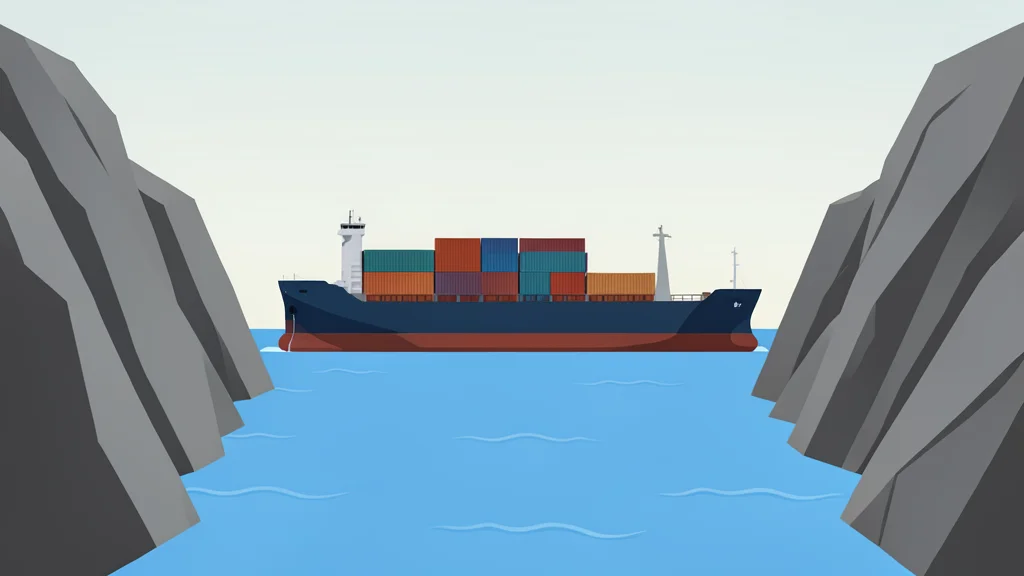
Kazakos specifically highlighted the strategic significance of the Strait of Hormuz, noting that it facilitates approximately a quarter of global seaborne oil trade, alongside significant volumes of LNG and fertilizers. He described the ongoing disruptions in this region as extraordinary, warning that such instability undermines the reliability of international shipping routes. The ICS maintained that straits are not merely geographic features but vital arteries of the global economy that require consistent protection under international law.
The Secretary General stressed that commercial shipping must not be subjected to political leverage or used as collateral damage in broader military disputes. He asserted that the right to passage is not a privilege that can be granted or withdrawn based on shifting political circumstances. Instead, he advocated for a system where merchant ships can navigate without seeking permission or tolerating arbitrary limits, a stance that seeks to reinforce the rule of law over realpolitik in maritime domains.
Protecting Civilian Seafarers from Conflict
Beyond economic concerns, the briefing drew significant attention to the human cost of maritime insecurity. Kazakos reminded the council that seafarers are civilians who transport essential goods, including food, energy, and medicines, to communities around the world. He emphasized that these workers are not participants in geopolitical conflicts and therefore should not be exposed to the risks inherent in such disputes. The ICS urged member states to prioritize the safety and well-being of these individuals, who are often overlooked in broader strategic discussions.
The organization called for a return to established norms of navigational freedom, rejecting the notion that international straits should function as toll roads or bargaining chips. This position reflects a broader industry effort to distinguish between military sovereignty and commercial necessity. By framing the issue as one of humanitarian and economic stability rather than purely strategic competition, the ICS sought to build a consensus among Security Council members on the need for robust protective measures.
Diplomatic Engagement and Future Cooperation
The Arria-Formula format provided a platform for direct dialogue between industry representatives and UN Security Council members, allowing for a nuanced exchange on policy implications. The ICS expressed appreciation for the opportunity to brief the council and reaffirmed its commitment to cooperating with governments and international organizations. This engagement underscores the growing recognition that maritime security is a multidimensional challenge requiring coordinated diplomatic and operational responses from the global community.
As geopolitical tensions continue to evolve, the focus remains on maintaining the flow of goods and people through critical chokepoints. The ICS’s intervention highlights the urgency of establishing clear protocols that protect civilian shipping while respecting national security interests. Moving forward, observers will likely watch for specific policy measures or resolutions that emerge from these discussions, particularly regarding the legal status of commercial passage in contested waters.