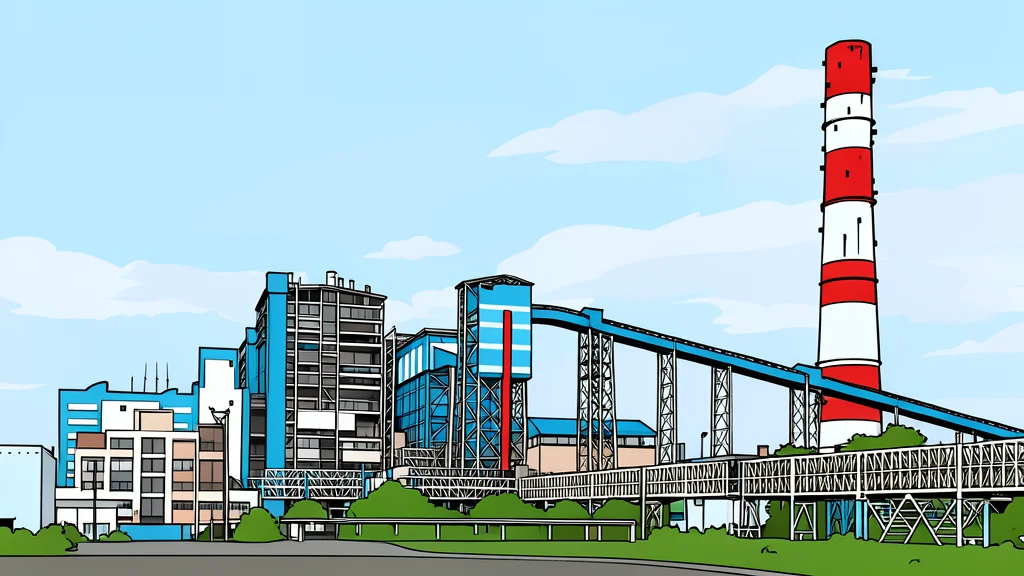
Trump Loses Bid to Keep Michigan Coal Plant Operational

The D.C. Circuit Court has invalidated the emergency order forcing the J.H. Campbell plant to stay open, saving Michigan $135 million in 2025.
The U.S. Court of Appeals for the District of Columbia Circuit has ruled against the Trump administration, overturning an emergency order that mandated the continued operation of the J.H. Campbell coal-fired power plant in Michigan. The decision invalidates the Department of Energy’s directive, which had sought to block the plant’s scheduled decommissioning despite prior congressional authorization for its closure. This legal defeat removes a significant federal obstacle to the state’s energy transition plans.
The ruling directly impacts the financial and operational trajectory of Michigan’s power sector. State officials estimate that keeping the facility open incurred costs of at least $135 million in 2025 alone. By reversing the plant’s planned retirement, the administration’s intervention disrupted long-term infrastructure planning, creating a scenario where high-cost coal generation remained in the mix rather than being replaced by more efficient renewable sources, as detailed in reports from GN auto stocks/utilities: power plant.
Court Rejects Emergency Power Statute
Judge Cornelia Pillard, writing for a unanimous three-judge panel, determined that the Department of Energy misapplied the Federal Power Act. The statute permits emergency generation orders only during wartime or specific supply shortages, conditions the court found absent in the current market. The panel emphasized that the law was designed as a narrow, last-resort backstop for genuine crises, not as a tool for general energy policy intervention.
The judges noted that the legislation originated from World War I-era power shortages and does not support the administration’s broader use of this authority. By forcing the plant to remain operational without a qualifying emergency, the government exceeded its statutory limits. This legal interpretation constrains the Department of Energy’s ability to compel electricity generation outside of defined, exceptional circumstances.
Coal Costs Outpace Alternatives
Economic data highlights the financial inefficiency of maintaining the coal facility. According to the Pennsylvania State University Institute of Energy and the Environment, coal energy costs remain two to three times higher than alternative energy sources. This cost disparity persisted despite federal efforts to support fossil fuel production and cut environmental regulations. The financial burden on the state underscores the economic unsustainability of keeping high-cost infrastructure online.
The administration’s strategy, which framed coal plants as essential for jobs and energy dominance, has faced significant legal and economic headwinds. The court’s decision reinforces that market forces and state-level planning take precedence over federal emergency powers in the absence of a crisis. This outcome affects the broader energy sector by validating the retirement of older, less efficient plants.
Broader Legal Battles Continue
This ruling is part of a larger legal conflict involving multiple coal-fired plants across the United States. The Department of Energy has used similar emergency powers to prevent the closure of at least six other facilities, as reported by the Associated Press. These ongoing lawsuits represent a sustained challenge to the administration’s energy agenda, with states and environmental groups arguing that federal overreach is distorting the energy market.
The Michigan case serves as a precedent for these disputes, establishing that emergency orders cannot be used to override state-approved retirement plans without a specific statutory trigger. The legal landscape for coal plant decommissioning remains uncertain as other jurisdictions await final rulings, but the D.C. Circuit’s decision provides a clear boundary on federal authority in this domain.