RWE Agrivoltaics Plant in Bedburg Combines Solar with Raspberry Crop
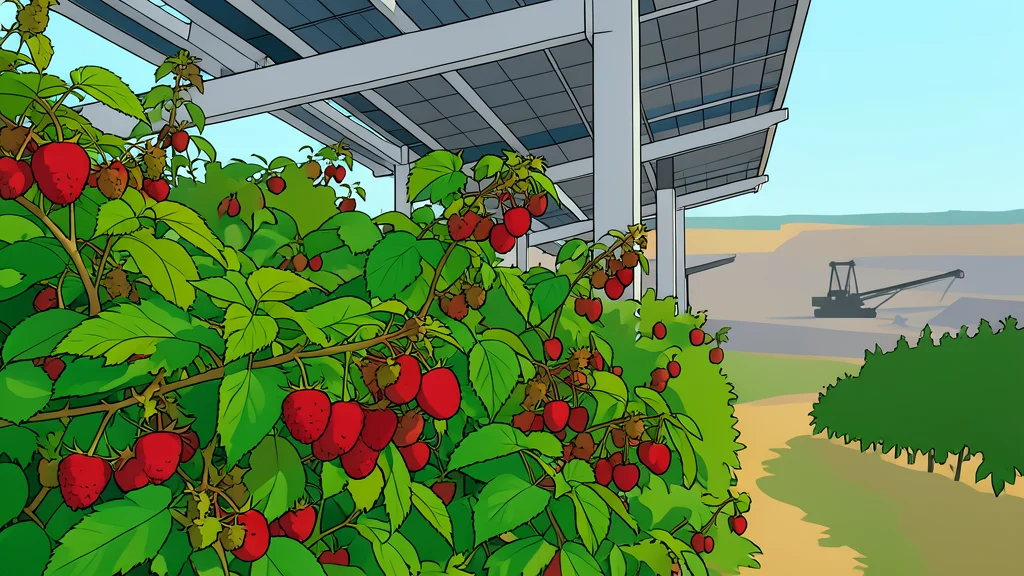
RWE operates a 3.2-megawatt solar facility in Bedburg where 6,100 panels generate power while raspberries grow beneath elevated structures.
Key points
- RWE operates a 3.2-megawatt solar plant in Bedburg featuring 6,100 panels on 17 acres of recultivated land.
- The facility uses three panel setups, including elevated structures for raspberries and vertical rows for wheat and barley.
- The project addresses land competition in Germany by combining renewable energy generation with agricultural production.
RWE has operationalized a 3.2-megawatt agrivoltaic demonstration plant in Bedburg, Germany, situated on recultivated land at the edge of the Garzweiler opencast mine. The facility utilizes 6,100 solar panels installed across nearly 17 acres to simultaneously generate electricity and support agricultural production, addressing spatial constraints that typically hinder renewable energy expansion in Europe.
The project directly tackles the competition for land resources in Germany, where over 50% of the territory is dedicated to farming. By integrating photovoltaics with crop cultivation, RWE aims to mitigate the opposition that often stalls utility-scale solar developments, thereby accelerating progress toward national climate targets without displacing essential agricultural output.
Panel configurations optimize crop compatibility
The Bedburg facility employs three distinct panel setups to evaluate energy output and crop performance. Two configurations utilize vertical, fence-like rows and motorized sunlight trackers, both tested with grain crops such as wheat and barley growing between the structures. These setups allow for standard agricultural workflows while capturing solar energy from different angles and orientations.
The third configuration features a raised, pergola-like structure designed specifically for potted raspberries. This elevated arrangement creates a shaded microclimate beneath the panels, allowing rainwater to pass through freely and providing a dual harvest of electricity and fruit. This approach demonstrates how specific crop types can thrive under solar infrastructure, offering a viable model for land-intensive agriculture.
Agrivoltaics address German land scarcity
Germany faces significant pressure to reduce greenhouse gas emissions by over 55% compared to 1990 levels, a mandate that conflicts with limited available space for new renewable infrastructure. The country’s heavy reliance on agriculture for food security has fueled resistance to large-scale solar projects, which often threaten productive farmland. Agrivoltaics offer a technical solution to this conflict by maximizing land use efficiency.
According to reports from energiesmedia.com, the Bedburg plant serves as a critical testing ground for harmonizing these competing sectors. By proving that clean power generation and food production can coexist successfully, the project provides data for scaling similar initiatives. This is essential for meeting climate regulations while maintaining the agricultural base that supports the national economy.
Technical monitoring validates dual-use potential
Technical bodies, including the Energy Institute, have tracked the performance of the Bedburg demonstration plant to gather initial data on its efficacy. The facility’s design allows for the free passage of rainwater and adequate light penetration, ensuring that crops receive necessary nutrients and sunlight while the panels generate power. This rigorous monitoring helps establish best practices for combining solar power with traditional farming methods.
The results from this 3.2-megawatt site provide valuable insights into how photovoltaics and food production can function as a unified system. By reducing the spatial footprint of energy generation, such projects can alleviate the intense competition for land resources in overcrowded European nations. The Bedburg plant stands as a practical example of achieving green capacity goals without compromising domestic food security.