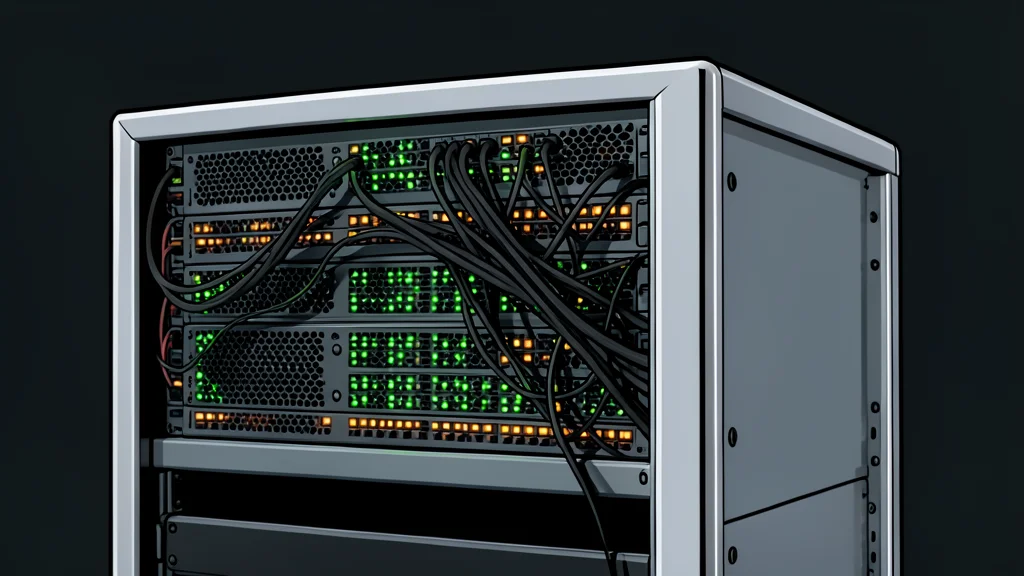
Ambarella Targets Edge AI Growth in Autos and Wearables
Ambarella is positioning its chips for a new wave of on-device AI, targeting efficiency in security, automotive, and wearable markets despite a fragmented demand landscape.
Ambarella is betting that the next wave of artificial intelligence will happen right on the device, not in the cloud. CEO Fermi Wang stated that the company is expanding its system-on-chip portfolio to meet rising demand for processing power in security cameras, vehicles, and wearables. This shift is driven by customers needing to run complex models, including large language models, directly on their hardware.
The core of this strategy is power efficiency. As devices move from simple tasks to sophisticated AI inference, battery life and heat management become critical constraints. Ambarella argues that its integrated approach, combining AI, video processing, and standard computing functions into a single chip, offers a practical advantage over general-purpose processors that consume more energy.
Efficiency Becomes the Key Metric
While high-performance GPUs are often the first choice for developers due to their ease of use, they struggle in environments with limited thermal capacity. Wang noted that for battery-powered products, such as wearables or mobile security units, the ability to perform calculations without draining the battery or overheating is the deciding factor. This makes performance per watt a more important metric than raw speed for many edge applications.
To support this, Ambarella has developed a unified software development kit that works across its range of chips. This allows developers to port applications between different hardware models with minimal code changes. The company’s portfolio spans a wide range of processing capabilities, from 1 to 1,000 TOPS, covering everything from lightweight sensors to high-end automotive systems.
Security and Automotive Lead Demand
Enterprise security remains the company’s largest market, but the role of these cameras is evolving. They are no longer just recording tools; they are becoming intelligent nodes that analyze store traffic and operational conditions in real-time. Automotive is another major sector, accounting for about 30% of revenue, as vehicles increasingly rely on on-board processing for safety and navigation features.
Wearables and robotics represent a faster-growing but earlier-stage opportunity. These sectors demand extremely efficient chips that can handle AI tasks while remaining small and cool. Although the market for these devices is currently smaller than security or automotive, it offers significant room for expansion as consumer interest in personal AI assistants grows.
Challenges in a Fragmented Market
Despite the growth potential, the edge AI market lacks a single dominant application that drives massive spending, unlike the data center sector. This fragmentation means companies must address a wide variety of use cases without the benefit of a single, massive standard workload. Competition is intense, with Qualcomm identified as the primary rival due to overlapping product offerings.
Ambarella is targeting 10% to 15% revenue growth for fiscal 2027. However, the company faces risks related to memory availability and pricing fluctuations. As reported by GN auto tech/wearables, the success of this strategy depends on maintaining its edge in power efficiency while navigating a competitive landscape where general-purpose processors continue to improve their energy profiles.