Crusoe Raises $3 Billion for AI Data Center Expansion
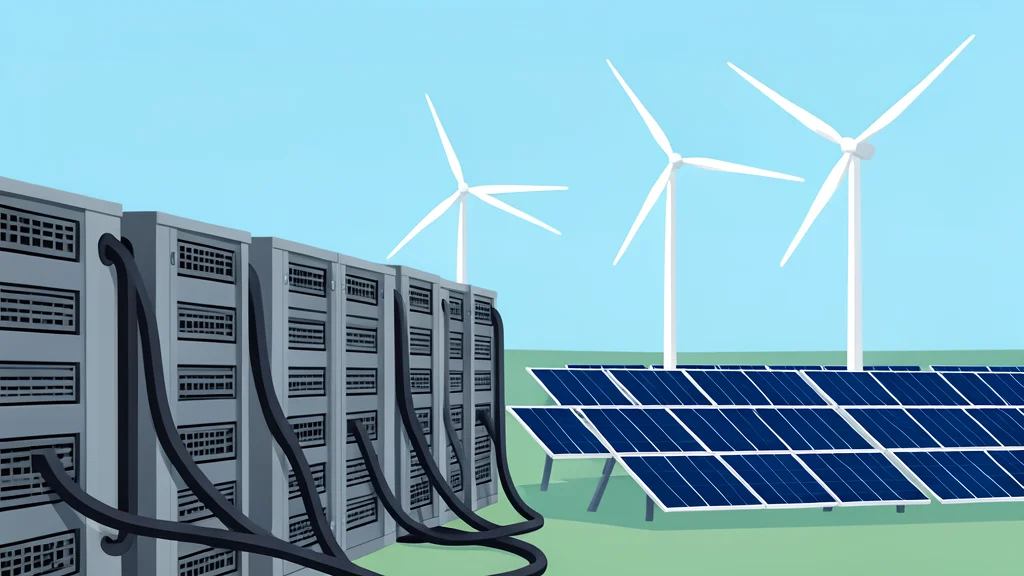
A new funding round pushes Crusoe's valuation to $30 billion, betting that energy access, not just chips, is the bottleneck for AI growth.
Crusoe has reportedly secured more than $3 billion in fresh capital, valuing the company at approximately $30 billion on a post-money basis. According to reports from Bloomberg, the round was co-led by Atreides Management and Valor Equity Partners, with participation from Mubadala Capital. Although the company had not publicly announced the deal when the news broke, the financing marks a significant leap from its previous valuation.
This latest round nearly triples the valuation Crusoe achieved in October 2025, when it raised $1.375 billion at a value exceeding $10 billion. The same investors who backed the company last year are returning with larger stakes, signaling confidence in its strategy. The move positions Crusoe as one of the most highly valued privately held infrastructure firms in the artificial intelligence sector.
Large Contracts Drive Investor Confidence
The surge in valuation is closely tied to recent commercial wins. Crusoe recently signed a five-year agreement worth roughly $13 billion with quantitative trading firm Jane Street to provide GPU and AI infrastructure. This contract is cited as a key factor in generating additional interest from investors during the latest financing round.
Beyond Jane Street, the company supplies computing capacity to major tech players including OpenAI, Microsoft, Meta, and Oracle. These agreements highlight a shift in the market, where securing reliable compute resources has become as critical as developing the models themselves. The scale of these deals suggests that demand for specialized hardware remains robust despite economic uncertainties.
Energy Becomes The Core Strategy
Founded in 2018, Crusoe originally built its business on cryptocurrency mining using flared natural gas. It has since pivoted to a vertically integrated model that spans energy sourcing, data center construction, and cloud computing services. The company argues that physical constraints, specifically power availability and data center capacity, will be the primary limits on future AI expansion.
This approach differentiates Crusoe from traditional cloud providers by controlling the entire stack, from the fuel source to the final compute output. By securing its own energy supply, the company aims to offer more stable and scalable infrastructure for customers with high energy demands. This strategy is particularly relevant as AI models grow in size and power requirements.
Scale And Pipeline Growth
Crusoe reported in June that it has contracts representing 4.9 gigawatts of computing power, with a total project pipeline exceeding 40 gigawatts. This massive pipeline reflects the rapid buildout underway across the industry. Technology companies are aggressively seeking additional power and compute capacity to train and operate increasingly complex AI models.
The scale of this expansion carries inherent trade-offs. Building such large-scale infrastructure requires significant upfront capital and long lead times, exposing the company to execution risks. However, the new funding provides the liquidity needed to continue construction. For readers, this signals a market where the physical reality of data centers is becoming just as important as the software running on them.