Doosan Bets Big on AI Hardware Supply Chain
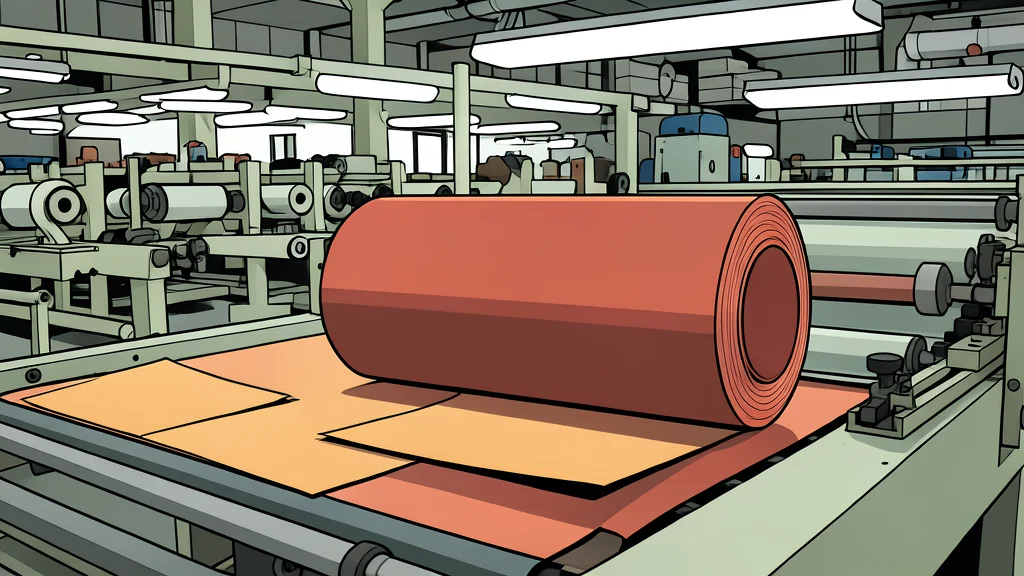
South Korea’s Doosan is pouring nearly a billion dollars into copper-clad laminate production, signaling a critical bottleneck in the global race to build AI data centers.
Doosan Group has approved its largest investment to date, allocating 970 billion won, or roughly 700 million dollars, to expand the production of a material essential for artificial intelligence infrastructure. This substrate, known as copper-clad laminate, serves as the foundation for printed circuit boards used in AI accelerators and network switches. The move comes as major technology firms announce massive data center buildouts, creating urgent demand for high-performance electronic components.
Simultaneously, the company announced it will cancel treasury shares worth approximately 3 trillion won, a shareholder return move that underscores its confidence in future cash flows. By combining aggressive capacity expansion with significant equity adjustments, Doosan is positioning itself as a central player in the physical supply chain for the AI era, leveraging decades of material science expertise to meet shifting global needs.
Split strategy across two continents
The investment is divided between South Korea and China, reflecting a nuanced approach to logistics and technology. In South Korea, 420 billion won will fund lines dedicated to optical modules, a segment where strict quality control and protection of proprietary technology are paramount. Doosan aims to retain its competitive edge in these high-value products by relying on specialized local personnel who have maintained the company’s technical standards for decades.
In China, the remaining 550 billion will go toward a new plant focused on AI accelerators and network switches. This location choice prioritizes speed and proximity to the dense cluster of global PCB manufacturers in the region. By being closer to its customers, Doosan can accelerate response times and adapt more quickly to fluctuating demand. The new lines are scheduled to begin operations in phases, with the first expected to come online in the second half of 2028.
Scarcity defines the market landscape
High-end copper-clad laminate for AI accelerators is not a commodity; it is a specialized product with a limited supplier base. The material must minimize signal loss at ultra-high speeds, a technical hurdle that only a handful of companies worldwide can overcome in mass production. Doosan’s existing South Korean facilities are already operating at over 100 percent capacity, a clear indicator that supply is tightening as AI infrastructure investment accelerates.
This scarcity has driven Doosan Electronics’ revenue past the 1 trillion won mark for the first time in 2024, with projections showing an 86 percent year-over-year increase to 1.9 trillion won in 2025. The company’s ability to supply these critical components has turned a material science advantage into a significant financial driver, validating the strategic importance of its manufacturing footprint.
Shareholder returns signal financial strength
Alongside the capital expenditure, Doosan resolved to cancel 2.56 million treasury shares, valued at roughly 2.2 billion dollars at market rates. This action reduces the total number of shares outstanding, effectively increasing the ownership stake of remaining shareholders. The decision aligns with the company’s broader policy to return capital to investors, excluding only those shares reserved for employee compensation plans.
By pairing this buyback with the massive capacity expansion, Doosan signals that it expects the heavy investment to generate substantial long-term returns. The move suggests the company views the AI hardware boom not as a temporary spike, but as a sustained structural shift that will support its financial health well into the next decade.