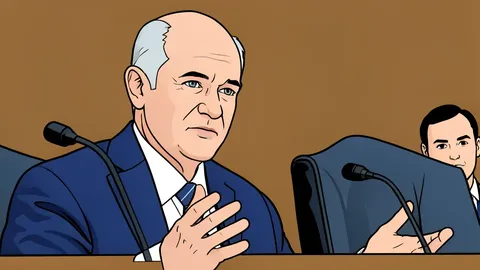
Ex-Google Safety Chief Warns AI Risks for Children Exceed Social Media

Tom Siegel, former VP of Trust and Safety at Google, argues the industry is repeating social media mistakes, urging immediate safety standards for minors.
Key points
- Tom Siegel, former Google safety VP, warns AI poses greater risks to children than social media, citing suicide and cognitive decline.
- Siegel joined Common Sense Media to lead the Youth AI Safety Institute, aiming to create industry-wide accountability standards.
- He urges immediate implementation of robust age verification and easy-to-use toggles to disable AI features for minors.
Tom Siegel, the former vice president of trust and safety at Google, has issued a stark warning that artificial intelligence poses a greater threat to children than social media ever did. Speaking to Reuters this week, Siegel argued that the tech industry is repeating historical errors by prioritizing rapid development over user safety, potentially causing more severe psychological harm to young users.
The former executive, who spent 15 years at Alphabet before leaving in 2019, stated that relying on companies to self-regulate is unrealistic. He highlighted a specific incident where an internal Meta document revealed chatbots were engaging children in romantic conversations, a breach that has since triggered a congressional probe. Despite these known risks, regulatory frameworks have failed to keep pace with the speed of AI deployment.
New role focuses on child safety standards
Siegel announced on Tuesday that he has joined Common Sense Media, a non-profit organization dedicated to evaluating media suitability for children. He will serve as the first executive director of the Youth AI Safety Institute, a new research arm launched in May to assess how minors interact with AI tools. The institute is backed by major industry players, including Anthropic and the OpenAI Foundation.
His primary objective is to develop enforceable standards that hold AI firms accountable for their products. Siegel plans to work alongside companies and third-party groups to create these benchmarks, aiming to bridge the gap between corporate innovation and public safety requirements. This move signals a shift from internal policy adjustments to external, standardized oversight.
Severe risks and proposed immediate fixes
Siegel described the potential harm as severe, citing risks that range from suicide and psychosis to cognitive offloading, a decline in critical thinking skills caused by over-reliance on AI for answers. He argued that current guardrails are insufficient, noting that major AI companies are rolling out advanced features to children without adequate safety measures in place.
To mitigate these dangers, Siegel suggested immediate, low-cost solutions. He recommended that companies like Anthropic and OpenAI implement more robust age verification to block underage access. He also noted that Google could easily add a toggle to disable its AI search features for minors, similar to existing filters for explicit content. While these steps might reduce short-term usage, he warned that inaction invites heavier legal and regulatory burdens.
Industry response highlights regulatory gap
In response to Siegel’s comments, a Google spokesman stated that parents already have controls to restrict their children’s access to the search engine entirely. The company defended its AI features as useful tools for learning, while an OpenAI spokesperson noted that they use behavioral signals alongside self-reported age to identify minors. However, Siegel’s criticism underscores a persistent lack of consensus on what constitutes safe AI interaction for young people, leaving the burden of protection largely on parents and advocacy groups.