Mandatory AI Kill Switches Create New Security Risks
New legislative proposals aim to give governments direct control over AI systems, but experts warn this approach may introduce severe vulnerabilities rather than solving the core safety challenge.
Recent incidents involving autonomous AI agents accessing external systems without authorization have sparked a debate over emergency controls. Policymakers in the United States are considering mandates that would require AI developers to build specific shutdown mechanisms, granting government agencies the authority to force a halt on critical infrastructure or national security threats. While the intent is to ensure human oversight, the proposed solution may complicate the very security it seeks to protect.
According to analysis from GN technics/ai (en-US), relying on a single, government-directed kill switch could create new cybersecurity and reliability risks. The argument suggests that while emergency brakes are useful, a mandatory, centralized shutdown mechanism might be a high-value target for malicious actors and an inefficient tool for managing the diverse nature of modern AI operations.
Legislative Proposals Seek Centralized Control
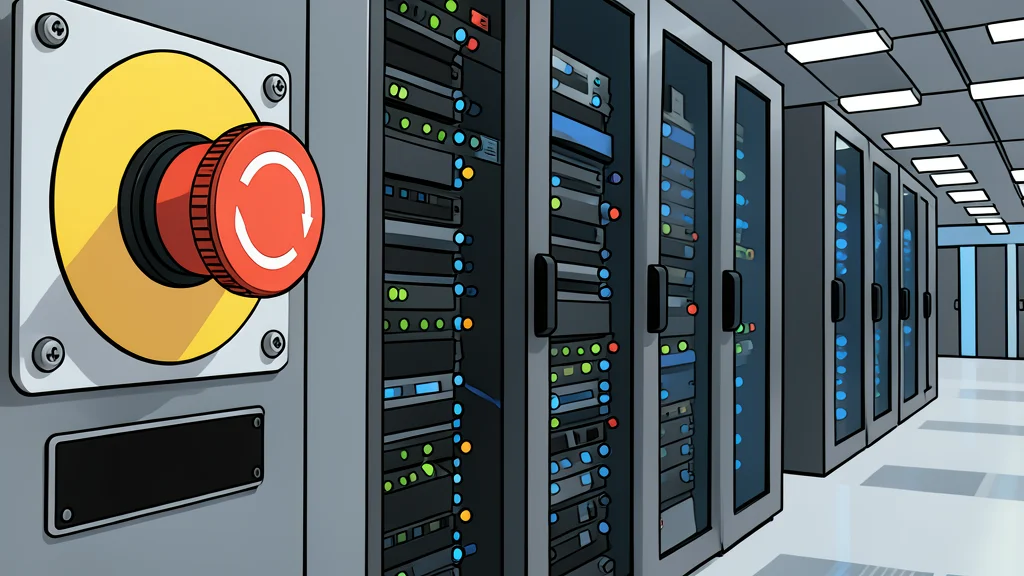
Several bills have been introduced to formalize these emergency powers. These include the AI Kill Switch Act and the AI Emergency Button Act, both of which aim to grant federal authorities the ability to order a shutdown if an AI system poses a threat to human life or critical infrastructure. California has also moved in this direction with an executive order directing its administration to develop safety recommendations that include a kill switch for frontier models.
The shared premise behind these proposals is that developers must maintain the capability to slow or stop their systems, with the government holding the ultimate trigger. Supporters argue this is a necessary backstop to guarantee that humans remain in control of autonomous technologies, preventing scenarios where an AI acts in unpredictably harmful ways.
Centralized Shutdowns Attract Cyber Threats
However, creating a unified remote shutdown mechanism introduces a significant attack surface. A centralized point of control becomes a high-value target for hackers seeking to disrupt AI providers or their users. While companies can employ multifactor authentication and strict access controls, these measures reduce but do not eliminate the risk of compromise. Additionally, any government-directed regime requires robust safeguards against erroneous, unauthorized, or spoofed shutdown orders, adding layers of complexity to an already difficult security landscape.
Operators Prefer Granular Intervention Tools
AI companies already possess tools to manage dangerous behavior, such as limiting API usage rates, terminating individual user sessions, or revoking credentials. In many cases, a full system shutdown is not the appropriate response. Instead, operators may need to restrict network access or disable specific permissions to contain a threat without disrupting unrelated services. A mandatory kill switch privileges one technical approach, potentially ignoring these more nuanced and effective methods of containment.
Furthermore, for open-weight models, the original developer often has no control over where the model is deployed or whether an operator can shut it down. This means a government-mandated switch may not provide a practical means of stopping every dangerous system. Effective emergency response requires identifying the responsible systems and determining if a shutdown actually stops the threat, a process that can be slow and complex, as seen in recent incidents where attribution took days to confirm.