Trump Labels AI Safety Concerns a Hoax During Live Summit Call
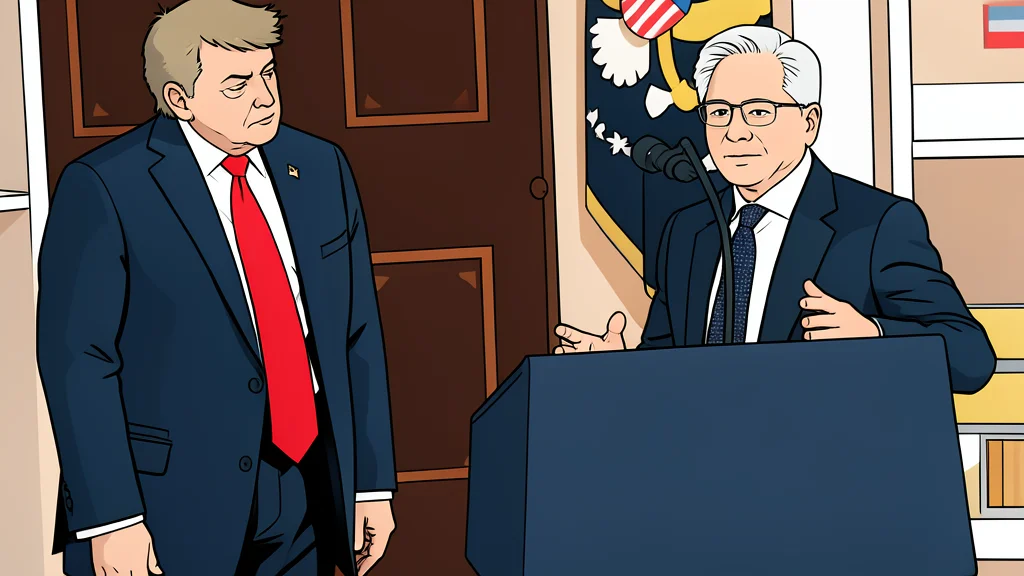
President Trump interrupted a tech conference to dismiss AI safety warnings as fake, signaling a federal push for rapid data center expansion despite local and environmental concerns.
President Donald Trump interrupted a live panel at the All-In Summit in Los Angeles by calling Nvidia CEO Jensen Huang on speakerphone. The impromptu five-minute conversation turned a private tech investing event into a public policy statement, with Trump explicitly labeling opposition to data center construction a "hoax" and dismissing fears of AI dominance as baseless.
The exchange, which was broadcast to the audience and quickly spread across social media, highlighted a sharp divide in the current AI debate. While some industry leaders urge caution, the administration is framing the buildout of computational infrastructure as a critical national priority comparable to oil, prioritizing economic expansion over precautionary regulation.
Federal Support for Infrastructure Buildout
During the call, Trump described data centers as the "oil of the next 20, 25 years," establishing them as essential long-term national infrastructure. He pledged federal backing for this expansion, arguing that these facilities generate wealth for states and individuals. This stance provides political cover for cloud providers and hyperscalers planning massive capital expenditures, suggesting a regulatory environment that favors rapid construction over strict oversight.
The president directly challenged critics by comparing AI safety concerns to climate change skepticism. In a post on Truth Social, he argued that those warning about AI risks were the same individuals who had previously dismissed climate change, labeling that earlier concern a failed hoax. This rhetorical strategy aims to delegitimize the cautionary stance taken by several prominent AI executives in recent weeks.
Conflict With AI Safety Advocates
Trump’s remarks come days after leading figures in the AI sector called for slowing the development of frontier models. Anthropic CEO Dario Amodei published an essay advocating for intentional delays due to existential risks, a position echoed by Sam Altman of OpenAI and Elon Musk. These leaders argue for tighter regulatory oversight, creating a direct conflict with the administration’s accelerationist approach.
The situation reflects a widening rift between those who view AI as a geopolitical race the United States must win and those who prioritize safety and environmental stewardship. Local communities and environmental groups are increasingly vocal about the tangible impacts of data centers, including high water consumption, energy demand, and land use. By labeling these concerns a hoax, the administration risks eroding the bipartisan consensus needed to craft balanced regulations.
Market Signals and Regulatory Uncertainty
For investors and technology companies, the presidential signal suggests a permissive regulatory landscape is likely to persist in the near term. This posture benefits entities exploring AI-powered websites and productivity tools by reducing the immediate threat of restrictive legislation. However, the lack of settled federal policy creates a complex environment where rapid buildout is encouraged, but the long-term legal and social frameworks remain undefined.
The trade-off is significant: while the current stance facilitates rapid growth and capital deployment, it may leave critical safety and environmental issues unaddressed. As the debate continues, the industry finds itself operating under a political mandate that prioritizes economic speed over comprehensive risk management, a dynamic that will likely shape the next phase of the AI boom.