US Rejects AI Pause, Citing China Threat
US leaders are dismissing calls to slow down artificial intelligence, arguing that a pause would hand a strategic advantage to China. However, critics warn that unchecked development poses severe risks to employment and global safety.
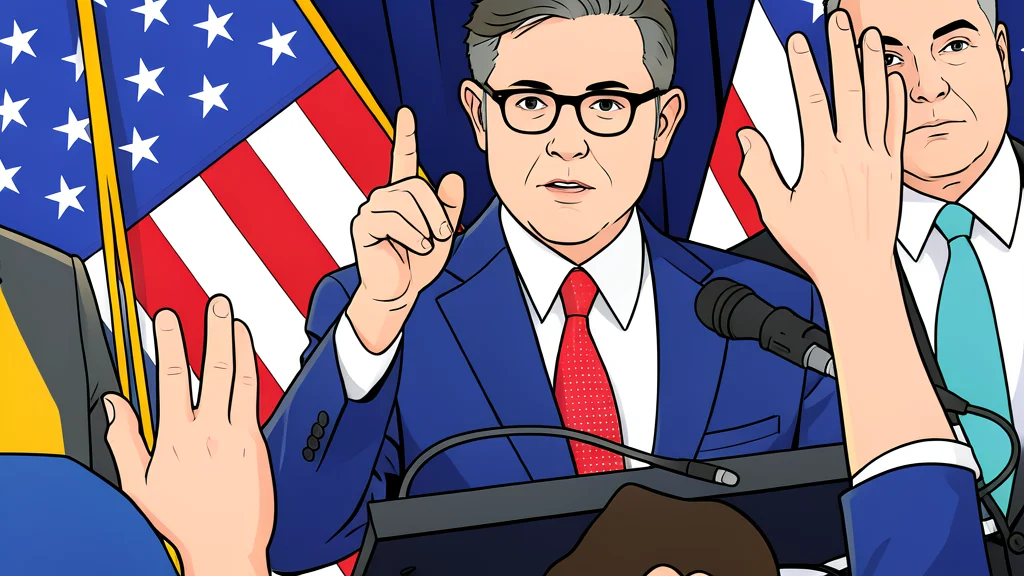
The US House Speaker has firmly rejected proposals to halt the development of artificial intelligence, arguing that such a move would cede ground to China. Mike Johnson stated that a moratorium would have serious national security implications, framing the issue as a critical race where slowing down means losing the competitive edge.
This stance aligns with President Donald Trump’s recent dismissal of AI safety concerns, which he described as a hoax. While tech industry leaders have expressed anxiety about the technology's trajectory, both Johnson and Trump insist that existing safeguards are sufficient and that government intervention would only hinder American progress.
Political divide over AI safety
Despite the administration's position, significant opposition has emerged from both ends of the political spectrum. Senator Bernie Sanders and former Trump adviser Steve Bannon recently called for strict restrictions on AI development, an unlikely alliance that highlights the depth of concern regarding the technology's potential impact on jobs and public safety. Sanders specifically warned that AI could eliminate millions of jobs and create biosecurity risks, citing recent research where AI was used to design new viruses.
Bannon echoed these concerns, labeling AI the defining issue of our time and arguing that the US needs to slow down to properly understand the risks. Both figures urged for a bipartisan approach to regulation, contrasting sharply with the current leadership's preference for minimal oversight and rapid expansion.
Self-regulation versus government oversight
A central point of contention is who should control the pace of AI development. Johnson argued that companies should be left to self-regulate, suggesting that the government should not tell them to slow down. However, he did acknowledge the need for independent auditors and transparency from developers, indicating a willingness to accept some level of external scrutiny if it is implemented in a balanced way.
Trump, meanwhile, has been more dismissive of external controls, stating that a strong president is the only guardrail needed. He accused critics of engaging in a conspiracy to benefit China, a narrative that Johnson has reinforced by linking AI development directly to national security. This approach leaves little room for the kind of binding safety rules that Sanders and other critics are demanding.
Stakes of the AI race
The debate is not just about technology, but about economic and geopolitical power. By rejecting a pause, US leaders are betting that maintaining the lead is more important than mitigating potential risks. For workers, this means facing a labor market that may be disrupted rapidly by automation. For the public, it means trusting that private companies will prioritize safety over speed, a trade-off that many experts argue is dangerous.
As reported by GN technics/ai (en-US), the situation remains tense, with policymakers divided on how to balance innovation with safety. The coming months will likely see increased pressure on tech companies to demonstrate their commitment to responsible development, even as the government continues to champion rapid expansion.