US Economy Faces Severe Risk if AI Spending Slows

President Trump is increasingly at odds with AI executives over unchecked development, driven by a concern that the US economy cannot afford a sudden slowdown in AI-driven growth.
President Donald Trump is increasingly at odds with leading AI executives over the unchecked development of the technology. This friction is not merely ideological; it stems from a deep concern that the US economy cannot absorb a sudden cooling of the AI boom. With midterm elections approaching, the president’s aggressive stance reflects a fear that an AI-driven recession on his watch would be politically and economically devastating.
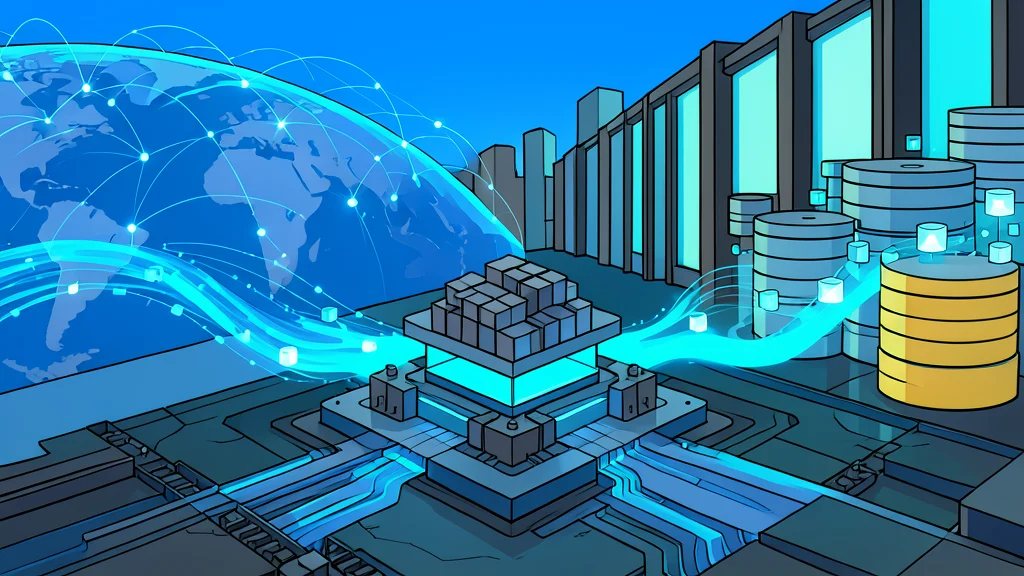
The stakes are high because the US economy has become heavily reliant on AI and data center spending. Recent estimates suggest that tech investments in this sector account for a significant portion of year-over-year economic growth. Without this frenzy, economists warn, the US economy could be in a much weaker position, potentially sliding into recession rather than maintaining its current momentum.
Economic growth relies on AI spending
According to reports from GN technics/ai (en-US), major financial institutions highlight the central role of AI in current economic metrics. ING estimates that AI and data center investments drive a third of the projected economic growth for 2026. Similarly, Goldman Sachs notes that AI investment is responsible for half of all profit growth in the S&P 500. These figures indicate that the broader economy is no longer separate from the tech sector but deeply intertwined with its success.
Proponents of AI argue that this technology will turbocharge productivity in the coming decades, similar to the impact of the internet in the early 2000s. However, in the short term, the economy is propped up by high stock valuations and consumer spending fueled by wealth effects. If this spending slows, the resulting drop in stock prices could reduce household wealth and corporate investment, creating a negative feedback loop.
Recession risk from market correction
Fitch Ratings recently modeled a scenario where AI-related stock prices fall by around 35% over six months. This decline, comparable to past financial busts, would likely push the US economy into recession, with GDP contracting by 1.5% next year. While Fitch notes that such a sharp decline is not their base case, the potential for stagnation or outright contraction remains a significant concern for policymakers.
The interconnectivity of the AI ecosystem adds to the risk. Companies in this sector are highly reliant on one another, meaning a failure in one part of the chain can cause widespread fallout. As John Sedunov, a finance professor at Villanova University, explained, breaking a link in this tightly woven system will inevitably lead to broader economic consequences that extend beyond Wall Street investors.
Macro risks compound AI exposure
The economic vulnerability is further exacerbated by broader macroeconomic pressures. Bond markets are signaling growing concern over government debt, deficit spending, and elevated inflation. These factors could lead to a cycle of higher interest rates, which would compound the risks associated with the AI buildout. Additionally, investors are piling into corporate debt to fund new infrastructure, increasing the overall financial fragility.
Olu Sonola, US head of economic research at Fitch Ratings, warned that the equity price bubble risk is a major threat to the global economy. With tariffs, geopolitical conflicts, and debt concerns already present, the market is susceptible to another significant shock. Even optimists acknowledge that while the long-term upside of AI is vast, the current economic structure is unusually fragile and requires careful management to avoid a sudden collapse.