China Launches First Mass-Production Humanoid Robot Factory
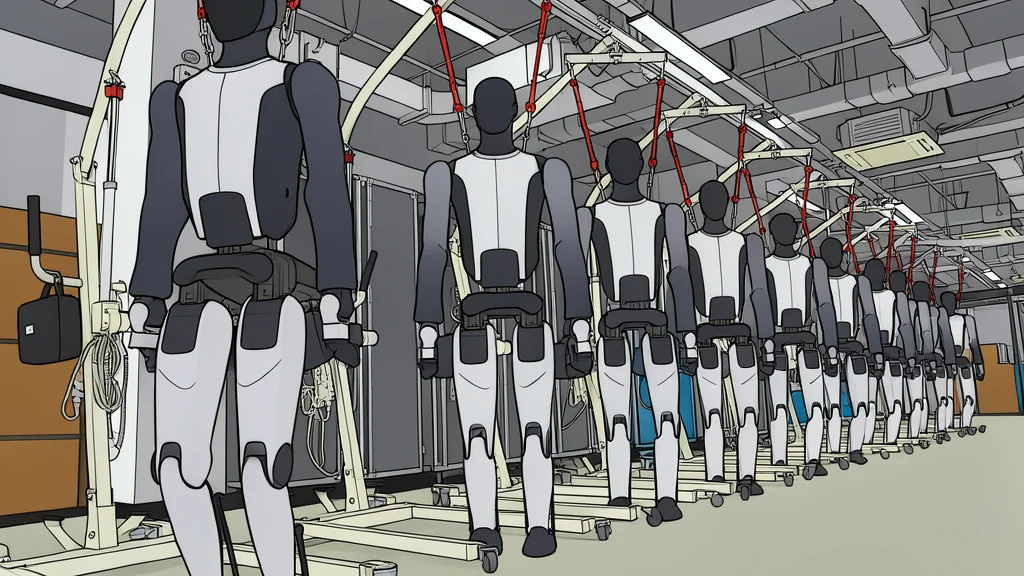
UBTECH has opened a facility in Guangxi that can produce a humanoid robot every ten minutes, marking a shift from experimental batches to industrial-scale manufacturing.
A new manufacturing facility in China has begun operations with a capacity to produce over 10,000 humanoid robots annually. According to reports from GN auto tech/robotics, this marks the first plant of its kind in the world, designed to shift the industry from small-batch pilot production to large-scale smart manufacturing. The facility operates with a rhythm that generates one finished unit every ten minutes, a pace that signals a significant step toward commercial viability for these complex machines.
The plant, located in Liuzhou within the Guangxi Zhuang Autonomous Region, is built around a concept where robots build robots. Rather than relying solely on human labor for the heavy lifting and precision work, the factory integrates its own products into the production line. This approach aims to standardize the assembly process and reduce the variability that has previously hindered the mass adoption of humanoid robotics in industrial settings.
Robots Build Robots on the Line
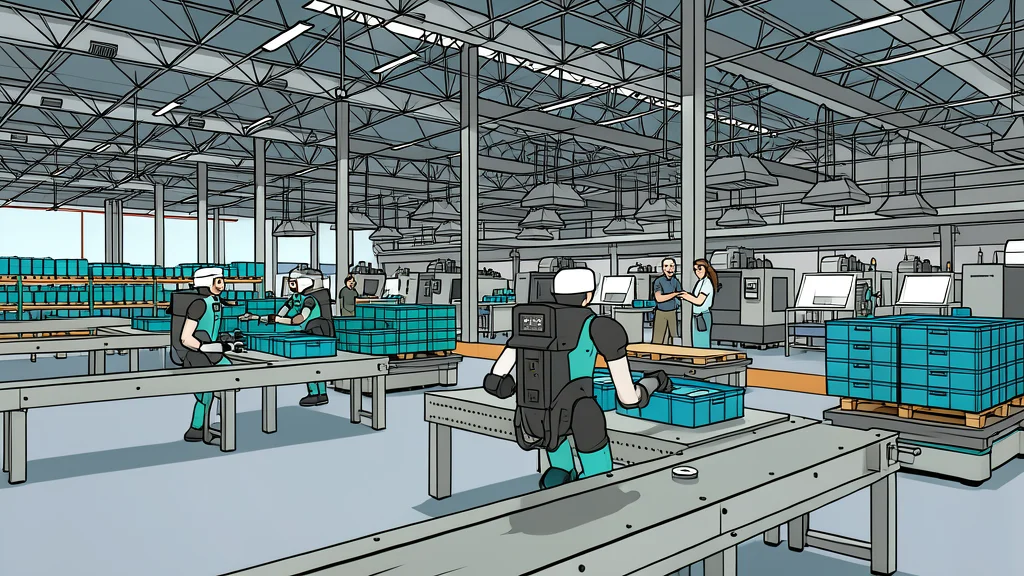
Inside the 14,000 square meter facility, smart industrial humanoids handle tasks such as unloading, stacking, and transporting materials. The Cruzr Y1 and S2 models serve as the workhorses of the floor, moving components to the assembly stations. This setup eliminates the need for human workers to perform repetitive, physically demanding tasks, allowing the factory to maintain a consistent output rate without fatigue.
The final assembly stage utilizes collaborative robots that move in sync with human operators, ensuring that delicate adjustments are made with high precision. Automated guided vehicles and 360-degree rotating workbenches allow for assembly from multiple angles without the need to reposition the entire chassis. This multi-angle approach is critical for complex mechanical structures, where access to internal components is often restricted by the external frame.
Supply Chain Drives Production Scale
UBTECH attributes the ability to scale production to China’s robust component supply chain. A vice president of the company noted that mass-producing complex components is extremely difficult without a strong local supply base, which provides both the necessary parts and the cost advantages required for industrial deployment. The company emphasizes that this infrastructure, built over the past two decades, is the foundation for the current leap in manufacturing capability.
The trade-off of this rapid scaling is a heavy reliance on domestic logistics and component availability. While this ensures speed and cost efficiency, it also ties the production capacity closely to the health of the local supply network. However, the company argues that the richness of local application scenarios allows for better optimization of the robots' tasks, creating a feedback loop that improves both the hardware and the software controlling it.
Quality Checks and Data Infrastructure
Every robot leaving the line undergoes a rigorous testing regimen that lasts more than four hours. The units pass through an automotive-grade inspection tunnel that scans the exterior in 360 degrees to ensure there are no blind spots or structural defects. This level of scrutiny is intended to meet the reliability standards expected in industrial environments, where a failure could have significant operational consequences.
Beyond the physical factory, the push for mass production is supported by expanding data infrastructure. Open-source datasets containing hundreds of thousands of motion trajectories are being downloaded by developers worldwide to train robot behaviors. This combination of hardware manufacturing and software training suggests that the industry is moving toward a more integrated ecosystem, where the robot's physical build and its decision-making capabilities are developed in parallel.