BYD Plans Three European Plants to Beat Tariffs
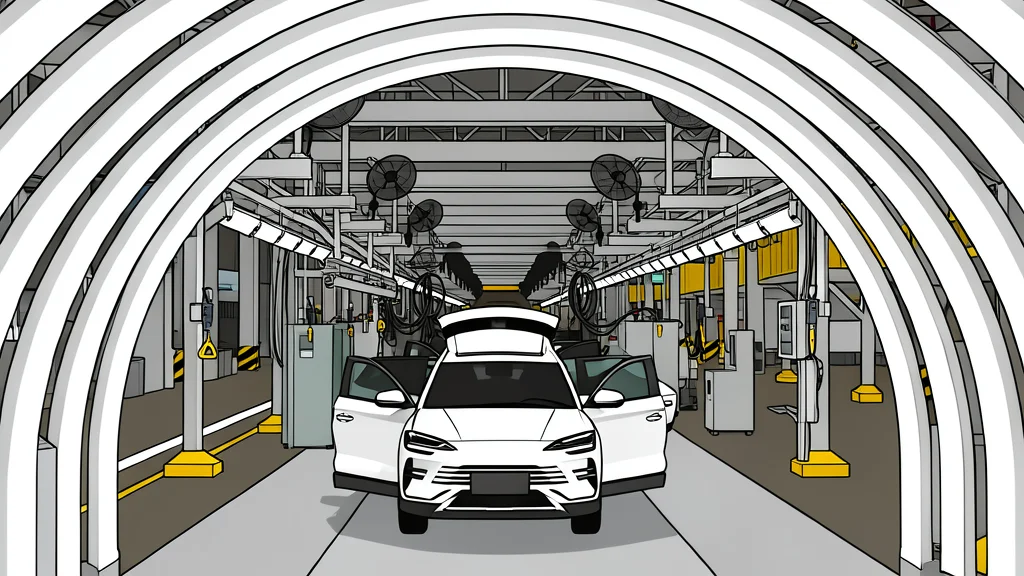
BYD is set to expand its European manufacturing footprint significantly, planning three vehicle assembly sites and a dedicated battery factory. This strategic shift aims to satisfy rising local content regulations and mitigate the financial impact of import tariffs.
BYD is planning to establish three vehicle assembly plants and one battery factory in Europe over the coming years. Alfredo Altavilla, the company’s special adviser for Europe, explained that this expansion is necessary to meet long-term growth targets while adhering to EU regulations. The move represents a significant shift from relying solely on imports, as the Chinese automaker seeks to embed itself more deeply within the European industrial landscape.
The company is currently in trial production at its first European facility in Hungary and expects to make a decision on a second site by the end of the year. Rather than building new infrastructure from scratch, BYD intends to acquire and refurbish existing facilities. Spain and France have emerged as preferred locations for this next step, while Italy has been ruled out due to political friction regarding Chinese automotive interests.
Regulatory pressure drives local production
The push for local manufacturing is partly a response to the EU’s draft Industrial Accelerator Act. This proposal suggests that companies may need to source around 70% of their components locally to qualify for subsidies or public procurement contracts. While not yet a strict legal obligation, this regulatory direction strengthens the economic case for producing both vehicles and batteries on the continent. For BYD, this means a complex balancing act between meeting volume targets and complying with evolving local content rules.
Additionally, local assembly allows BYD to avoid the substantial tariffs imposed on Chinese-made electric vehicles. The EU currently levies a combined 27% tariff on these imports, consisting of a standard 10% duty and an additional 17% countervailing duty. Building cars in Europe effectively sidesteps these costs, making the vehicles more competitive in price against European rivals. This financial incentive is a major driver behind the company's aggressive expansion plans.
Sales growth outpaces internal forecasts
BYD’s expansion plans are underpinned by a surge in overseas sales that has consistently exceeded management’s own projections. The company has repeatedly raised its annual target, most recently increasing it to 1.9 million to 2.0 million vehicles for 2026. In the first eight months of the year, overseas sales reached over 1.1 million units, marking an 85% increase compared to the same period last year. This rapid growth has shifted the company’s revenue balance, with overseas markets now contributing more to total income than its domestic Chinese market.
In Europe specifically, BYD has overtaken Tesla in registrations for the first time. According to data from the European Automobile Manufacturers' Association, BYD registered over 174,000 vehicles in the EU and associated markets in the first half of 2026. This performance lifted its market share to 2.4%, up from 1.0% a year earlier. The company’s ability to ship cars is now seen as a greater constraint than its ability to build them, prompting BYD to expand its fleet of vehicle carriers to keep up with demand.
Challenges in scaling European operations
Despite the momentum, the path to full-scale European production is not without hurdles. BYD’s first plant in Hungary only began trial production in January, with full assembly scheduled for the fourth quarter of 2026. This timeline highlights the significant lead time required to set up complex automotive operations. Furthermore, the company must decide whether to prioritize a third assembly plant or the battery facility, a choice that will be heavily influenced by energy costs in the chosen locations.
Political sentiment remains a critical variable in site selection. As noted by GN auto tech/ev, BYD has avoided countries that have expressed strong opposition to Chinese automotive interests. This geopolitical sensitivity adds a layer of complexity to the expansion, requiring careful navigation of trade relations alongside industrial strategy. The outcome will determine whether BYD can sustain its growth trajectory in one of the world’s most competitive automotive markets.