CATL Unveils Modular Battery to Solve Truck Charging Delays
A new partnership between CATL and Octopus Energy aims to replace long charging stops with a European battery swap network for heavy freight.
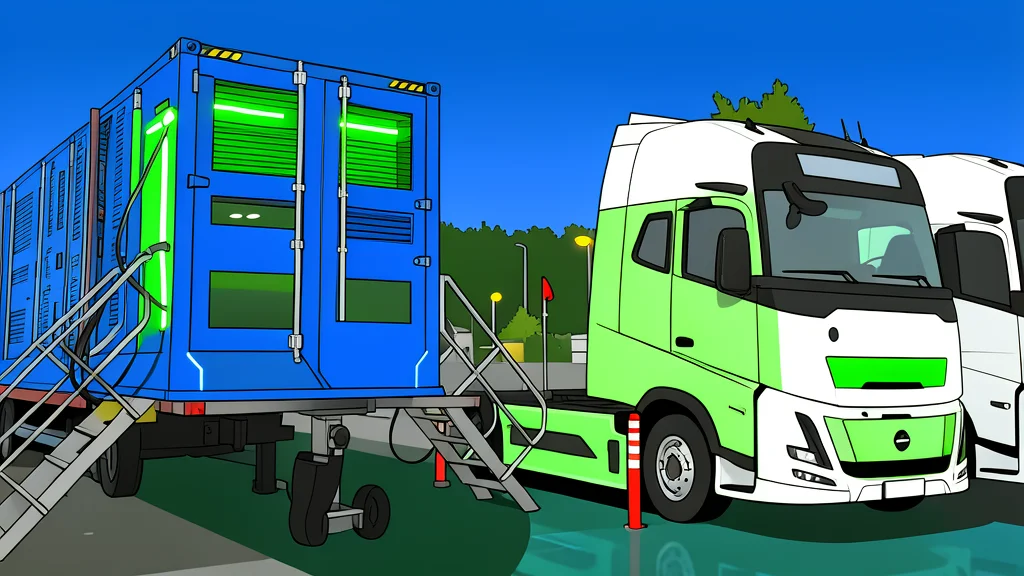
CATL and Octopus Energy have formed a joint venture called Swaptopus to deploy a battery swap network for commercial trucks across Europe. The initiative addresses the primary barrier to electric freight adoption, which is the significant downtime required for recharging heavy vehicles on long-haul routes. By swapping depleted battery packs for charged ones, operators can keep trucks moving with minimal delay.
The core of this system is the TECTRANS II, a modular battery platform designed for universal compatibility with various truck chassis. This approach shifts the focus from vehicle-specific charging infrastructure to a standardized energy container. The goal is to create a scalable ecosystem where batteries are treated as interchangeable assets, similar to refueling, rather than fixed components that require hours of plug-in time.
Modular design improves payload and efficiency
The TECTRANS II pack features a gravimetric energy density of 170 Wh/kg, which is approximately 13% higher than the industry average. This increased density allows trucks to carry about 0.6 tonnes of additional cargo without sacrificing range. For logistics companies, this translates directly into better utilization of every mile driven, as the vehicle can generate more revenue per trip due to the extra payload capacity.
The system also claims a 96% round-trip efficiency, which is attributed to a full-tab low-impedance design. This reduces energy loss during the charging and discharging cycles. While the maximum configuration offers up to 1,000 km of range and can charge to 80% in 25 minutes using megawatt-level chargers, the swap model ensures that even slower charging speeds do not impact fleet availability.
Broad industry coalition supports rollout
CATL has signed a Memorandum of Understanding with DHL Group to accelerate the adoption of these electric trucks in European road freight. The partnership includes other stakeholders such as Quibo Energy and FleetBoost, which provide mobile power plants and energy storage systems. This collaborative approach aims to integrate vehicle demand with charging, storage, and lifecycle services to create a practical solution for zero-emission logistics.
According to the partners, the network could eventually support over 300,000 electric trucks and unlock more than £30 billion in private investment. The strategy also aims to reduce Europe’s dependence on imported oil by replacing fossil fuels with sustainably produced electricity. However, the success of this model depends on the rapid construction of a dense network of swap stations, a significant logistical and financial undertaking.
Trade-offs in the swap network model
While battery swapping eliminates charging downtime, it introduces complexity in infrastructure and standardization. The system requires a robust supply chain for maintaining a pool of healthy batteries and a dense network of swap hubs to be viable for long-haul routes. Electrek notes that this venture challenges existing charging solutions by offering a faster alternative, but the initial capital expenditure for both manufacturers and operators remains a significant hurdle.
The trade-off is clear: operators gain flexibility and reduced idle time but must integrate into a new, proprietary ecosystem. For CATL, this locks customers into their battery technology and service model. For fleets, the promise of higher efficiency and payload capacity must outweigh the costs and logistical changes required to switch from a plug-in charging model to a swap-based one.