Factorial Partners with Mitsui Kinzoku to Scale Solid-State Batteries
A major Japanese manufacturer is helping an American startup overcome the biggest barrier to commercializing next-generation batteries, moving the technology closer to real-world vehicle use.
Factorial Energy has entered a new alliance with Mitsui Kinzoku to accelerate the mass production of solid-state batteries. This collaboration pairs Factorial’s proprietary cell design with Mitsui Kinzoku’s capability to produce the specific solid electrolyte material required for these advanced power sources. The move addresses a critical bottleneck in the industry, where finding reliable suppliers for specialized materials has slowed down broader adoption.
As reported by Electrek, the partnership is significant because Mitsui Kinzoku is one of the few companies globally capable of manufacturing sulfide-based solid electrolytes at scale. This material is essential for the type of all-solid-state battery Factorial is developing. By securing a steady supply from a dedicated plant in Saitama, Japan, Factorial aims to move beyond prototype stages and towards consistent, high-volume manufacturing.
Solving the Material Supply Challenge
The core technical hurdle for solid-state batteries has often been the difficulty of creating stable, conductive solid materials that can be manufactured cheaply and reliably. Mitsui Kinzoku brings a proven track record in this area, having already developed an argyrodite sulfide electrolyte designed specifically for this application. Their expertise in ultra-thin copper foil, where they hold a dominant market share, also indicates a deep understanding of the precise material sciences needed for high-performance battery components.
For Factorial, this relationship reduces the risk associated with component availability. Instead of relying on experimental or small-batch sources, the company now has a partner with industrial-grade production capacity. This stability is crucial for automotive customers who require consistent quality and supply chains for their production vehicles, rather than just one-off concept cars.
Commercial Goals And Performance Specs
Factorial claims its Solstice platform offers an energy density of up to 450 Wh/kg, which represents an 80 percent increase over traditional lithium-ion batteries. The cells also maintain stability at high temperatures, reaching up to 90 degrees Celsius. While these specifications are impressive on paper, the trade-off has historically been cost and manufacturability. This new partnership is designed to tackle that cost and scaling issue directly.
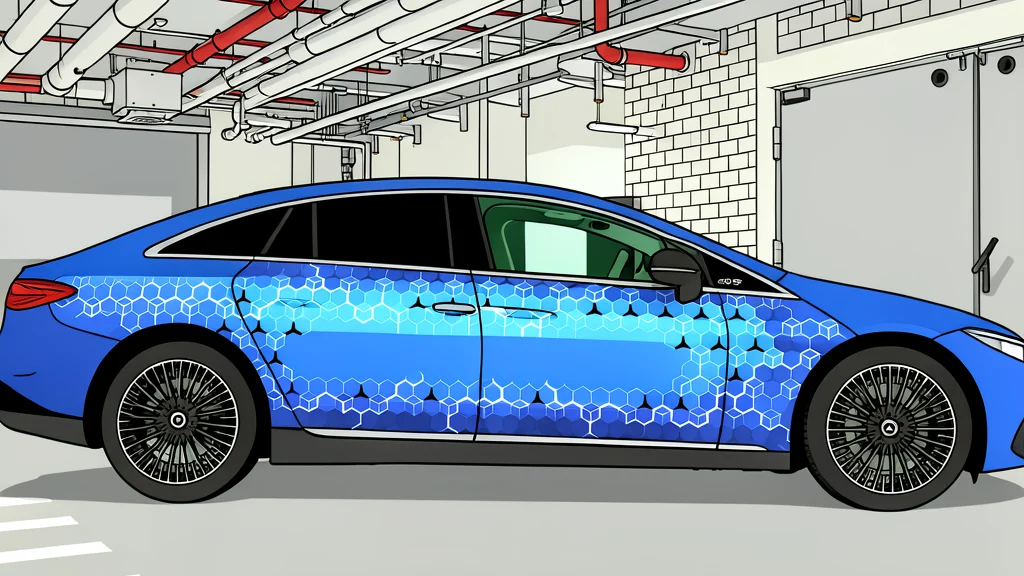
The company has already secured orders from major automakers including Mercedes-Benz, Stellantis, and Hyundai. In a notable test, a modified Mercedes EQS traveled over 745 miles using Factorial’s cells. Additionally, Stellantis has been testing the technology in a Dodge Charger prototype, reporting fast charging capabilities and stable performance in extreme temperatures. These real-world tests suggest the technology is maturing, but the final hurdle remains making it affordable for the mass market.
Timeline For Vehicle Deployment
Factorial CEO Siyu Huang has indicated that these batteries could be integrated into electric vehicles as early as 2027. The company plans to prioritize high-performance vehicles for initial deployment, where the higher cost of solid-state technology can be more easily justified by the superior range and charging speeds. However, widespread adoption in mainstream economy cars will likely take longer, depending on how quickly production costs fall.
The catch remains that solid-state batteries are still significantly more expensive to produce than current lithium-ion standards. While the partnership with Mitsui Kinzoku secures the supply of key materials, it does not instantly lower the overall system cost. The industry is betting that scale will eventually drive prices down, but for now, these batteries will likely be a premium feature rather than a standard inclusion.