Valeo's French Plant Pivots to High-Voltage Electric Components
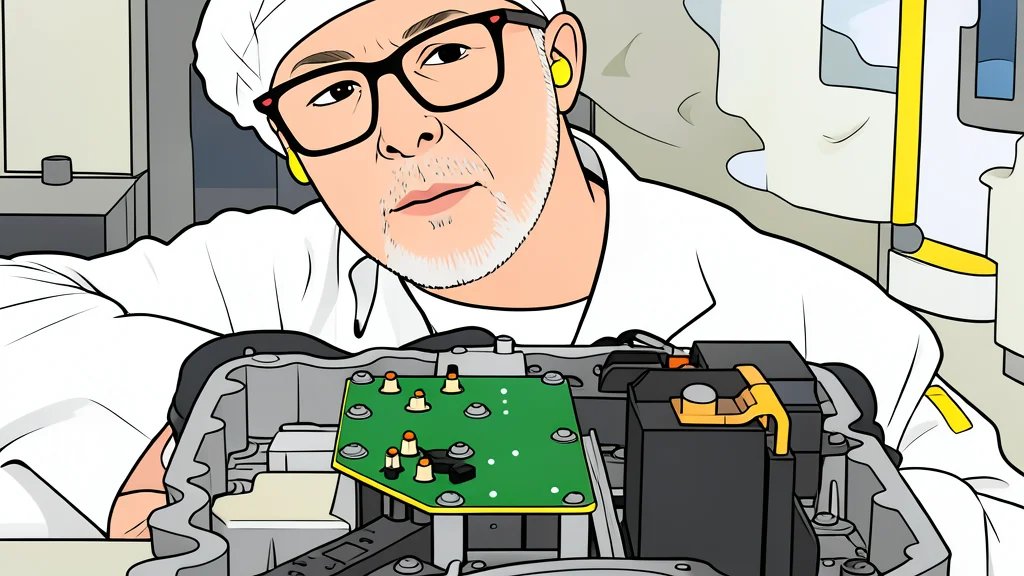
A northern French factory is shifting from making basic car electrical parts to producing the critical power inverters that define modern electric vehicle performance.
For more than five decades, the Valeo facility in Étaples-sur-Mer has been a steady fixture in the automotive supply chain, initially known for producing alternators and later becoming a leader in mild hybrid systems. Now, the site is undergoing a significant industrial pivot. It is preparing to manufacture high-voltage power inverters, the complex components that act as the power management heart of electric vehicles. This move signals a transition from supporting fuel-saving assist systems to producing core components for fully electric drivetrains.
The shift is not merely a product change but a strategic repositioning of the plant. According to reporting from GN auto tech/ev: electric vehicle, the site will begin producing inverters for commercial electric vehicles in 2026, followed by passenger car models in 2027. This timeline reflects a major industrial undertaking that requires new precision and quality standards, transforming the facility into a specialized center for high-voltage technology.
The Critical Role of the Inverter
In an electric vehicle, the power inverter is often described as the brain of the powertrain. It is responsible for converting the direct current stored in the battery into the alternating current needed to drive the electric motor. Beyond simple conversion, it precisely controls the power output and continuously optimizes efficiency. The quality of this component directly dictates how far a car can travel on a single charge and how smoothly it accelerates. As vehicles adopt 400V and 800V architectures, the demands on this hardware become increasingly complex.
The trade-off for manufacturers moving to these higher voltage systems is increased engineering complexity. The inverter must manage immense electrical loads while generating heat that requires robust cooling solutions. This makes the component one of the most strategic and expensive parts in an electric drivetrain. For Valeo, producing this technology in-house allows for tighter control over performance and reliability, which are critical for consumer confidence in electric mobility.
A Complete Spectrum of Expertise
What distinguishes the Étaples site is its ability to cover the entire range of electrification technologies. It already produces over six million 12V and 48V electric motors annually, components used in stop-start systems and small urban electric vehicles like the Citroën AMI. By adding high-voltage inverters to its portfolio, the facility now spans from basic electrical assistance to full high-voltage propulsion. This comprehensive coverage allows Valeo to offer a unified solution for vehicle electrification, leveraging decades of accumulated expertise in electrical machinery.
However, this expansion brings operational challenges. The facility must maintain its existing high-volume production lines while simultaneously ramping up new, more sensitive high-voltage manufacturing processes. The 1,200 employees at the site are now tasked with mastering these new industrial protocols. This dual focus requires significant investment in training and infrastructure, ensuring that the transition does not disrupt the reliable output of the existing mild-hybrid systems that remain vital to the industry's gradual shift toward electrification.
Industrial Transformation in Northern France
The launch of this production line represents a culmination of years of industrial adaptation. Since the 1970s, the site has evolved from a traditional alternator plant to a hub for low-voltage electrification, and now to a center for high-voltage innovation. This trajectory illustrates the broader trend in the automotive sector, where legacy electrical expertise is being repurposed for the electric age. The site’s directors describe this as a source of pride, positioning Étaples as a key player in Europe's electric vehicle supply chain.