Building a Cheaper Alternative to the Steam Machine
Valve's latest console costs over $1,000, but a custom PC build can match its performance for less.
Valve’s new Steam Machine has arrived with a base price of $1,049, a figure that has disappointed many enthusiasts who expected a more affordable entry point into living-room gaming. The device features custom silicon from AMD, yet the final cost reflects broader market pressures rather than the budget-friendly positioning of its predecessor, the Steam Deck. For many, the price tag makes the value proposition difficult to justify against the current PC market.
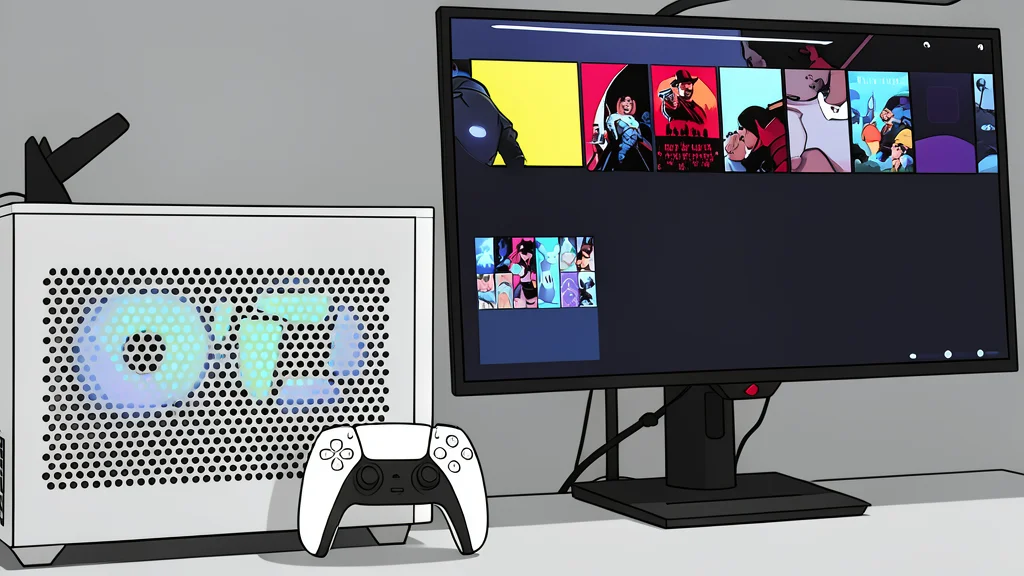
However, a recent report by XDA Developers highlights a practical alternative: building a custom mini-PC that matches or exceeds the Steam Machine's capabilities for a similar or lower cost. By leveraging open-source software updates and current AMD hardware, users can assemble a compact system that offers significantly better graphical performance without the premium associated with the branded console.
Custom silicon faces market realities
The Steam Deck’s success was largely due to Valve securing discounted AMD processors intended for laptops. This strategy allowed for a low entry price that appealed to casual gamers. Unfortunately, the same approach did not translate to the Steam Machine. Rising costs in memory components, often referred to as the RAM crisis, eroded the savings from the custom chip deals. Consequently, the final price of the Steam Machine reflects the current high cost of components rather than the historical lows seen in the handheld market.
This disconnect between hardware potential and retail price has shifted the conversation toward DIY solutions. While the Steam Machine offers a polished, all-in-one experience, the financial benefit of its custom hardware is largely negated by the inflated price of supporting components like memory and storage.
Open software enables cheaper builds
A significant barrier to building a SteamOS-based PC has always been software compatibility. However, recent updates to SteamOS 3.8 have removed many of these restrictions. Valve has now enabled support for a wide range of AMD hardware without requiring complex manual configuration. This change means that a standard AM4-based mini-ITX PC can run the SteamOS interface seamlessly, offering a console-like experience with the flexibility of a custom build.
The trade-off is that users must handle assembly and troubleshooting themselves. While the Steam Machine is a plug-and-play device, a custom build requires selecting compatible parts and installing the operating system. Despite this, the ease of setup has improved dramatically, making it a viable option for those willing to spend a weekend configuring their hardware.
Graphics performance outpaces the console
In terms of raw power, a custom build using a Ryzen 5 5500 and an RX 9060 XT GPU offers a distinct advantage over the Steam Machine. The custom configuration matches the CPU performance of the Valve device but significantly surpasses it in graphical capability. With double the video memory and access to newer rendering technologies, the custom PC can handle demanding titles at higher settings and resolutions.
The total cost for such a build, including a compact case, motherboard, and 512GB storage, can be kept just under $1,050. This is comparable to the Steam Machine’s price, but the resulting system offers up to twice the GPU performance. For gamers who prioritize frame rates and visual fidelity, the custom build provides a more robust platform. The only notable convenience lost is native HDMI-CEC support, which can be resolved with a low-cost adapter.