Meta Tests AI Game Creation at Mumbai Arcade
Meta is testing a physical space in Mumbai where visitors can use natural language prompts to build and play games, aiming to remove traditional coding barriers for casual creators.
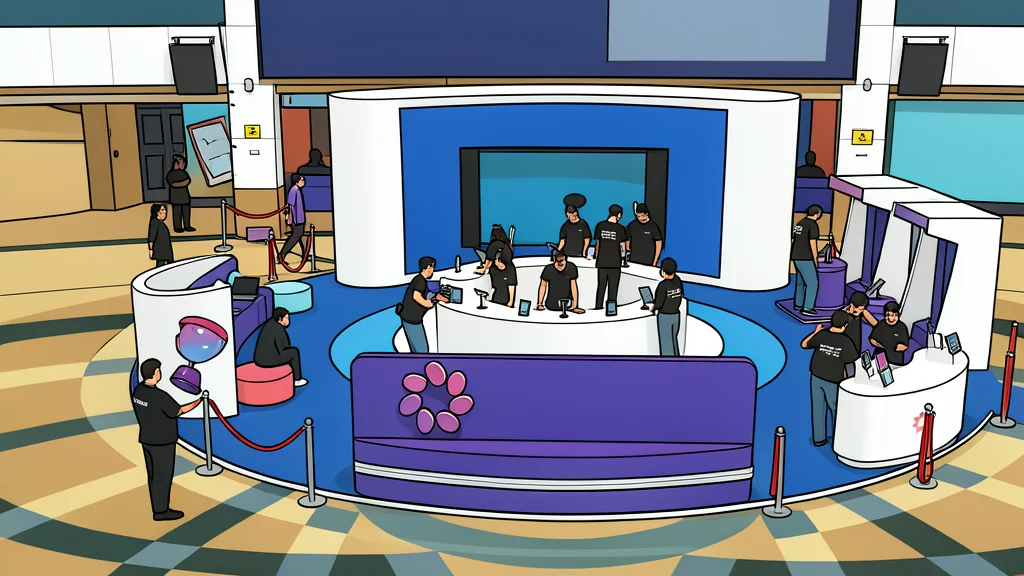
Meta is bringing its "Create & Play" initiative to a physical location for the first time, setting up a temporary gaming arcade at Infiniti Mall in Malad, Mumbai. The three-day event, scheduled for September 11 to 13, 2026, is designed to demonstrate how the company’s artificial intelligence tools can transform a simple text description into a playable video game without requiring any prior programming knowledge.
According to reporting from GN technics/gaming (en-US), the pop-up serves as a culmination of a broader campaign launched earlier in the month. By moving the experience from a digital interface to a physical arcade, Meta aims to show that game development can be as accessible as describing a scene in everyday language, targeting both seasoned gamers and newcomers who have never touched a code editor.
Community Creators Anchor the Experience
The arcade floor will feature a mix of puzzle, racing, and classic arcade-style titles. These are not just standard commercial releases but include entries from an online game-building challenge. Recognized creators such as Payal Gaming and Sarthak Sachdeva, along with various challenge winners, will have their AI-assisted projects on display. This approach highlights a shift toward community-driven content, where the primary asset is the idea rather than the technical execution.
In addition to individual creators, Meta has partnered with local services like FlixBus and Uber India to produce themed games. These collaborations translate mundane activities, such as planning a commute or scheduling a delivery, into interactive gameplay. The goal is to make the technology feel grounded in real-world scenarios, showing how AI can interpret complex, everyday concepts into simple game mechanics.
From Prompt to Playable Prototype
The core function of the event is to let visitors turn their own ideas into playable experiences in real-time. Instead of navigating complex development engines, users interact with Meta AI to generate the underlying structure of the game. This lowers the entry barrier significantly, allowing people to see immediate results from their creativity. The trade-off, however, is a lack of granular control; the AI makes the design choices, which may limit the precision of the final product compared to hand-coded alternatives.
This model challenges the traditional hierarchy of game development, where skill is measured by technical proficiency. By prioritizing prompts over code, Meta is testing whether a mass market of casual creators can be activated. The Mumbai pop-up acts as a live experiment to see if this simplified workflow is robust enough to produce engaging content that holds up in a social, physical setting.
Physical Space Meets Digital Tools
Bringing this technology into a mall environment changes the context of AI interaction. In a digital app, the feedback loop is instant but isolated. In an arcade, the process becomes social and performative. Visitors can watch others create games, share their own results, and play in groups. This social layer is a critical test for Meta, as it moves its AI gaming tools out of the smartphone screen and into shared public spaces.
The event also serves as a marketing bridge between brand partners and consumer engagement. By integrating brands like Comet into the gameplay, Meta demonstrates a new avenue for advertising that is interactive rather than passive. The catch for consumers is that the experience is fleeting; the pop-up lasts only three days, and the games created are ephemeral digital artifacts rather than permanent products on a store shelf.