AZZA 750W Power Supply Lacks Official Gold Certification
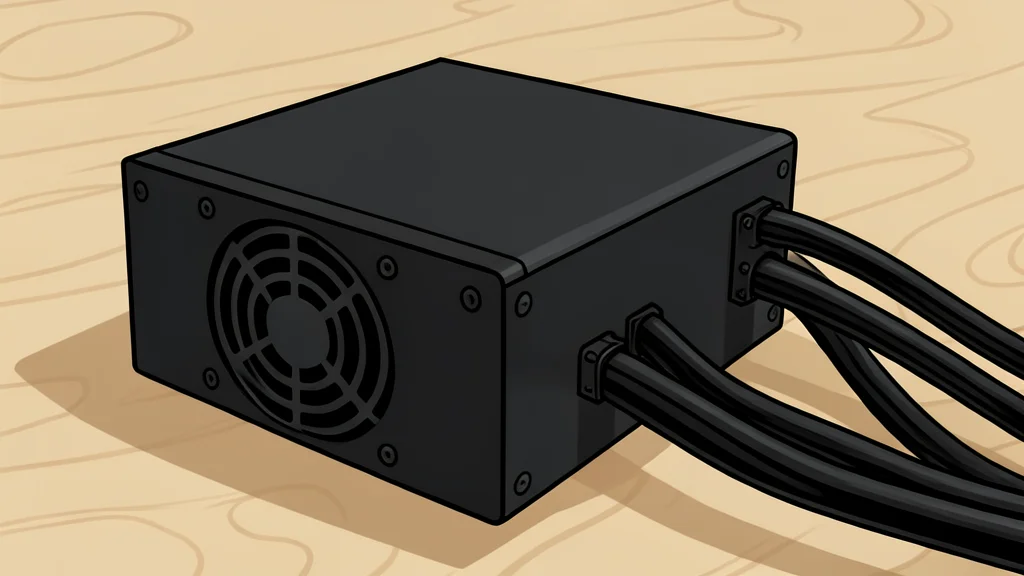
A budget power supply offers solid performance but misses a key efficiency target and carries an uncertified badge.
The AZZA PSAZ-750G is a 750-watt power supply unit priced at $78, targeting the budget-conscious builder. It features a native connector for modern graphics cards and a compact chassis. However, the unit carries an 80 PLUS Gold badge that has not been officially verified by the certifying body since 2015. This discrepancy creates a gap between the marketing claims and the actual performance data.
Tom's Hardware tested the unit and found it performs well in basic operations. The 12-volt rail holds steady, and the fan remains silent during light loads. The catch is that the efficiency drops below the Gold standard at half load. Additionally, the 12V-2x6 connector, intended for high-power GPUs, is limited to 450 watts, which may bottleneck some modern hardware.
Efficiency claims lack official verification
The 80 PLUS Gold certification is a specific benchmark for efficiency, not a generic marketing term. AZZA has not submitted this specific model line for certification in over a decade. While the unit measures close to the Gold threshold, it does not meet the strict requirements. Buyers relying on the badge for guaranteed energy savings should look elsewhere.
Connector limits affect high-end builds
The native 12V-2x6 connector is a significant update over older PCIe cables, simplifying connections for new GPUs. However, the power delivery is capped at 450 watts. For graphics cards that draw more than this, the unit cannot support them at full capacity. This limits the power supply to mid-range or lower-tier high-performance cards.
Budget trade-offs in build quality
The unit uses low-grade capacitors and a ball bearing fan, which are cost-saving measures. The fan is quiet at low speeds but becomes loud under heavy load. The two-year warranty is shorter than the industry standard of five or seven years. These components may not last as long as those in more expensive units, making the low price a trade-off for longevity.