NASA Schedules Launch for New Roman Telescope
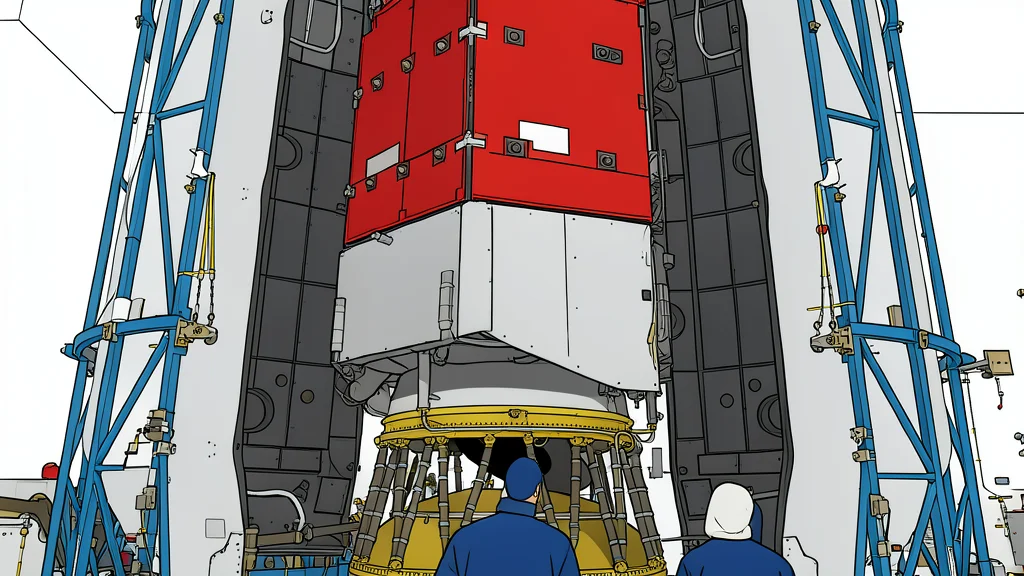
NASA and SpaceX have set a target window for launching the Nancy Grace Roman Space Telescope from Florida, marking the start of a new era in deep-space observation.
NASA has officially scheduled the launch of its next major space observatory, the Nancy Grace Roman Space Telescope. The mission is set to lift off from the Kennedy Space Center in Florida, with a targeted window beginning at 7:26 a.m. Eastern Daylight Time on Sunday, August 30. This event marks a significant step in the agency's plan to map the universe in unprecedented detail, building upon the legacy of previous telescopes while introducing new capabilities for studying dark energy and exoplanets.
The rocket carrying the telescope will be a SpaceX Falcon Heavy, launching from Launch Complex 39A. Live coverage of the prelaunch activities and the liftoff itself will be streamed across various digital platforms, allowing the public to follow the event in real-time. This collaborative effort between NASA and SpaceX highlights the growing reliance on commercial launch providers for major scientific missions, ensuring that the telescope reaches its intended orbit with the necessary precision.
Roman offers vastly wider vision
Named after NASA’s first chief astronomer, the Roman Space Telescope represents a substantial upgrade in observational power. Unlike its predecessors, Roman is designed with a field of view that is at least one hundred times larger than that of the Hubble Space Telescope. This expansive view, combined with sharp infrared vision, allows scientists to survey huge swaths of the sky in a single exposure. According to GN auto tech/space reporting, this capability is crucial for mapping billions of galaxies and studying the large-scale structure of the cosmos.
The primary scientific goals of the mission include investigating the nature of dark energy and dark matter, two of the universe's most mysterious components. Additionally, the telescope will help identify and characterize exoplanets, offering insights into worlds beyond our solar system. By combining wide-angle surveys with precise measurements, Roman aims to answer fundamental questions about how the universe evolved and how planetary systems form.
Long journey to distant orbit
Once separated from the Falcon Heavy rocket, Roman will not remain in low Earth orbit. Instead, it will travel to the second Sun-Earth Lagrange point, known as L2, which is located approximately one million miles from Earth. This distant location provides a stable vantage point for long-term observations, free from the interference of Earth's shadow and atmosphere. The move to L2 is a critical step in ensuring the telescope can operate effectively for its intended duration.
The mission is designed with a five-year primary lifetime, with a goal of operating for a decade or more. This longevity is essential for the kind of deep, repetitive observations required to detect subtle changes in distant galaxies and stars. The trade-off for this extended operational period is the complexity of maintaining the instrument over such a long distance from Earth, requiring robust systems for power, communication, and thermal control.
Data becomes public resource
A key feature of the Roman mission is its commitment to open science. Once the data collected by the telescope is processed, it will be made publicly available. This policy ensures that researchers around the world, not just those at NASA or its partner institutions, can access the vast amount of information gathered by the observatory. This open access model accelerates scientific discovery by allowing a global community of astronomers to analyze the same high-quality data.
The launch schedule includes several public-facing events in the days leading up to liftoff. On Saturday, August 29, NASA will hold a science briefing and a prelaunch news conference at the Kennedy Space Center. These events will feature presentations from mission scientists and engineers, providing context on the telescope's capabilities and the challenges of the launch. While the flyby by NASA Administrator Jared Isaacman is expected to add a ceremonial touch, the core focus remains on the technical readiness of the spacecraft and the rocket.