7,000 Humanoid Robots Sold, but Mostly for Research
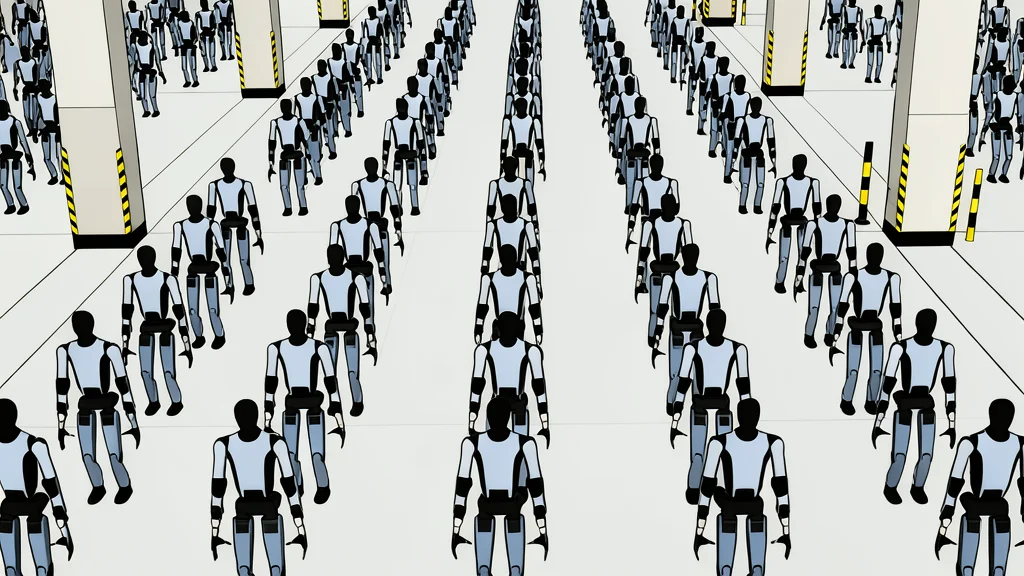
Most of the 7,000 humanoid robots sold last year went to labs, not factories. The gap between sales and industrial deployment remains wide.
Key points
- Approximately 7,000 humanoid robots were sold globally in 2025, with most going to research institutions rather than factories.
- Humanoid sales represent a small fraction of the total robot market, which includes over 540,000 industrial robots installed in 2024.
- While forecasts predict 90,000 shipments in 2026, current adoption remains experimental, with few robots used for actual production work.
Global sales of humanoid robots reached approximately 7,000 units last year, according to the International Federation of Robotics. However, the majority of these machines were not deployed on factory floors to replace human workers. Instead, they were primarily purchased by research institutions and companies looking to generate data for artificial intelligence training.
This marks the first time the IFR has tracked humanoids as a distinct category in its 30-year history of robot statistics. The data reveals a significant disconnect between market volume and actual industrial utility. While the figure sounds substantial, it represents a tiny fraction of the broader robotics market, which includes hundreds of thousands of traditional industrial and service robots.
Research labs drive current demand
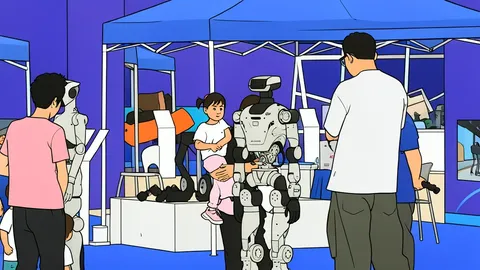
Susanne Bieller, the IFR’s secretary general, clarified that the primary buyers were entities seeking to improve AI models rather than manufacturers seeking labor. For example, Chinese robotics firm Unitree reported that 75 percent of its humanoid sales last year went to universities, research bodies, and individual developers. This pattern suggests that the current market is focused on experimentation and data collection rather than operational efficiency.
Even in the automotive sector, where humanoids might be expected to see heavy use, adoption remains limited. Most pilot projects involve only single-digit or occasionally double-digit numbers of robots. These deployments are typically experimental, serving as test beds for autonomy and movement rather than as core components of production lines.
Small slice of total robot market
The 7,000 humanoid units sold in 2025 are a minor segment compared to other robot categories. The IFR noted that approximately 542,000 conventional industrial robots were installed worldwide in 2024, while around 199,000 professional service robots for tasks like cleaning and transport were sold. Bieller described the humanoid segment as only a small part of the overall global robot market, highlighting that the technology is still in its nascent stages.
Reported by digitaltoday.co.kr, the IFR’s data also highlights inconsistencies in how different companies count shipments. Figures from manufacturers like Unitree and AGIBOT may use different definitions or counting periods, making direct comparisons difficult. Consequently, sales numbers alone do not indicate how many robots are actually operating effectively or generating sufficient value to justify their cost.
Future forecasts face reality checks
Market projections suggest a significant surge in adoption, with Bank of America forecasting 90,000 humanoid shipments in 2026 and 1.2 million by 2030. However, these figures rely on different methodologies than the IFR’s conservative count. China is positioned as a key driver of this expansion, with government-backed initiatives and a state-led venture fund aiming to boost the sector over the next two decades.
Despite the optimistic long-term outlook, the immediate future remains uncertain. The industry must prove that pilot projects can transition into large-scale commercial use. Until companies begin placing substantial orders for production environments, annual sales may remain closer to the current 7,000-unit mark than the projected 90,000, indicating a slow path from laboratory curiosity to industrial necessity.