Barclays Delays Humanoid Robot Mass Market to 2035
A new report argues that intelligence, not hardware, is the real barrier to widespread adoption. The firm suggests the first major disruptions will likely come from non-humanoid machines.
Barclays has released a detailed assessment of the humanoid robot sector, challenging the optimistic timelines currently favored by many investors. The bank argues that the industry is facing a fundamental shift in how progress is measured. Instead of focusing on mechanical dexterity, the report highlights that the true bottleneck is artificial intelligence. This perspective reframes the race for next-generation robotics away from manufacturing speed and toward cognitive capability.
The analysis, cited in GN auto tech/robotics, suggests that general-purpose humanoid robots will not achieve large-scale commercial deployment until approximately 2035. This is a significant pushback from the 2030 target often cited in industry pitches. The core issue is that current demonstrations rely heavily on pre-programmed tasks or remote operation. True autonomy, where a robot perceives, reasons, and acts independently in unpredictable environments, remains largely theoretical in practice.
Intelligence lags behind mechanical design
According to the report, the hardware components of robots are advancing faster than the software brains required to control them. This creates a chicken-and-egg problem for manufacturers. Without a large enough fleet of robots, companies cannot gather the diverse real-world data needed to improve their AI models. Conversely, without sufficiently smart AI, robots cannot perform complex tasks well enough to justify their high cost. This cycle prevents the rapid cost reductions seen in other industries.
The bank draws a parallel to the autonomous driving sector, which has struggled with similar commercialization hurdles for over a decade. The implication for investors is that the most valuable opportunities currently lie in the foundational layers. These include computing infrastructure, data generation, and model training. The hardware itself may remain a niche product for years until the intelligence layer reaches a breakthrough point.
Edge computing becomes the primary focus
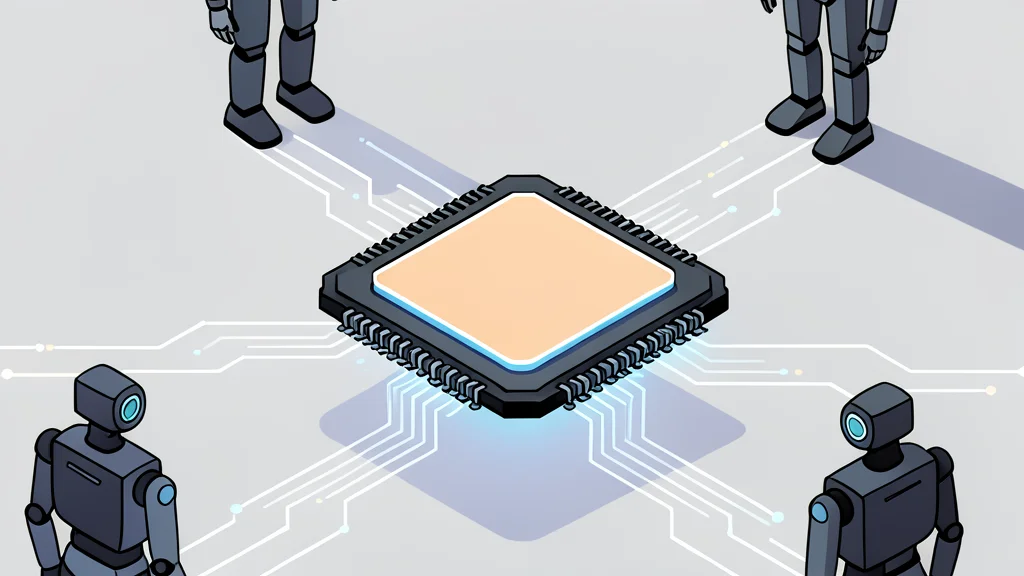
A common misconception is that humanoid robots will drive massive demand for central data centers. Barclays contends that this view overlooks the critical need for real-time processing. While data centers are essential for training models and running simulations, the actual decision-making process must happen on the robot itself. This is due to strict limits on latency, power consumption, and security. A robot cannot wait for a server to process a decision to avoid a collision or manipulate an object.
This shifts the economic impact toward edge computing hardware. The demand for specialized processors that can handle perception and action in real time is likely to be more significant than the incremental demand for cloud computing power. However, even the cloud side is not negligible. Developers require substantial computing resources to simulate environments and generate synthetic data before physical robots are widely deployed. This means computing demand will rise ahead of hardware sales, creating an early revenue stream for infrastructure providers.
Humanoid shape may not be essential
The most counterintuitive finding in the report is the question of form. Barclays suggests that the first wave of disruptive physical AI may not come from humanoid robots at all. The human-like shape is often seen as a marketing advantage, but it may not be technically necessary for many industrial or commercial applications. Specialized machines with wheels, tracks, or other non-humanoid configurations might be more efficient, cheaper, and safer for specific tasks.
This view challenges the narrative that a human-like form is a prerequisite for general-purpose utility. If a machine can perform the job without looking like a person, the cost and complexity of building bipedal locomotion may be an unnecessary burden. The report implies that investors should broaden their definition of robotics. The goal is functional autonomy, not anthropomorphic appearance. This could lead to a fragmented market where specialized non-humanoid devices dominate the early stages of adoption.