Chinese Humanoid Robot Prices Drop 72% as Mass Production Begins
China’s robot industry has crossed into mass manufacturing, slashing prices by over 70% in two years. However, experts warn that affordability alone does not guarantee commercial success.
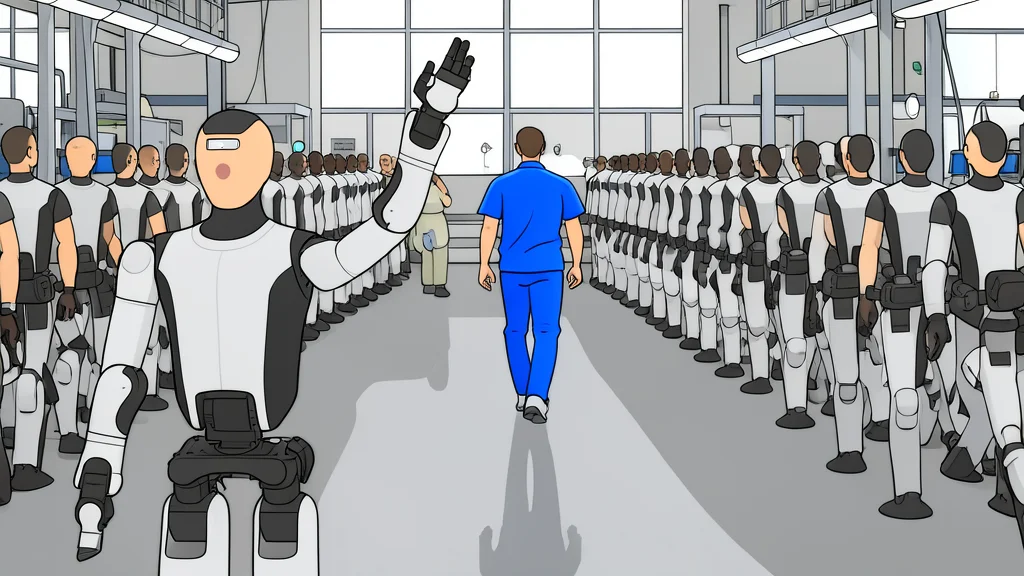
The Chinese humanoid robot sector has shifted from small-scale pilots to standardized mass production, a move that has dramatically lowered costs. Annual capacity now exceeds 10,000 units, allowing manufacturers to absorb production costs more comfortably. This expansion, combined with the localization of core components, has driven finished product prices down by more than 70% in just two years, with consumer models now appearing in the $4,500 range.
This transition marks a symbolic milestone for the industry. UBTech recently launched a super smart factory in Liuzhou with the ability to produce one finished robot every 10 minutes. While the pace of price decline is faster than most analysts predicted, industry insiders caution that lower sticker prices do not immediately translate into widespread commercial adoption. The challenge now lies in proving operational reliability rather than just cost efficiency.
Scale and Local Parts Cut Costs
The sharp drop in pricing is underpinned by economies of scale and a highly localized supply chain. Reports from GN auto tech/robotics sources indicate that the localization rate of core components has surpassed 75%, with some estimates putting specific parts above 90%. If Chinese manufacturers had to rely on foreign supply chains, the cost per robot would reportedly surge to roughly three times current levels.
Specific hardware categories have seen significant price reductions. Harmonic reducer prices have fallen from approximately $450–$750 per unit to $220–$300, while planetary roller screw prices have dropped by more than 80%. This localization strategy allows companies like Unitree to cut their average selling price from around $88,000 in 2023 to approximately $25,000 in 2025, making the technology accessible to a broader commercial market.
Expensive Hands Remain a Cost Barrier
Despite overall price declines, specific components remain expensive bottlenecks. High-degree-of-freedom tactile precision robot hands cost between $15,000 and several hundred thousand yuan per unit. These components are not only costly but also have short lifespans, often lasting only a few weeks to three months under heavy use.
As the price of the full robot body falls, these hand components now account for a growing share of the total cost. This creates a paradox where the most affordable parts are becoming the least affordable relative to the whole. Manufacturers must solve the durability and cost issues of these dexterous hands before they can claim full cost-efficiency in the mass market.
Reliability Matters More Than Price
Analysts suggest that falling prices will not immediately trigger explosive market growth. The key variable for commercialization is operational reliability, not just affordability. Global shipments in the first half of this year reached approximately 19,100 units, with Chinese manufacturers accounting for over 97% of that volume. However, without consistent performance in real-world environments, lower prices may not sustain long-term demand.
Goldman Sachs projects that average humanoid robot prices will continue to decline, reaching around $21,300 by 2035. Yet, the immediate challenge for the industry is to prove that these machines can work reliably over long periods. The trade-off is clear: while the hardware is becoming cheaper, the software and mechanical consistency required for true commercial utility remain the primary hurdles.