Humanoid Robots Compete on General Knowledge
A new benchmark reveals that a robot's ability to handle unseen environments matters more than its raw physical dexterity.
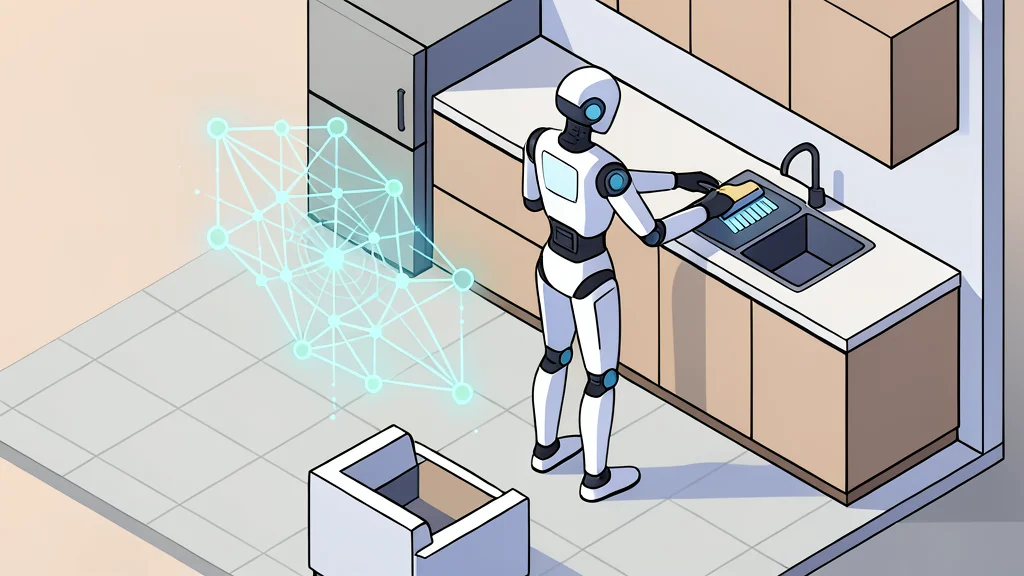
The next major hurdle for humanoid robots is not their ability to perform specific chores, but their capacity to adapt to completely new environments. Figure AI recently demonstrated that its latest model could complete household tasks in thirty homes it had never visited, relying solely on pre-existing knowledge. This shift suggests that the quality of background data is becoming as critical as the physical hardware itself.
The company reported that a version of its robot trained on broad human behavior data succeeded in 56 percent of these blind trials. In contrast, an identical model trained from scratch without that foundational knowledge managed only 9 percent success. The difference highlights that carrying general knowledge into unfamiliar spaces is a decisive factor in robotic utility.
Pretraining Determines Real World Success
Figure AI tested its Helix 2.5 model in thirty Bay Area homes, asking the robots to tidy living rooms, fold towels, and make beds. These tasks required complex navigation and physical manipulation. The robots were not allowed to collect data in these specific homes or receive any environment-specific adjustments before the test.
The core of the experiment was the use of a pretraining dataset called Index. This dataset captures human interactions with the physical world. When the model was built on this foundation, it could interpret new spaces and objects effectively. Without it, the robot struggled to understand how to move and act in those specific settings.
Tesla Leverages Vehicle Fleet Data
Tesla has positioned its Optimus robot as a beneficiary of its massive automotive data collection. The company argues that training neural networks on billions of real-world examples from its vehicle fleet provides a significant advantage. This approach relies on the sheer volume of data generated by millions of cars navigating diverse environments.
However, Figure is taking a different approach by focusing specifically on human behavior. The company is generating roughly 35 minutes of new human experience data every second. It has also committed 3.5 billion dollars to computing resources to process this information. This targeted strategy aims to teach robots how people physically interact with their surroundings, rather than just relying on driving data.
Scale Remains The Primary Hurdle
Despite the impressive 56 percent success rate, the technology is far from perfect. More than four in every ten trials still failed, and the tests covered only three types of household behaviors. For investors and observers, the challenge now is whether these companies can turn their data advantages into consistent, generalizable skills across a wide range of tasks.
According to GN auto tech/robotics, the key metric is not just task completion but the ability to handle environments never seen before. As both Figure and Tesla scale their operations, the company that can best convert data into universal physical intelligence will likely lead the move toward mass deployment. The trade-off remains clear: specialized performance in known areas is less valuable than robust adaptability in the unknown.