Robots Share the Stage with Human Dancers in Beijing
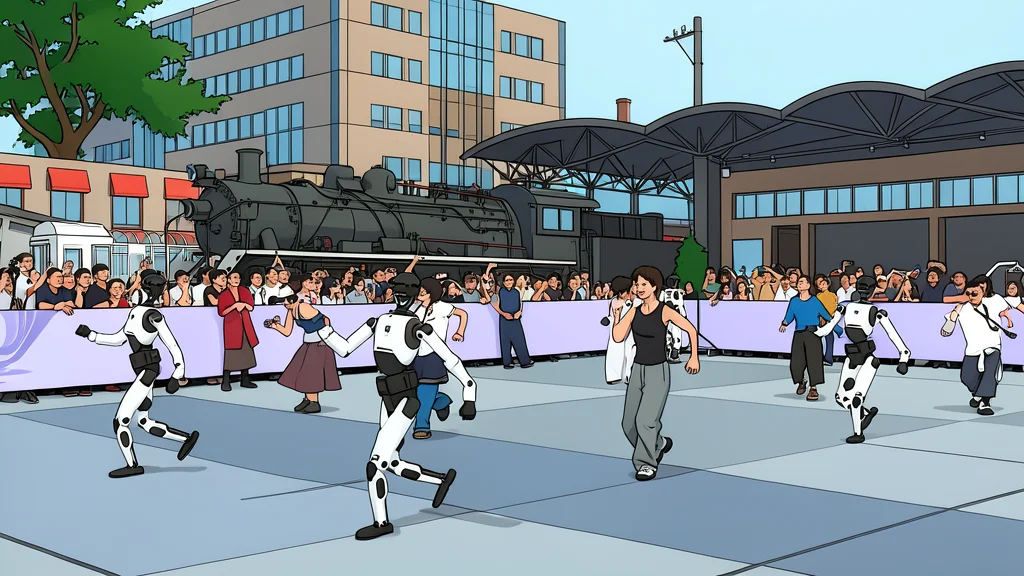
A dozen humanoid robots performed alongside professional dancers at the opening of Beijing Art & Technology Week, marking a significant step in collaborative live performance.
At the 798 Art District in Beijing, a dozen humanoid robots from the Beijing Innovation Center of Humanoid Robotics joined forces with human dancers for a live performance. The event, titled Playable Technology: Infinite Walk, served as the opening act for the second Beijing Art & Technology Week, a 21-day festival designed to integrate emerging technologies with creative arts.
According to GN auto tech/robotics, the performance showcased mass-produced, general-purpose models rather than specialized prototypes. The collaboration required extensive preparation, with engineers and dancers spending two weeks on round-the-clock testing. The goal was to create a seamless interaction where the machines could navigate and coordinate their movements in real-time alongside their human counterparts.
Engineering limits shape the dance
The process of creating the choreography revealed strict technical boundaries. Ding Gang, the algorithm lead for motion control, explained that the robots first learned movement patterns through motion capture data. However, testing showed that certain sequences exceeded the robots' physical capabilities. Consequently, the movements were pared back to match the machines' practical limits.
The human dancers then adjusted their own routines to align with what the robots could physically achieve. Ding described the performance as a stress test for the entire system, including navigation, locomotion, and full-body coordination. The robots had to maintain continuous high-torque output and make athletic shifts, which tested the durability of their joints and the robustness of their algorithms.
Collaboration replaces competition
Tao Ye, the founder of the participating dance theater, emphasized that the objective was never to replace human performers. He noted that the robots treat humans as a benchmark to chase, while humans continue to push their own limits. This dynamic creates a feedback loop where human excellence drives improvements in machine capability.
Despite current limitations, the technology is advancing rapidly. Ding stated that the team expects to enable direct interaction between robots and dancers within one to two months. This will be achieved by optimizing the existing algorithms, suggesting that the current performance was a milestone rather than a final destination.
Art bridges ancient and modern
The festival features more than 100 programs, including exhibitions and forums. One notable piece, Artificial Humans: An Unfinished Dance, draws on an ancient Chinese legend about a mechanical figure that gained autonomy. Visitors are invited to reconstruct the figure's body and complete a dance that has remained interrupted for millennia.
This blend of historical narrative and modern technology reflects the festival's broader goal. Organizers aim to use cultural content to energize consumption and foster international cooperation. By placing art and technology in real settings, the event seeks to demonstrate how emerging innovations can be applied in industrial and creative contexts.