Low-Cost Multilingual Home Robot Harley Debuts in India

A new wheeled robot offers voice-controlled home automation and multilingual conversation at a fraction of the cost of commercial rivals, though it relies on fixed waypoints for navigation.
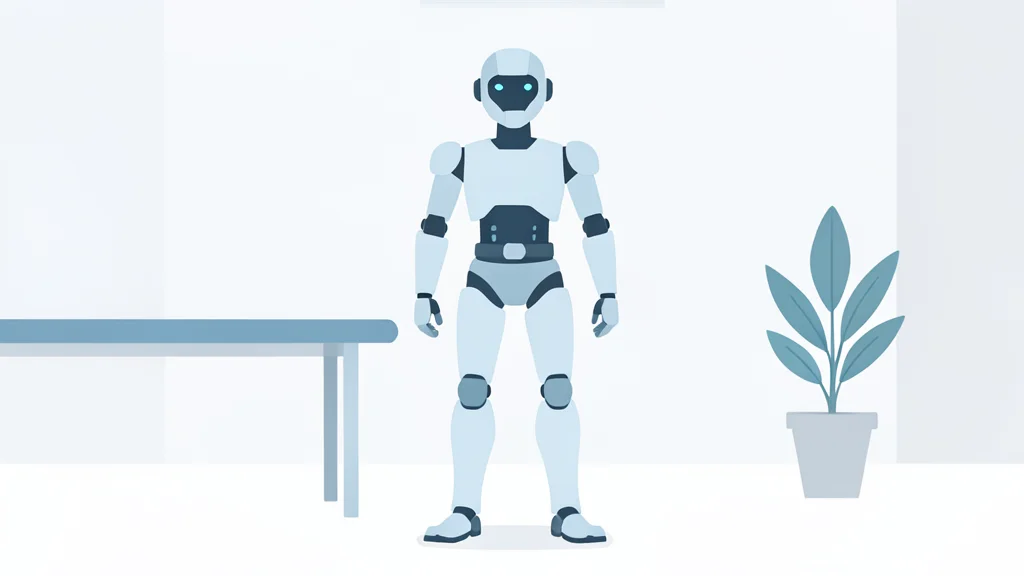
A compact, wheeled robot named Harley has emerged as a budget-friendly alternative to expensive commercial home assistants. Developed by students at Nirma University in Ahmedabad, the device combines autonomous navigation with smart-home control and multilingual conversation for under 10,000 rupees. This price point is significantly lower than standard market offerings, which often exceed 150,000 rupees and typically restrict users to English-only interactions.
The project addresses a common gap in domestic robotics, where affordable units usually handle either movement or appliance control, but rarely both. By integrating these functions, Harley targets households in linguistically diverse regions that have been excluded by rigid, English-centric voice interfaces. The system allows users to switch appliances and direct the robot’s movement using their native languages, including Hindi and Gujarati.
Two-Tier Computing Architecture
Harley relies on a split-compute design to balance processing power and safety. A Raspberry Pi handles the heavy cognitive tasks, including speech recognition and navigation decisions, while an ESP32 microcontroller manages the physical switching of high-power household appliances. This separation prevents the sensitive processing unit from being directly coupled to high-voltage circuits, reducing the risk of electrical damage.
Communication between these two components uses the MQTT protocol, a lightweight messaging standard common in industrial internet of things deployments. This allows the intelligent layer to send commands to the actuation layer without direct electrical contact. While this architecture makes the system extensible to other compatible devices, it adds a layer of software complexity that requires precise configuration to maintain stable command execution.
Natural Language Processing Integration
The conversational capabilities are powered by the Google Gemini API, which interprets spoken commands and generates context-aware responses. Unlike older systems that rely on rigid keyword matching, Harley can handle paraphrased requests and mixed-language utterances. According to the developers, this approach allows for more natural dialogue, with experimental trials showing an average conversational quality rating of 4.1 out of 5.0.
However, this reliance on a cloud-based large language model means the robot requires a stable internet connection to function effectively. While the system performs well in residential settings, the quality of interaction depends on the availability of network access. Users in areas with poor connectivity may find the responsiveness and accuracy of the voice assistant significantly degraded.
Navigation Limitations and Trade-offs
For movement, Harley uses a waypoint-based navigation system where users direct the robot to predefined locations within the home. This method simplifies the technical requirements by avoiding the complex calculations needed for real-time mapping of unknown environments. It is a practical choice for static home layouts but limits the robot’s ability to explore new spaces or adapt to significant changes in furniture placement.
As reported by GN technics/smarthome (en-US), this design prioritizes robustness over flexibility. While the robot can reliably travel to named rooms or charging docks, it cannot dynamically map a new house on its own. This trade-off makes Harley suitable for established homes but less versatile for users who frequently rearrange their living spaces or require open-floor exploration capabilities.