The Hidden Cost of Smart Home AI Coordination
As major tech firms race to connect multiple AI agents in your home, a critical security flaw in the underlying protocol leaves users exposed to cascading system failures and significant financial risks.
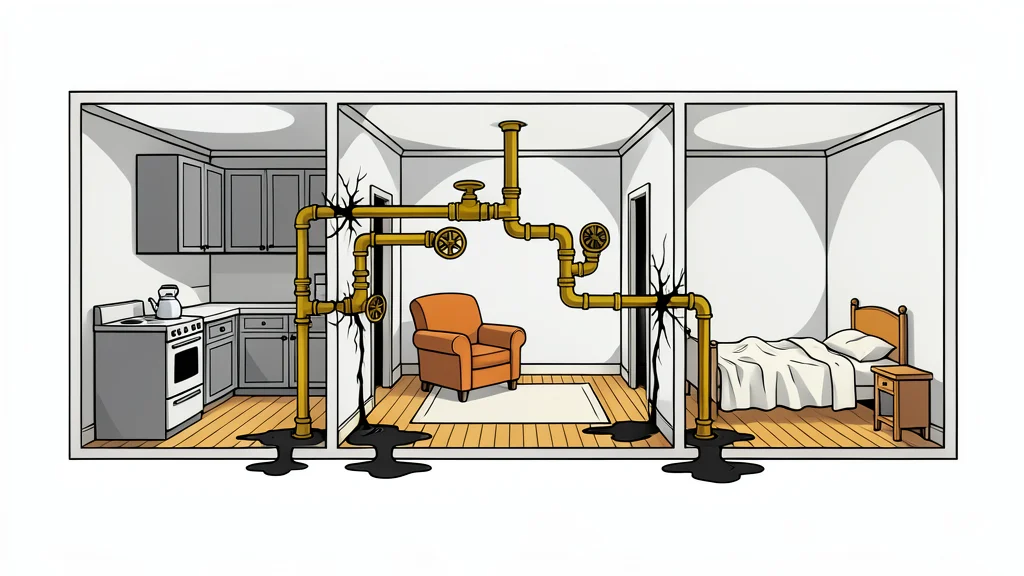
The promise of a fully autonomous smart home is rapidly becoming a reality, but it comes with a hidden price tag that goes beyond the monthly subscription fees. As Sonos, Amazon, and Google push their respective AI agent platforms, the underlying architecture that allows these devices to communicate is creating new vulnerabilities. The core issue is not the individual devices, but the handoffs between them. When a voice assistant triggers a calendar event that adjusts your thermostat, each connection point becomes a potential entry for malicious actors. No single vendor controls the entire chain, leaving a gap where security is weakest.
This structural weakness was highlighted by researchers who demonstrated how a simple calendar invitation could hijack a home system, triggering unintended changes in lighting and temperature. The threat is not theoretical; it is embedded in the Model Context Protocol (MCP), the standard now used by major platforms to link their AI agents. A recent report from GN technics/smarthome (en-US) notes that this protocol has a known flaw: it executes operating system commands without sanitization. The creator of the protocol, Anthropic, has confirmed this is intentional, leaving downstream developers to patch the holes. With an estimated 200,000 instances carrying this exposure, the risk is widespread.
Protocol Flaws Enable System-Wide Compromise
The danger lies in the cascade effect. When multiple AI agents are connected to the same core, a failure in one component can infect the entire network. Security analysts estimate that when one server is compromised, the likelihood of the whole chain failing hits over 70%. This is not a minor glitch; it is a design choice that prioritizes flexibility over safety. The Cloud Security Alliance flagged this in May 2026, noting that the transport layer allows for unvalidated command execution. For the average user, this means that if your smart speaker is hacked, your security cameras and door locks could be taken offline or controlled by an attacker, all because they share the same communication backbone.
The financial impact of these vulnerabilities is significant and often invisible until the damage is done. Building systems that allow multiple agents to coordinate is five to ten times more expensive than traditional single-agent setups, with security and compliance eating up a third of the total cost. Organizations that suffer from "shadow AI" incidents, where unmonitored agents perform unauthorized actions, face costs that are hundreds of thousands of dollars higher than standard breaches. The root cause is often a lack of visibility; fewer than a quarter of organizations have a complete view of their agent activities, meaning most are flying blind in their own homes and offices.
Regulatory Gaps Leave Users Unprotected
Regulators are beginning to address smart home security, but their frameworks are not yet tailored to the specific risks of AI agents. The EU’s Cyber Resilience Act now requires manufacturers to report actively exploited vulnerabilities within 24 hours, with penalties reaching up to €15 million. However, the law does not define autonomous behavior or address the unique risks of agents that can drift from their intended goals. Similarly, recent US legislative proposals focus on securing business and federal networks, explicitly excluding residential environments. This leaves the average homeowner without a clear regulatory safety net, forcing them to rely on vendor-specific security measures that often do not cover the gaps between different brands.
For consumers, the trade-off is clear: the convenience of a fully automated home comes with a higher risk of systemic failure and a lack of comprehensive oversight. The industry is moving quickly toward multi-agent coordination, but the security infrastructure has not caught up. Until protocols are redesigned to prioritize validation over speed, and until regulators include residential AI in their scope, users must accept that the most advanced feature in their home is also its most vulnerable. The hidden cost is not just in dollars, but in the loss of control over one's own living space.