UGREEN HA100 Replaces DIY Smart Home Setups
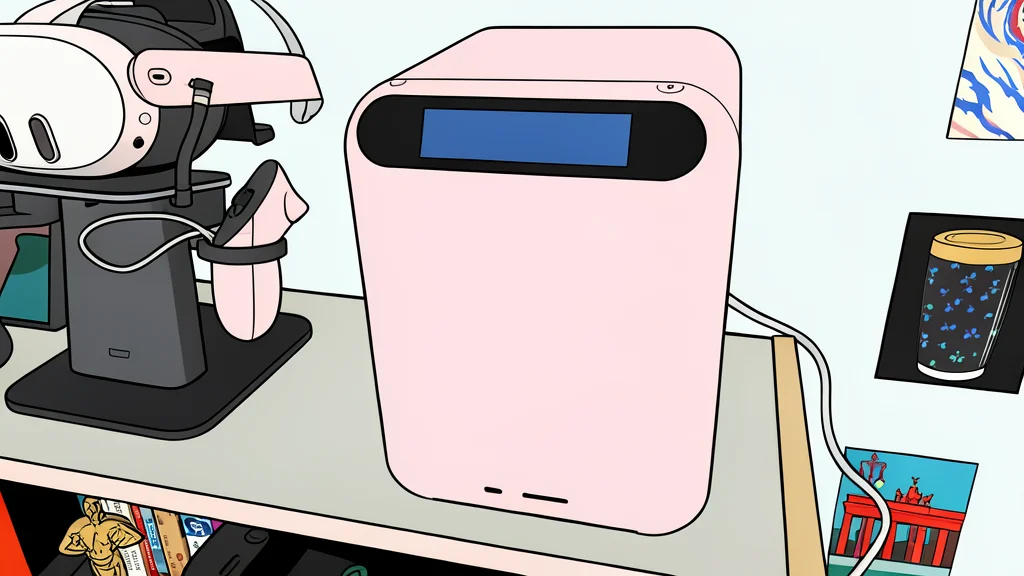
A new all-in-one hub promises to simplify smart home management by replacing complex DIY servers with a single appliance.
Smart home enthusiasts have long relied on custom-built mini PCs and fragmented hardware stacks to run their automation backends. While these DIY solutions offer deep control, they often come with a hidden cost: a tangled mess of cables, power bricks, and the constant maintenance of unstable kernel drivers. For many users, the physical clutter and technical overhead become a burden that outweighs the benefits of customization.
UGREEN aims to solve this with the HomeAgent HA100, a purpose-built appliance that combines local storage, smart home control, and AI processing into a single tower. As reported by XDA Developers, the device represents a shift from raw hardware freedom to a polished, managed experience. However, the move to this all-in-one solution is not without trade-offs, forcing users to exchange granular system control for operational simplicity and integrated intelligence.
Simplifying the physical smart home setup
The most immediate benefit of the HA100 is physical consolidation. Traditional home labs often require a mini PC, a separate network-attached storage drive, and multiple USB dongles for various smart home protocols. This creates a cluster of devices that must be hidden or managed carefully. The UGREEN unit collapses these components into a single, sleek tower that can sit comfortably in a living room or utility closet without looking out of place.
This reduction in hardware eliminates the need for external power adapters and drive enclosures, significantly lowering power consumption and reducing the visual clutter of a typical media center. For users who find the maintenance of a complex home lab intimidating, this turnkey design lowers the barrier to entry, allowing them to manage their smart home without dealing with the intricacies of server hardware.
Local AI replaces cloud dependencies
A key differentiator for the HA100 is its integrated neural processing hardware. This allows the device to run AI models locally for tasks such as video object detection and voice command processing. By handling these computations on-device, the hub reduces reliance on external cloud APIs, which can be slower, less private, and dependent on internet connectivity.
Achieving this level of local AI performance in a DIY setup is difficult. It typically requires expensive, high-performance hardware and complex software configuration to ensure the system is stable and efficient. The UGREEN device provides this capability out of the box, offering a streamlined way to implement advanced automation features without the technical expertise usually required to self-host such workloads.
The cost of reduced system control
The primary trade-off for adopting the HA100 is the loss of granular control. Unlike a DIY box where users have direct access to the BIOS and can install any operating system or driver, the UGREEN device operates on a closed, proprietary firmware layer. This means users cannot modify the underlying system to their liking or install unsupported software without breaking the device's stability.
Additionally, the abstraction layers between the user interface and the hardware can limit flexibility for advanced users who want to tweak kernel parameters or manage containers with full transparency. While the DIY approach offers absolute freedom, it also demands constant vigilance to prevent issues like kernel panics or hardware failures. The HA100 offers peace of mind at the price of that freedom, making it a choice between total control and managed convenience.