China's Rapid Rocket Cadence Highlights Growing Launch Diversity
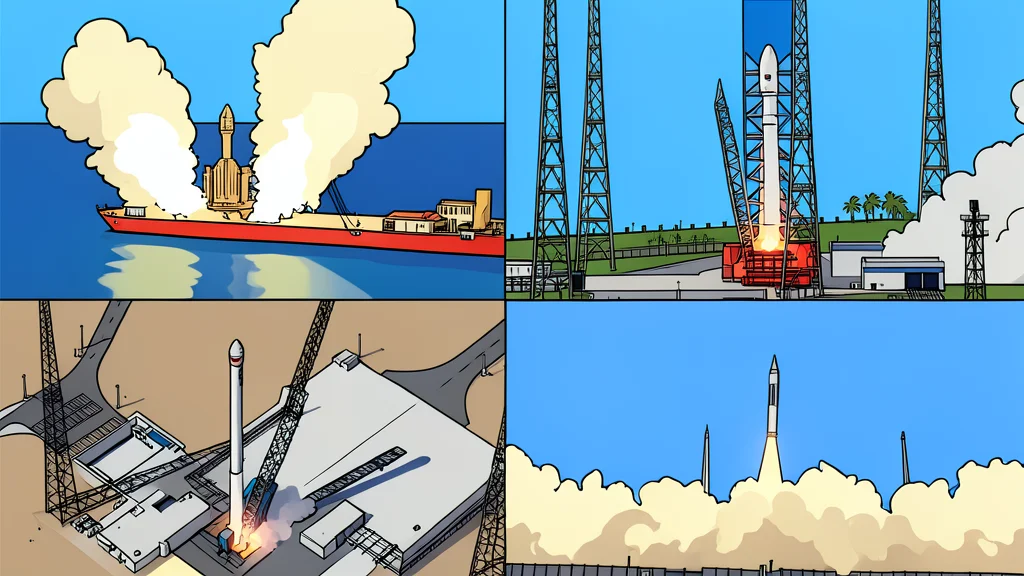
Four distinct rockets reached orbit within 45 hours, signaling a new era of frequency and variety in China's space industry.
China demonstrated a significant surge in launch activity by sending four different rockets to orbit over a 45-hour period last week. This rapid sequence, occurring between September 15 and 16, involved three separate launch sites and included two vehicles operated by private companies. All four missions were successful, marking a clear step forward in the nation's ability to sustain high-frequency space operations.
The flurry of activity serves as a practical display of the increasing diversity within China's launch sector. Unlike previous periods where state-owned entities dominated the schedule, this week saw a mix of government and commercial providers operating in close succession. While the focus remains on delivering payloads to low Earth orbit, the underlying message is one of industrial maturity and expanding capacity.
Commercial players join state agencies
Two of the four launches were executed by private enterprises, highlighting the growing role of the commercial sector. LandSpace, based in Beijing, used its Zhuque-2E rocket to place ten satellites into orbit for the Qianfan broadband constellation. This vehicle utilizes liquid methane and oxygen, a fuel combination also being developed for SpaceX's Starship, which offers lower cost and easier storage than traditional kerosene-based propellants.
The other private launch was performed by Orienspace using the Gravity-1 rocket. This vehicle is notable for being the world's most powerful solid-fuel rocket, characterized by its unique squat and stubby design. It lifted off from a barge off the coast of Shanghai, delivering nine additional Qianfan satellites. The successful integration of these private vehicles into the national launch schedule indicates a maturing market where non-state actors are becoming routine participants in orbital missions.
Focus on broadband constellation deployment
The primary goal of most of these launches was the construction of large-scale satellite networks for internet connectivity. The Qianfan project aims to eventually deploy approximately 15,000 spacecraft, while the SatNet constellation, served by a state-run Long March 12 rocket, targets a similar scale of 13,000 satellites. These mega-constellations are designed to provide global broadband coverage, competing directly with existing Western-led projects like Starlink.
The final launch of the week involved a Kuaizhou-11 rocket carrying two Earth-observing radar satellites for the company Spacety. This mission underscores that while broadband is a major driver, the launch demand is also fueled by government and commercial needs for surveillance and environmental monitoring. The diversity of payloads sent up during this short window illustrates the broad range of services that the expanding launch infrastructure is now capable of supporting.
Reusable technology remains in testing
Despite the high volume of launches, none of the four rockets attempted to recover their first stages for reuse. This is a significant trade-off, as single-use rockets are more expensive to produce and operate over time compared to reusable systems. However, China is actively developing reusable technology, with recent successful test flights of the Zhuque-3 and Long March 10B vehicles demonstrating that first-stage recovery is technically feasible.
As reported by space.com, the current focus is on proving reliability and volume rather than immediate cost reduction through reusability. The industry has made considerable progress in landing capabilities over the last few months, but no Chinese rocket has yet flown a first stage on multiple orbital missions. This suggests that while the technology is advancing, the operational shift toward a fully reusable fleet is still in its early stages, with the immediate priority being to saturate orbit with the necessary satellite infrastructure.