NASA's Roman Telescope Captures First Test Image
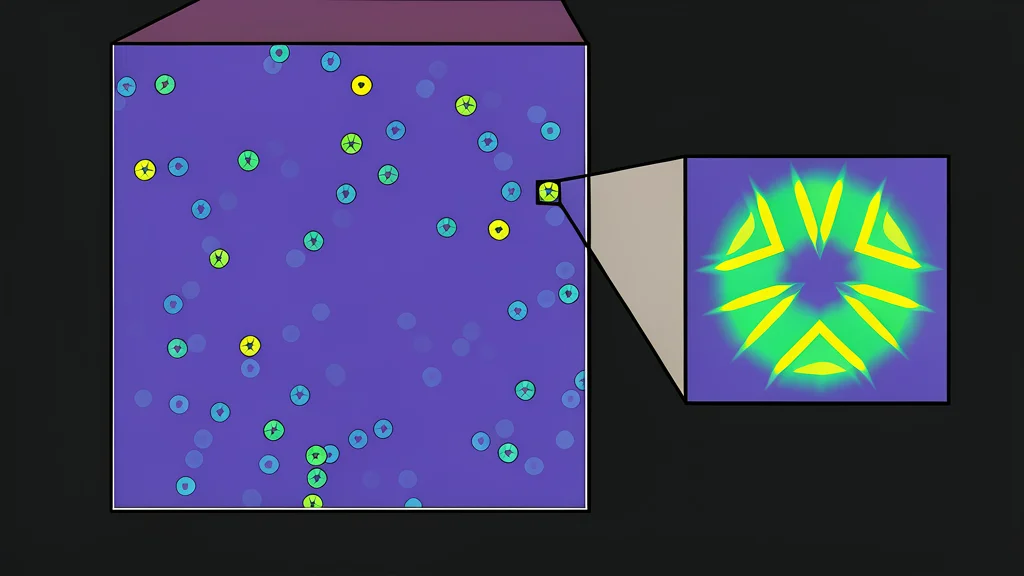
NASA has shared the first test image from the Nancy Grace Roman Space Telescope, marking a critical step in its commissioning process.
NASA has released the first test image from the Nancy Grace Roman Space Telescope, confirming that its primary camera is operational in orbit. The image, captured by the Wide Field Instrument, shows hundreds of stars appearing as distinct lime-colored loops rather than sharp points. This visual artifact is expected because the camera has not yet been fully focused, a normal part of the months-long commissioning process that began after the spacecraft's launch on August 30.
According to a statement from NASA, all systems are functioning as intended, signaling a major milestone for the mission. The telescope is currently on its way to Lagrange point L2, a stable orbital location shared with the James Webb Space Telescope. Once fully calibrated, the Roman telescope is designed to deliver images with the same sharpness as the Hubble Space Telescope, but covering a field of view 100 times larger, which will allow for unprecedented surveys of the universe.
Data Volume Exceeds Smartphone Storage
The scale of data generation from this telescope is substantial. The 300-megapixel camera consists of 18 detectors that convert light into electrical signals, producing roughly 1.4 terabytes of data per day. To put this in perspective, that is equivalent to five to ten times the storage capacity of an average smartphone. This high volume of information will be transmitted to Earth, providing astronomers with a massive dataset to analyze for signs of dark energy and the expansion of the universe.
However, handling this data stream presents a significant technical challenge for ground-based infrastructure. The sheer volume requires robust computing resources and efficient data processing pipelines to sift through the noise and extract meaningful scientific insights. While the telescope's ability to capture such vast amounts of light is a breakthrough, the bottleneck often lies in the capacity to store and analyze the resulting digital files effectively.
Potential To Double Mission Lifespan
In a positive development for the mission's longevity, NASA indicates that the Roman telescope may operate for up to 22 years instead of the planned 10. This extension is attributed to a successful thruster burn and the presence of bonus fuel loaded onto the spacecraft at launch. This extended operational window will allow for more comprehensive studies of exoplanets and distant galaxies, potentially increasing the count of known alien worlds from over 6,000 to more than 100,000.
As reported by GN technics/space, this extended timeline mirrors the trajectory of the Hubble Space Telescope, which has continued to yield discoveries decades beyond its initial design life. The trade-off for this extended mission is the continued need for precise orbital maneuvers to maintain the telescope's position at Lagrange point L2, ensuring it remains in the optimal location for scientific observation without interference from Earth or the sun.
First Steps Toward Scientific Goals
The primary goal of the Roman telescope is to address some of the biggest mysteries in astronomy, including the nature of dark energy and the search for life on other planets. By using a built-in coronagraph to block starlight, the telescope can observe exoplanets with unprecedented precision. This capability is crucial for identifying atmospheric signatures that might indicate habitability, a task that is difficult with current technology due to the overwhelming glare of nearby stars.