China Completes Six Orbital Launches in Six Days with Mixed Results
A rapid sequence of rocket launches demonstrates growing capacity, but also highlights the intense pressure on reliability and cost efficiency in the commercial space sector.
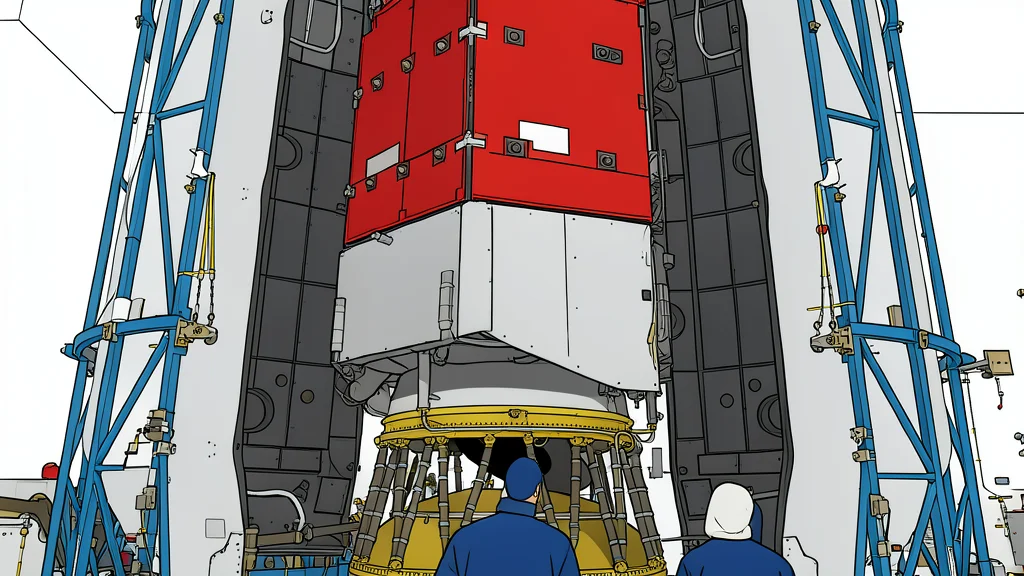
China has completed six successful orbital launches in a span of just six days, a feat that signals a significant shift in the pace of its space activities. The most recent mission, executed on September 20, 2026, involved the Kinetica-1 Y18 rocket launching nine satellites from the Dongfeng commercial space innovation pilot zone in Northwest China. This successful deployment concludes a busy week that saw a variety of rockets, both state-owned and privately developed, reach orbit without any recorded failures.
According to reporting from GN auto tech/space: satellite deployment, the payloads for this final launch included equipment for remote sensing, disaster prevention, and artificial intelligence computing. The streak began on September 15 and involved six different rocket models, including the Zhuque-2E, Gravity-1, Long March-12, and Kuaizhou-11. This density of activity is not merely a numerical milestone but a practical test of the infrastructure needed to support such a high frequency of space operations.
Private rockets join national efforts
A key development during this period was the active participation of commercial companies in deploying the Qianfan satellite constellation. On September 15, a privately developed Zhuque-2E rocket sent ten satellites into orbit, marking the first time a Chinese private company handled such a large-scale internet deployment. Less than 16 hours later, another private rocket, the Gravity-1, launched eight more satellites from a sea platform off Shanghai. Together, these missions added 256 satellites to the constellation, showing that private firms are now contributing meaningful capacity to national goals.
Industry observers note that this collaboration changes the dynamic of the sector. Rather than operating in isolation, commercial entities are leveraging the established technological foundation and infrastructure of the national space program. This symbiotic relationship allows private companies to offer more flexible and potentially lower-cost services, while the national sector benefits from the increased overall launch frequency and industrial supply chain growth.
Reliability remains the primary challenge
While the success rate for this specific week was 100 percent, the pressure on commercial providers is intensifying. To sustain this pace, companies must prove they can launch not just successfully, but frequently and at a competitive cost. The transition from proving a rocket can reach orbit to proving it can do so repeatedly and reliably is a critical hurdle. Failure to meet these standards could hinder the broader investment needed for future innovations, such as reusable launch technologies.
The catch in this rapid expansion is the immense demand for consistent performance. As satellite internet and space-based computing generate more demand, the margin for error shrinks. The ability to maintain a high cadence without compromising safety or cost-efficiency will determine whether this new level of activity can be sustained in the long term.
Infrastructure supports higher frequency
The ability to execute six launches in six days relies on a mature ecosystem that includes rocket development, testing, launch infrastructure, and tracking systems. This infrastructure is supported by an increasingly complete industrial supply chain. The diversity of rockets used during this period indicates that the sector is not dependent on a single provider, which adds a layer of resilience to the overall space transportation network.
However, this success comes with the trade-off of extreme logistical complexity. Coordinating multiple launches in such a short timeframe requires precise scheduling and robust support systems. The recent streak demonstrates that China has built the necessary physical and technical capacity, but the economic sustainability of maintaining this level of output remains a question for the coming years.