Tiangong Crew Tests Long-Term Health Protocols in Orbit
China's Shenzhou-23 astronauts are four months into their mission, focusing on critical experiments and rigorous health monitoring to ensure safety for extended stays in space.
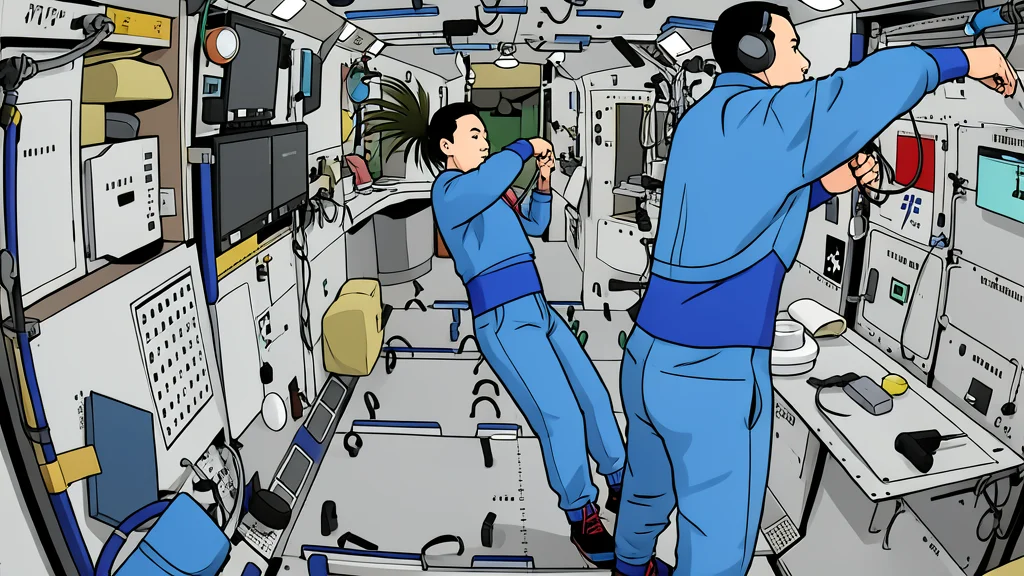
The China Manned Space Agency reported on Sunday that the Shenzhou-23 crew has completed another week of scientific research and maintenance aboard the Tiangong space station. With nearly four months elapsed in their orbital mission, the three astronauts, Zhu Yangzhu, Zhang Zhiyuan, and Lai Ka-ying, are prioritizing data collection that will inform how humans can live and work safely in space for extended periods. Their recent activities highlight a shift from routine operations to specific physiological and biological challenges posed by weightlessness.
According to the agency's weekly update, the team is conducting detailed studies on how viruses interact with the immune system in a microgravity environment. This research is not merely academic; it is essential for understanding how the human body defends itself against infection when away from Earth's gravity. By accumulating this data, engineers and medical professionals hope to develop better protective measures for future long-duration missions, such as potential trips to the Moon or Mars, where medical evacuation is impossible.
Monitoring the body in zero gravity
A significant portion of the crew's time is dedicated to continuous health surveillance, a necessary trade-off for spending months in orbit. Without gravity to stimulate bone and muscle, astronauts face rapid physiological changes. To counter this, the team performed mass measurements, bone density scans, and ultrasound examinations of their necks, abdomens, hearts, and blood vessels. These procedures allow ground control to track subtle shifts in their physical condition in real-time.
Beyond passive monitoring, the astronauts actively use specialized equipment to mitigate the effects of weightlessness. The agency noted the use of a bone loss countermeasure device, a tool designed to simulate resistance training to preserve skeletal integrity. This daily regimen is a critical component of their protocol, ensuring that the crew remains fit enough to perform their duties and return to Earth safely. The balance between rigorous testing and regular exercise defines the physical reality of life aboard Tiangong.
Station hygiene and sample management
Maintaining a sterile environment is equally vital for crew safety. The team collected microbial samples from the water dispenser outlet and carried out routine prevention work to control bacteria and fungi inside the station. In a sealed environment, even minor contamination can escalate into serious health risks, so these inspections are a standard but crucial part of their weekly duties. The crew also replaced test samples for debris migration imaging experiments, contributing to broader knowledge of how materials behave in space.
As reported by GN technics/space, these operations underscore the complexity of managing a long-term orbital habitat. The Shenzhou-23 mission serves as a testbed for the systems and protocols required for future deep-space exploration. By rigorously documenting the effects of space on the human body and the station's environment, the crew is building the foundational knowledge necessary for the next generation of space travelers. Their work transforms abstract scientific goals into practical, life-saving data.