Macron and Carney Announce Deeper Ties on Saint Pierre and Miquelon
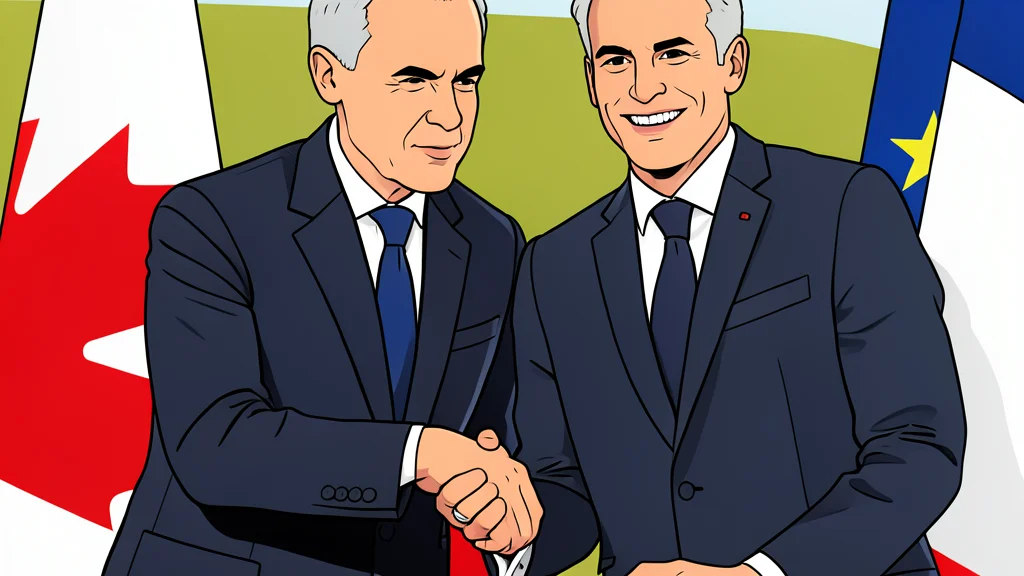
France and Canada pledge cooperation in energy and defense, signaling a strategic pivot toward the EU as trade tensions with the US escalate.
Key points
- France and Canada announced new cooperation in energy, defense, and space sectors during a summit on Saint Pierre and Miquelon.
- Canada is seeking 'associate membership' in the EU to reduce dependence on the US amid a trade war involving up to 50 percent tariffs.
- US President Trump has warned that Canada's closer ties with Europe could be treated as a hostile act, threatening further trade disruptions.
French President Emmanuel Macron and Canadian Prime Minister Mark Carney have announced a comprehensive plan to deepen bilateral cooperation across energy, defense, and space sectors. The joint declaration was issued during a media conference on the North Atlantic archipelago of Saint Pierre and Miquelon, a French territory located approximately 25 kilometers from Newfoundland, Canada.
According to Al Jazeera English, the leaders emphasized that this strengthened alliance is rooted in shared democratic values and a mutual commitment to international law. The timing of the announcement coincides with Ottawa’s broader effort to reduce economic reliance on the United States while navigating an escalating trade dispute with its northern neighbor.
Strategic pivot toward European alliance
Carney stated that both nations view sovereignty through the lens of securing access to critical technologies, including artificial intelligence, semiconductors, and clean energy. This approach supports Canada’s pursuit of a unique status within the European Union, recently described by European Commission President Ursula von der Leyen as a potential 'associate membership' arrangement.
In a speech to the European Parliament, Carney clarified that this move is not intended to create a rival geopolitical bloc but to ensure resilience against external pressure on open markets. He argued that this partnership allows Canada and Europe to protect their democratic institutions without seeking dominance over other nations.
Escalating tensions with Washington
The diplomatic rapprochement occurs against a backdrop of severe friction with the United States. President Donald Trump has repeatedly characterized Canada’s EU-oriented moves as potentially hostile, warning of heavy tariffs if the arrangement is deemed to be in bad faith. He has also threatened to disrupt trade with Europe on multiple fronts.
These threats follow the imposition of tariffs reaching up to 50 percent on nearly $20 billion worth of Canadian goods by the Trump administration. The dispute remains unresolved, with both sides accusing the other of failing to reach a mutually acceptable trade agreement.
Historic bonds and future outlook
Macron highlighted the historic closeness between the two countries, noting that parts of Canada were once French colonies and that French remains an official language in Canada. He described the partnership as a reflection of a shared perspective on the present and future challenges facing the region.
Analysts will now watch closely for the formalization of the associate membership proposal and any retaliatory measures from Washington. The next few weeks are expected to reveal whether the EU can integrate Canada into its economic framework without triggering a broader transatlantic crisis.