Spain Reports Nearly 10,000 Migrants Remain in Ceuta
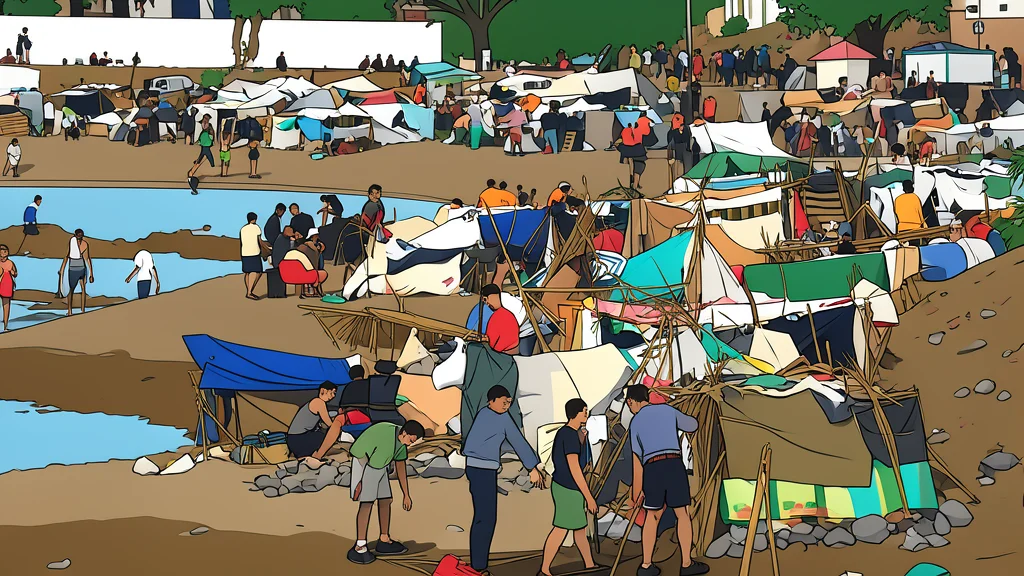
Madrid estimates that between 9,000 and 10,000 people from the July mass entry are still in the enclave, with thousands newly housed in temporary tents near the port.
The Spanish government released new estimates on Friday indicating that between 9,000 and 10,000 individuals who entered Ceuta during the mass crossing in late July remain in the territory. This figure marks a significant reduction from earlier counts and coincides with the completion of a major relocation effort that moved 1,700 people from the beaches into a temporary reception center set up on the port grounds. According to the executive branch, these new arrivals join approximately 4,160 others who have been housed in similar facilities over the past month and a half, bringing the total number of registered adults in official shelters to nearly 6,000.
Despite the progress in providing basic shelter, authorities acknowledge that a gap remains in accommodation capacity. Based on the current estimates, there is still a shortage of between 3,000 and 4,000 spaces for adult migrants who continue to live on the streets, in mountainous areas, or in unoccupied buildings. The government maintains that securing these temporary housing spaces is a prerequisite for complying with national and European laws, as it is only through formal registration that proceedings for repatriation or asylum can be legally initiated. This stance has become a central point of contention in the ongoing political debate surrounding the crisis.
Discrepancy in official population counts
The figures provided by the central government differ notably from those cited by the local authorities in Ceuta. The autonomous city’s executive calculated last week that 13,000 people were still present in the enclave following the event. This divergence highlights the challenges in obtaining accurate data in a complex humanitarian situation. According to Madrid, security forces on the ground provide the most reliable basis for the current estimate, which they describe as a realistic assessment of the remaining population. The lack of a single, unified count continues to complicate efforts to coordinate aid and legal processing across the different levels of government.
Political tensions over crisis management
The response to the situation has intensified friction between the Socialist-led central government and the local People’s Party administration. Prime Minister Pedro Sánchez has stated that the situation is expected to stabilize by the end of the year, emphasizing that immediate repatriation without proper registration is not legally feasible. In contrast, the right-wing opposition and local leaders argue that the central government is delaying necessary actions and failing to assume its responsibilities. They characterize the event as a matter of national security rather than a migration issue, demanding the immediate return of all individuals who entered illegally.
Accusations have been exchanged in both directions, with Madrid claiming that the local executive is obstructing the provision of housing spaces and the transfer of unaccompanied minors to other regions. The central government alleges that these actions are intended to prolong the crisis for political gain. The local government denies these claims, insisting that the federal authorities are refusing to take charge of the legal processes required for resolution. This stalemate has drawn public attention, with protests occurring across Spain where some demonstrators have called for the prime minister’s resignation, while others criticize the opposition’s rhetoric.
Path toward stabilization and registration
Moving forward, the focus shifts to the practical implementation of the registration process and the expansion of shelter capacity. The government’s strategy relies on the premise that only by housing every individual can the legal framework for their status be applied. Observers will likely watch for further updates on the number of people successfully registered and the pace at which new shelter spaces are opened. The coming weeks may see increased diplomatic activity or legal challenges as both sides seek to manage the humanitarian and political dimensions of the situation in this Spanish enclave on the North African coast.