Sweden's Tight Race Pivots on Coalition Dynamics
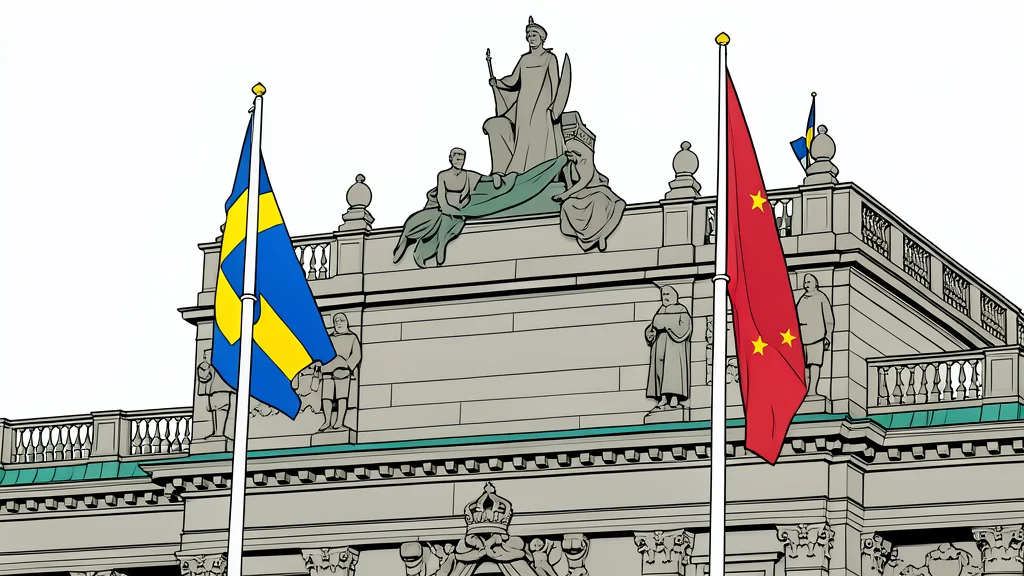
With polls showing a narrowing gap between blocs, the outcome hinges on whether the Sweden Democrats can secure a formal role in government.
Swedish voters are set to decide the composition of the Riksdag in a parliamentary election that has become significantly tighter in the final weeks of the campaign. While recent polling data places the opposition bloc ahead, the margin has narrowed considerably, creating uncertainty over whether Prime Minister Ulf Kristersson’s right-wing coalition can maintain its parliamentary majority.
The stakes extend beyond a simple change of leadership. The result may mark a historic shift in the political landscape, as the Sweden Democrats (SD) seek to move from a supporting role to full cabinet participation for the first time. This potential transition could fundamentally alter the center of gravity in Swedish politics, particularly if divisions among opposition parties prevent them from forming a stable alternative government.
Coalition Mechanics and the Tido Agreement
The current government is a minority coalition comprising the Moderates, Christian Democrats, and Liberals, supported in parliament by the Sweden Democrats. This arrangement, formalized under the Tido Agreement after the 2022 election, allowed the right-wing bloc to govern with 176 seats despite SD remaining outside the cabinet. However, the political dynamic is shifting for this year’s election.
According to reports from GN geopolitics/politics, the Liberals have dropped their previous opposition to SD joining the cabinet, opening the door for a four-party government if the bloc wins. SD leader Jimmie Akesson has stated his party intends to be "either in government or in opposition," signaling a desire for formal policy influence. This contrasts with the 2022 outcome, where SD won over 20 percent of the vote but was excluded from the executive due to mainstream resistance.
Opposition Fragmentation Complicates the Path
On the other side of the political divide, former Prime Minister Magdalena Andersson leads a bloc of Social Democrats, Greens, Left Party, and Centre Party. However, forming a government formula has proven difficult. The Centre Party has ruled out any coalition that includes the Left Party, while the Left Party insists on cabinet representation. Swedish media have described this impasse as an "impossible equation," suggesting that even if the opposition wins more votes than the right, they may struggle to command a majority in the Riksdag.
Healthcare and Migration Dominate the Debate
Campaign discussions have centered on healthcare, migration, and the economy. A recent survey indicated that healthcare is the top concern for voters, with 64 percent ranking it as a primary issue. The Moderates propose reducing the maximum waiting time for non-urgent treatments from 90 to 30 days, whereas the Social Democrats pledge to increase funding to match inflation. Migration policy remains a sharp dividing line, with the Sweden Democrats advocating for stricter restrictions, while several opposition parties favor easing recent measures.