Pakistan Calls for UN Reform to Counter Modern Terror Tactics

As the Security Council marks 25 years since the September 11 attacks, Islamabad argues that counter-terrorism frameworks have failed to keep pace with digital evolution, urging the body to address gaps in sanctions and surveillance capabilities.
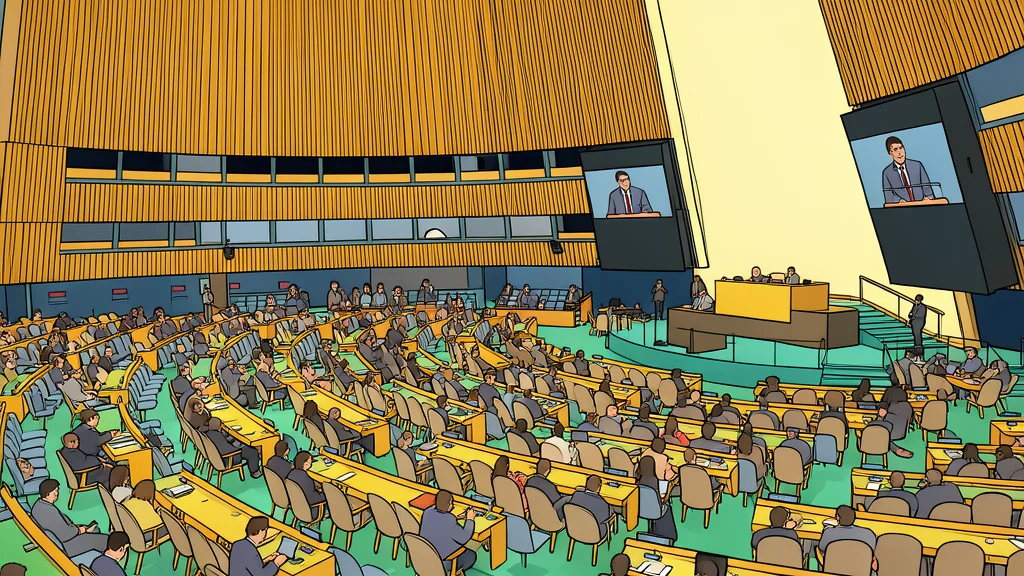
Pakistan has formally requested the United Nations Security Council to overhaul its counter-terrorism mechanisms, arguing that current international frameworks are ill-equipped to handle the digital transformation of extremist groups. The call was made during a high-level discussion commemorating the 25th anniversary of the September 11 attacks, a session that highlighted the growing divergence between traditional security policies and the rapid adaptation of terrorist financing and recruitment methods. According to GN geopolitics/un, the Pakistani delegation emphasized that the threat landscape has fundamentally changed since the early 2000s, necessitating a more robust and technologically informed response from the international community.
The urgency of this appeal is underscored by a recent assessment from the Counter-Terrorism Committee Executive Directorate, which identifies a critical "acceleration gap" between the speed at which terrorist organizations adapt their strategies and the legislative capacity of member states to respond. The report indicates that propaganda is no longer merely a messaging tool but has become embedded in the operational core of groups like the Tehreek-i-Taliban Pakistan, facilitating everything from fundraising to territorial governance. This structural shift suggests that traditional counter-insurgency measures may be insufficient without a corresponding modernization of legal and technological countermeasures.
Digital tools reshape extremist operations
A central focus of the debate is the exploitation of emerging technologies by terrorist networks, including artificial intelligence, virtual assets, and gaming platforms. Pakistan’s Permanent Representative, Asim Iftikhar Ahmad, noted that these tools have enabled groups to bypass traditional borders and regulatory checks, using the dark web and cryptocurrencies to obscure financial trails. The UN report further warned that young individuals are increasingly being targeted through online subcultures and social media ecosystems, creating a new vector for radicalization that traditional monitoring systems often fail to detect. This technological asymmetry poses a significant challenge for nations relying on conventional intelligence gathering.
While Islamabad stressed the need for stronger sanctions regimes to cut off these digital lifelines, other stakeholders raised concerns about the human rights implications of the global counter-terrorism campaign. More than 30 independent UN human-rights experts cautioned that the 25-year effort to combat terrorism has placed considerable strain on fundamental freedoms and the boundaries of international law. This tension highlights a complex dilemma for the Security Council: how to maintain the effectiveness of security measures while ensuring they do not undermine the very rights they are ostensibly designed to protect.
Human rights concerns in security response
The discourse in New York was marked by a recognition of the heavy toll that the global war on terror has taken on civilian populations and legal systems. The US representative, Michael Waltz, recalled the 2,977 victims of the September 11 attacks, honoring the first responders who faced the burning World Trade Center towers. This moment of silence served as a reminder of the human cost of terrorism, yet it also prompted broader discussions about the long-term consequences of aggressive security postures. The interplay between national security imperatives and human rights obligations remains a contentious area, with many arguing that a sustainable peace requires a balanced approach that respects both.
Regional tensions and cross-border threats
Specific concerns were raised regarding the spillover of violence from Afghanistan, a region that continues to serve as a hub for extremist activity. Pakistan cited statistics indicating that over 4,700 of its citizens have lost their lives to terrorism in the last three years, attributing this partly to groups operating from Afghan territory. The Pakistani envoy called for decisive international action against designated entities, including the Tehreek-i-Taliban Pakistan and the Balochistan Liberation Army, arguing that the current diplomatic stance has not yielded sufficient results. This regional instability underscores the transnational nature of the threat, which no single nation can address in isolation.
As the Security Council continues to deliberate on these issues, the focus is likely to remain on how to bridge the identified gaps in global cooperation. The convergence of digital innovation and ideological extremism presents a novel challenge that requires multilateral solutions. Observers will be watching for concrete proposals on sanctions reform and information sharing, as well as the extent to which human rights considerations are integrated into future counter-terrorism strategies. The coming months may see a renewed push for diplomatic engagement, particularly with neighboring states, to contain the spread of radicalization and disrupt the digital infrastructure supporting it.