Greenland Security Pact Balances Sovereignty and US Interests
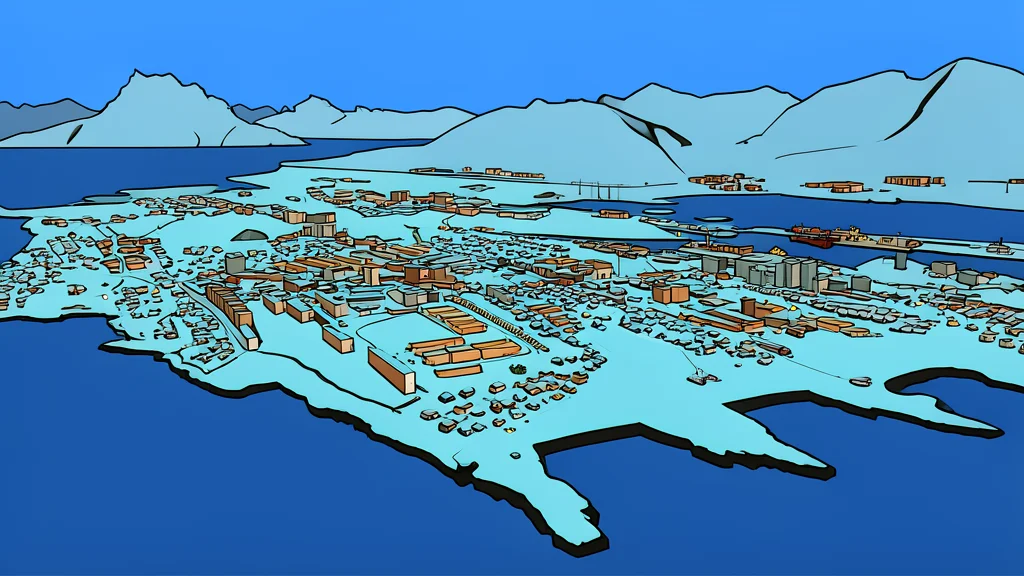
A new tripartite agreement aims to stabilize tensions in the Arctic, though questions remain over whether it represents a genuine shift in policy or a diplomatic maneuver to satisfy political demands.
A newly announced agreement between the United States, Denmark, and Greenland seeks to resolve nearly two years of diplomatic friction regarding the autonomous territory’s security status. According to Al Jazeera English, the deal appears to return the dispute to a diplomatic framework where international law and security policy can be managed, potentially ending the period of intense pressure Washington exerted on Nuuk and Copenhagen.
The development allows President Donald Trump to present a negotiated outcome to his supporters, framing sustained pressure as a successful strategy. However, analysts note that the practical changes may be limited, as many of the rights claimed in the new accord were already available under the 1951 defense agreement, which was updated in 2004 with Greenland’s Home Rule Government as a party.
Historical Military Rights in Arctic Territory
The United States has maintained extensive military rights in Greenland for decades. During the Cold War, Washington operated 17 military installations and stationed more than 10,000 personnel on the island. Today, that footprint has shrunk significantly to a single facility, Pituffik Space Base, which hosts approximately 150 US military personnel.
The new agreement may introduce specific modifications to this historical framework. One key distinction cited by observers is the duration of the pact. While the original 1951 agreement was tied to the continued existence of the North Atlantic Treaty, the new document is described as having an indefinite lifespan. This shift may reflect a decoupling from NATO commitments, aligning with the administration’s broader foreign policy stance.
Veto Powers Over Foreign Investment
A second significant provision reportedly grants the United States formal veto power over any military base, presence, or sensitive investment by non-allied nations in Greenland. This clause explicitly requires US written approval for such activities, aiming to block competitors like Russia and China from establishing a foothold in the strategic region.
In practice, this level of control has often existed informally. Danish authorities have previously intervened to block Chinese interests in Greenland, such as a 2016 attempt to purchase a decommissioned naval station and a subsequent bid for the major airport project. The new agreement may simply codify these existing de facto restrictions into formal treaty language.
Financial Implications for Danish Taxpayers
Despite the diplomatic gains, certain terms of the statement surrounding the deal raise concerns. A declaration that the agreement will come at no cost to the United States has been noted as a point of scrutiny. If accurate, this arrangement could shift financial burdens onto Danish taxpayers, a prospect that may not sit well with the public.
The outcome appears to be a testament to the negotiating skills of Danish and Greenlandic representatives, who have managed to preserve sovereignty while allowing the US president to claim a political victory. As the details of the agreement are further scrutinized, the focus will likely turn to how these provisions are implemented in daily security operations and investment approvals.