Sandia Proposes Expanded Z Machine for Nuclear Testing
Sandia National Laboratories is proposing a significant expansion of its Z facility to address limitations in current nuclear weapons testing capabilities.
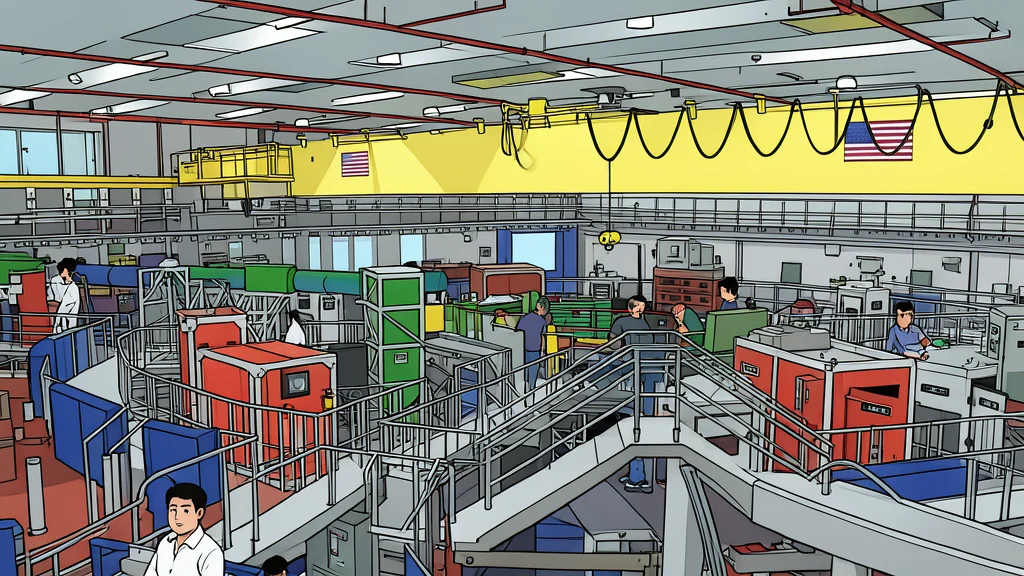
Deep within the confines of Sandia National Laboratories in New Mexico, engineers are evaluating a proposal to construct a substantially larger version of the Z Machine. The existing facility is already one of the most powerful electrical systems on Earth, capable of generating shockwaves that register as minor seismic events in the surrounding Sandia Mountains. However, according to lab officials, the current infrastructure has reached its physical and operational limits regarding the extreme densities required for certain national security applications.
The primary objective of this expansion is to enable researchers to simulate conditions that exceed those found at the center of the sun, a threshold deemed necessary to fully validate the reliability of nuclear weapons without conducting live detonations. As reported by GN geopolitics/nuclear, the facility currently generates extreme electrical power transmitted through materials designed to explode, but it cannot yet produce every specific condition relevant to the National Nuclear Security Administration’s mission. A tenfold increase in scale is considered necessary to bridge this gap.
Overcoming Physical Infrastructure Limits
Greg Rochau, director of the Z Machine Center, explained that the current facility has effectively exhausted its available space. He noted that at a certain point, researchers run out of real estate and must build a larger apparatus to continue advancing their capabilities. This expansion is not merely an upgrade but a structural necessity to accommodate the growing complexity of material physics tests required for modern deterrence strategies.
Chris Seagle, senior manager of material physics, emphasized that the extreme densities reached in weapon systems are critical for safety and reliability. He stated that while the current machine achieves solar-core densities, it falls short of generating all conditions relevant to the agency’s mission. The proposed larger facility would provide the necessary headroom to explore these higher-density states, ensuring that the laboratory can continue to support the integrity of the nuclear stockpile.
Pathway to Congressional Funding
The proposal is currently in the conceptual phase, with Sandia presenting the design to the National Nuclear Security Administration. If the agency advances the project, it will be responsible for seeking the necessary funding from Congress. For now, the larger Z Machine remains a theoretical construct, dependent on political and budgetary approvals that are not yet secured.
Sandia officials maintain that such infrastructure is essential for maintaining nuclear deterrence. Rochau underscored that ensuring the safety, security, and reliability of weapons is a critical component of national safety. The laboratory’s daily work is framed as a direct support to these broader security goals, with the expanded facility serving as a key tool in that ongoing effort.
Future Implications for Deterrence
The next steps will involve detailed engineering reviews and budgetary assessments. Observers will watch for formal announcements from the National Nuclear Security Administration regarding the viability of the project. The outcome will reflect broader priorities in national security policy, particularly the balance between maintaining a credible deterrence posture and the logistical constraints of laboratory-based testing in a world where live nuclear tests are largely suspended.