Trump-Xi Summit Balances Trade and Rights
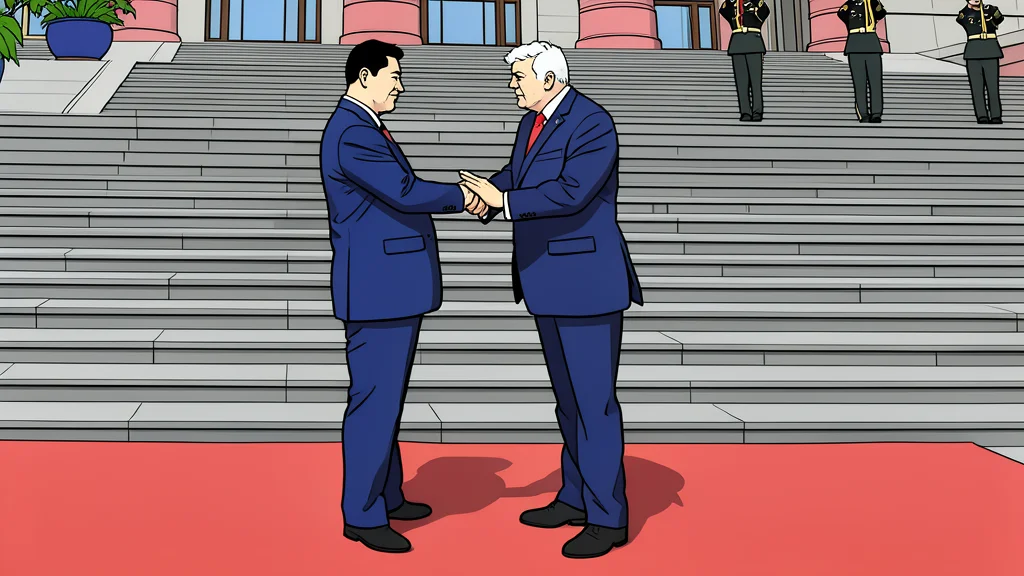
As Washington prepares for a high-stakes meeting with Beijing, analysts argue that economic deals must not overshadow the urgent humanitarian issues facing Chinese dissidents and religious leaders.
President Donald Trump is set to host Chinese President Xi Jinping in Washington later this month for what is expected to be a pivotal diplomatic encounter. The summit is anticipated to focus heavily on economic matters, with Beijing reportedly bringing a sizable delegation of business leaders to negotiate on tariffs, agricultural purchases, and broader investment frameworks. These discussions carry significant weight for American workers, farmers, and national security interests, making the potential for substantial trade agreements a central theme of the upcoming dialogue.
However, according to GN geopolitics/rights (en-US), there is a growing consensus among human rights advocates that the United States should not treat economic engagement and human rights advocacy as mutually exclusive goals. Critics argue that while the scale of trade deals will dominate headlines, the administration must also address the severe restrictions on civil liberties within China. This perspective suggests that strategic diplomacy should include direct discussions on prisoners of conscience and religious freedom, rather than allowing economic interests to silence moral concerns.
Historical Precedents in Diplomacy
Proponents of this approach point to the tenure of former President Ronald Reagan as a model for balancing arms control with human rights advocacy. During negotiations with the Soviet Union, Reagan pursued nuclear reductions while simultaneously raising issues of political imprisonment and religious persecution. This dual-track approach demonstrated that strategic interests and human dignity need not be sacrificed in favor of one another. The argument extends this logic to current Sino-American relations, suggesting that the same principle of integrating rights-based dialogue into high-level talks is both possible and necessary.
There is also recent evidence that direct presidential intervention can yield tangible results in the Chinese context. Earlier this year, President Trump reportedly raised the case of Pastor Ezra Mingri Jin directly with Xi Jinping. Following this diplomatic engagement, Pastor Jin was released and eventually reunited with his family in the United States. Advocates highlight this instance as proof that naming specific individuals and pressing for their release can be an effective component of broader bilateral negotiations, rather than a symbolic gesture that risks complicating economic talks.
Urgent Humanitarian Cases
Several high-profile cases remain unresolved and are expected to be on the agenda. These include human rights lawyer Gao Zhisheng, who has been missing since 2017, and Pastor Wang Yi, who is serving a lengthy prison sentence. Other individuals cited include Uyghur scholar Ilham Tohti, who is serving a life sentence, and various Christian leaders detained for their religious practices. Among these, the case of Pastor John Cao is described as particularly urgent, as he remains separated from his family in the United States despite completing his sentence. Advocates argue that these specific humanitarian issues are well-suited for leader-to-leader diplomacy.
Lessons from Past Engagement
The United States has previously pursued a strategy of deep economic integration with China, hoping that exposure to international institutions would foster greater openness and rule of law. When President Bill Clinton championed Permanent Normal Trade Relations in 2000, the underlying hope was that market forces would eventually drive social and political change. However, more than two decades later, many of these expectations have not materialized, prompting a reassessment of whether engagement alone is sufficient. The current summit offers an opportunity to test whether a more explicit combination of trade incentives and rights-based demands can produce better outcomes for both economic stability and human dignity.