UN Chief Warns of Widening Global Fractures
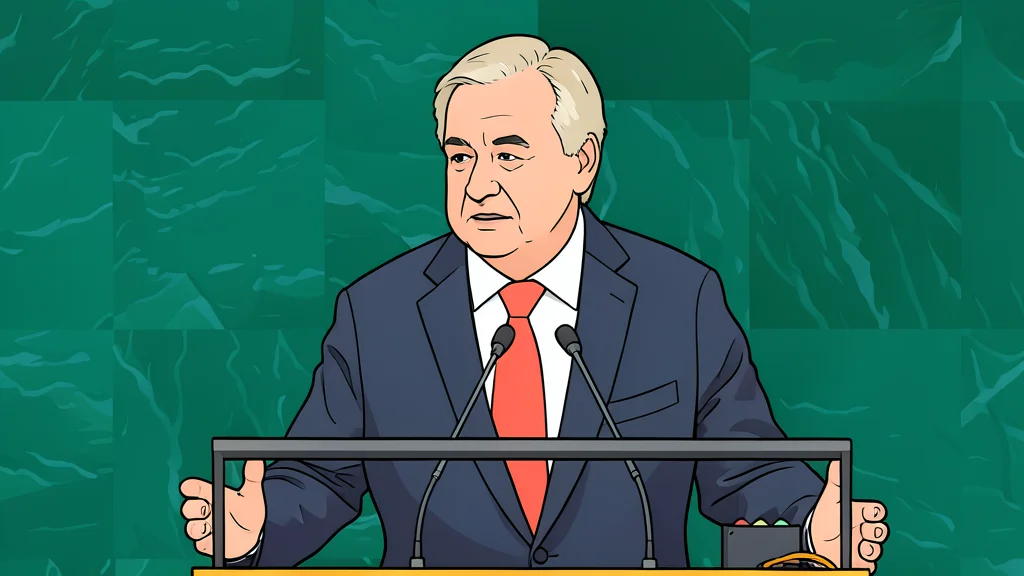
António Guterres urges binding cooperation on AI and war, warning that international norms are eroding into deep divisions.
Key points
- Guterres warns that AI and autonomous weapons pose critical threats, demanding binding international governance.
- The UN Secretary-General calls for Security Council reform, citing the lack of permanent African seats as indefensible.
- The UN has achieved full gender parity in senior leadership for the first time in its history.
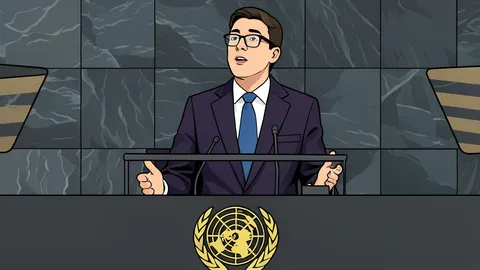
United Nations Secretary-General António Guterres has warned that the international order is facing a critical inflection point, describing four major tests of power that will determine whether the world moves toward cooperation or deeper fragmentation. Addressing the General Assembly, he framed current global crises not as isolated incidents but as symptoms of a fundamental struggle over how authority is exercised and distributed among states, corporations, and emerging technologies.
According to UN News, the Secretary-General stated that the faultlines in global society are widening rapidly, with minor cracks evolving into deep canyons. He emphasized that the greatest power lies not in domination, but in the ability to build a shared future, urging nations to avoid sliding into rival blocs with separate economic and security systems.
Risks of Artificial Intelligence
A central focus of the address was the rapid advancement of artificial intelligence and autonomous weapons. Guterres called for binding international cooperation to govern these technologies, arguing that decisions with life-and-death consequences must never be delegated to machines. He highlighted the significant transfer of authority from traditional state actors to private corporations and individuals, a shift he identified as a primary driver of the current geopolitical instability.
The Secretary-General warned that the current trajectory risks creating a world where power is concentrated in ways that exclude vast populations from decision-making processes. He stressed the need for a truly global network based on interdependence and shared rules to counterbalance these emerging concentrations of influence.
Calls for Institutional Reform
Guterres renewed his longstanding call for reform of the UN Security Council, describing the continued absence of permanent African representation as unjust and indefensible. He noted that the council’s structure was established in a different geopolitical era and no longer reflects contemporary realities. This critique was part of a broader argument that international institutions must adapt to remain relevant and effective in addressing modern conflicts.
Regarding the ongoing war in Ukraine, the UN chief condemned Russia’s full-scale invasion as a clear violation of the UN Charter. He also pointed to the situation in Gaza, urging compliance with International Court of Justice orders and warning that settlement expansion in the West Bank threatens the viability of the two-state solution. These points underscored his view that international law must be upheld to prevent further erosion of global trust.
Progress in Gender Equality
Despite the gloomy assessment of global power dynamics, the Secretary-General offered a note of institutional progress by announcing that the UN has achieved full gender parity across senior leadership and professional staff. He described this milestone as proof that entrenched power structures can be changed, stating that equality is not merely a dream but a deliberate decision. This achievement was highlighted as a model for broader societal change regarding resource distribution and opportunity.
The forward question now centers on whether member states will translate these warnings into actionable policy. Observers are watching for concrete proposals on AI governance, debt relief mechanisms for developing nations, and a formal timeline for Security Council reform. The coming months will likely reveal whether the international community can halt the widening fractures or if the trend toward fragmentation will continue to accelerate.